Vampires and The Bible: Christian Parallels in Vampire Folklore
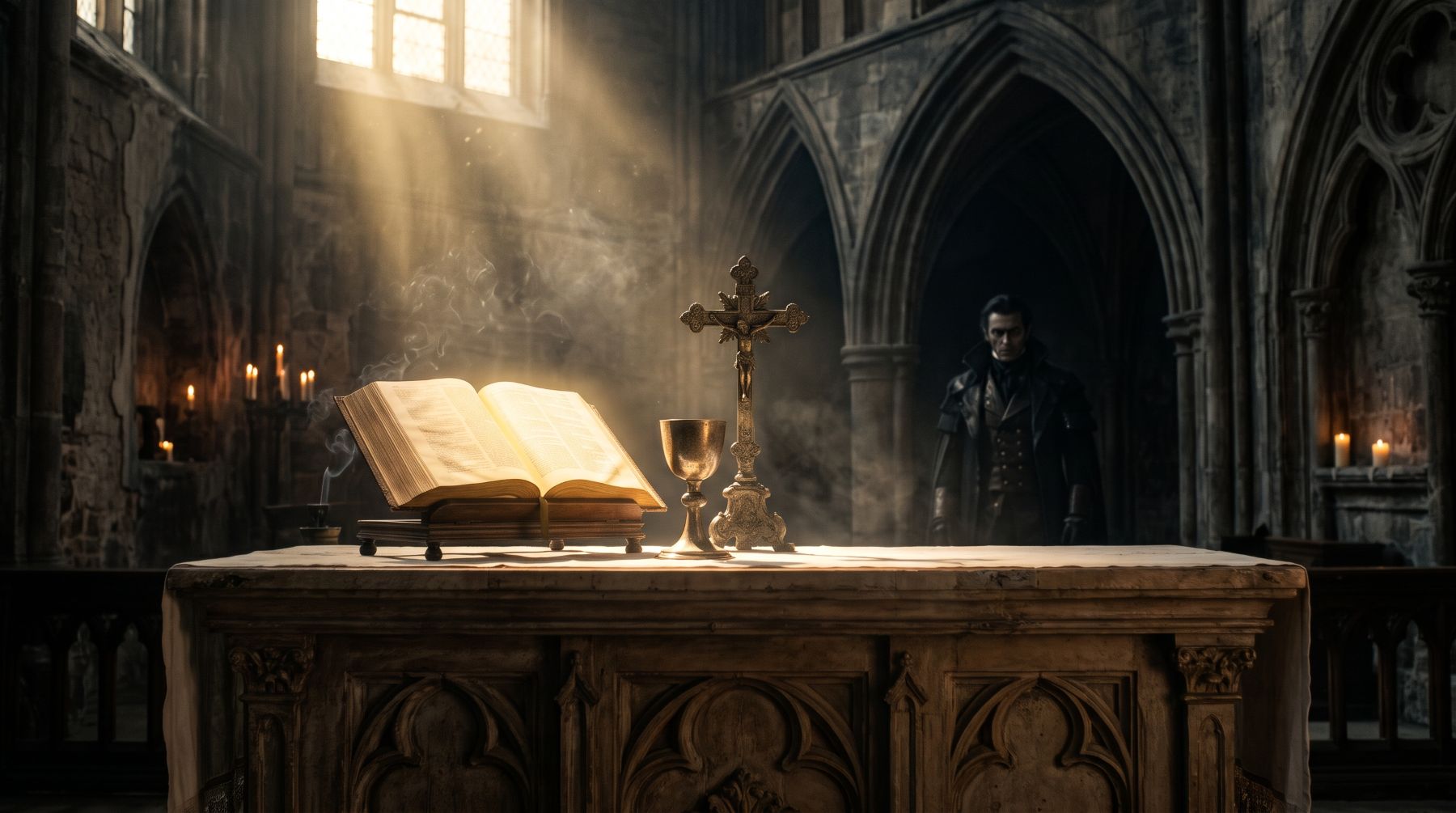
When you put vampires and the Bible side by side, it might seem at first glance like two subjects that have nothing in common. One belongs to the realm of gothic horror, midnight legends, and Hollywood fiction, while the other is the timeless, inspired Word of God. Yet when you look closely at traditional vampire lore, an unmistakable pattern emerges. What is vampirism, and how does this dark legend relate to the cross of Jesus Christ? At its core, vampirism is defined as a relentless, unnatural craving by an undead creature to drink the blood of the living in order to survive. When you examine the rules, symbols, and weaknesses found in classic vampire stories, you quickly realize that the legend is not random superstition—it is a direct, inverted reflection of biblical truth.
Modern entertainment has turned the vampire into a romanticized figure, captivating audiences through books, television shows, and blockbuster movies. Millions of people are fascinated by stories of creatures who cheat death, walk in the shadows, and crave blood to sustain an endless existence. Beneath that cultural obsession lies a deep spiritual reality: humanity has an innate longing for eternal life, and we instinctively recognize that life is tied to blood. Unfortunately, the world embraces the fictional counterfeit while ignoring the One whose blood was actually shed so mankind could live forever. Studying vampires and the Bible reveals how folklore borrows heavily from Christian theology—and twists every single element backward.
Vampires and The Bible: The Shedding of Blood and a Reversal of Roles
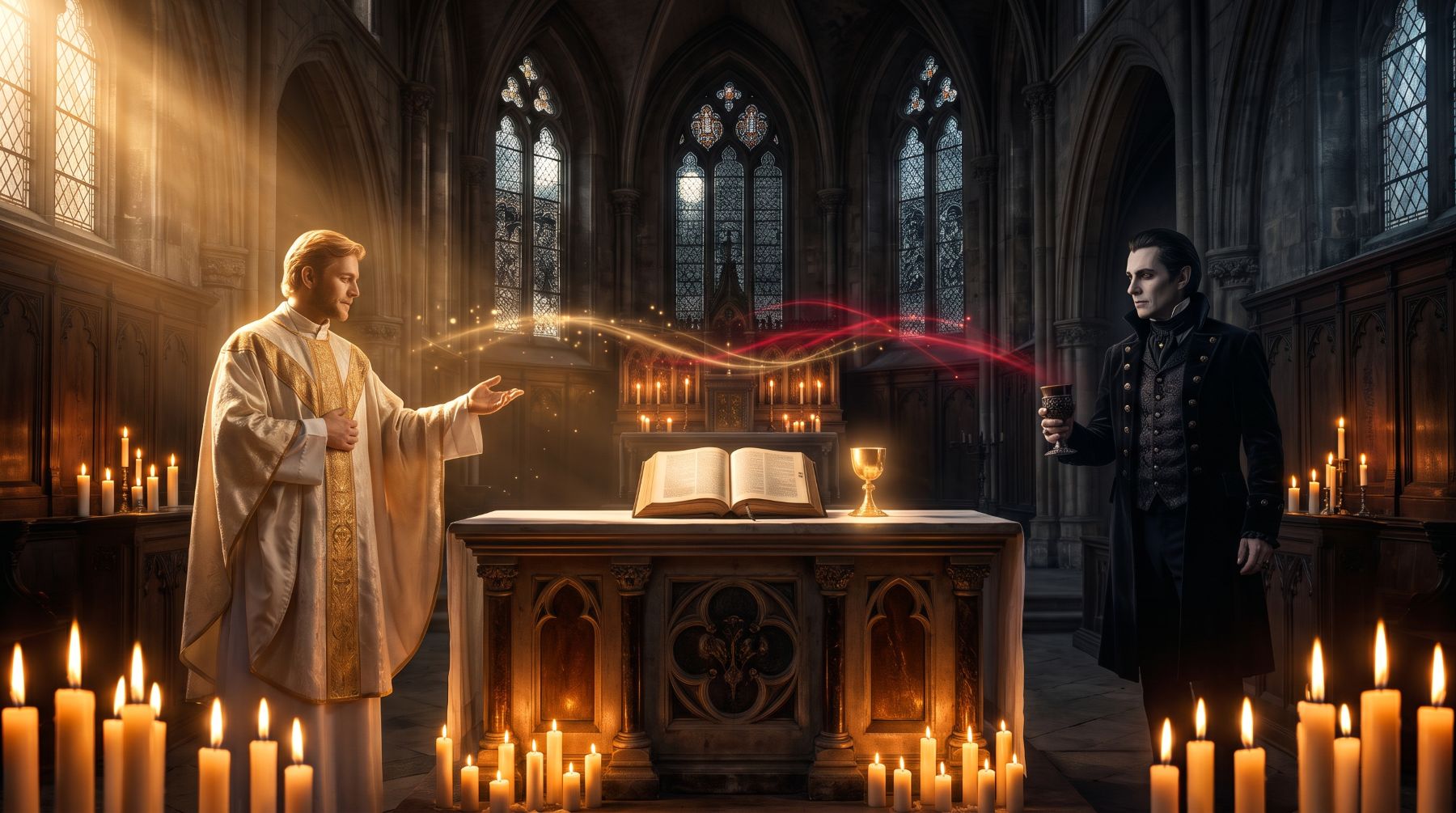
To understand the connection between vampire mythology and Scripture, you have to start with the central theme of both: blood. In the Bible, blood is never treated lightly. From Genesis to Revelation, God establishes that life resides in the blood and that sin carries a fatal penalty that only blood can satisfy. When Adam and Eve fell into sin in the Garden of Eden, humanity was placed under a spiritual curse that separated us from a holy God. Under the Old Testament law, God instituted a sacrificial system in which innocent animals had to be offered on the altar to temporarily cover the sins of the people. As Leviticus 17:11 declares, "For the life of the flesh is in the blood: and I have given it to you upon the altar to make an atonement for your souls: for it is the blood that maketh an atonement for the soul."
Those animal sacrifices pointed forward to a permanent, perfect sacrifice. Hebrews 9:22 reminds us that "almost all things are by the law purged with blood; and without shedding of blood is no remission." Because no fallen human being could pay the debt of sin for another, Jesus Christ—the spotless, eternal Son of God—willingly stepped into human history and went to the cross. At the Last Supper, holding up the cup, Jesus explained the exact purpose of His coming death in Matthew 26:28: "For this is my blood of the new testament, which is shed for many for the remission of sins." Jesus had to shed His own innocent blood so that cursed, sinful mankind could be pardoned and receive the free gift of eternal life. If a person believes and trusts in what Christ accomplished on that cross, their sins are washed away forever. If they reject that pardon, they remain in their sins and face eternal separation from God.
Now look at how vampire folklore takes that exact spiritual framework and turns it completely upside down. In classic Dracula-style legends, the roles of the innocent and the cursed are reversed. In Christianity, an innocent, eternal Savior willingly sheds His own blood so that cursed human beings can live eternally without being tormented in the fires of hell. In vampire lore, it is the evil, undead creature who is cursed, and it is innocent human beings whose blood must be violently spilled and consumed so the monster can continue existing in darkness without being tormented by his own insatiable hunger. Instead of giving His life to save others, the vampire steals life from others to preserve himself. When you examine vampires and the Bible through this lens, the vampire stands out as a dark parody of salvation—a creature trapped in a counterfeit immortality sustained by predation rather than grace.
The Wooden Stake vs. The Cross of Calvary
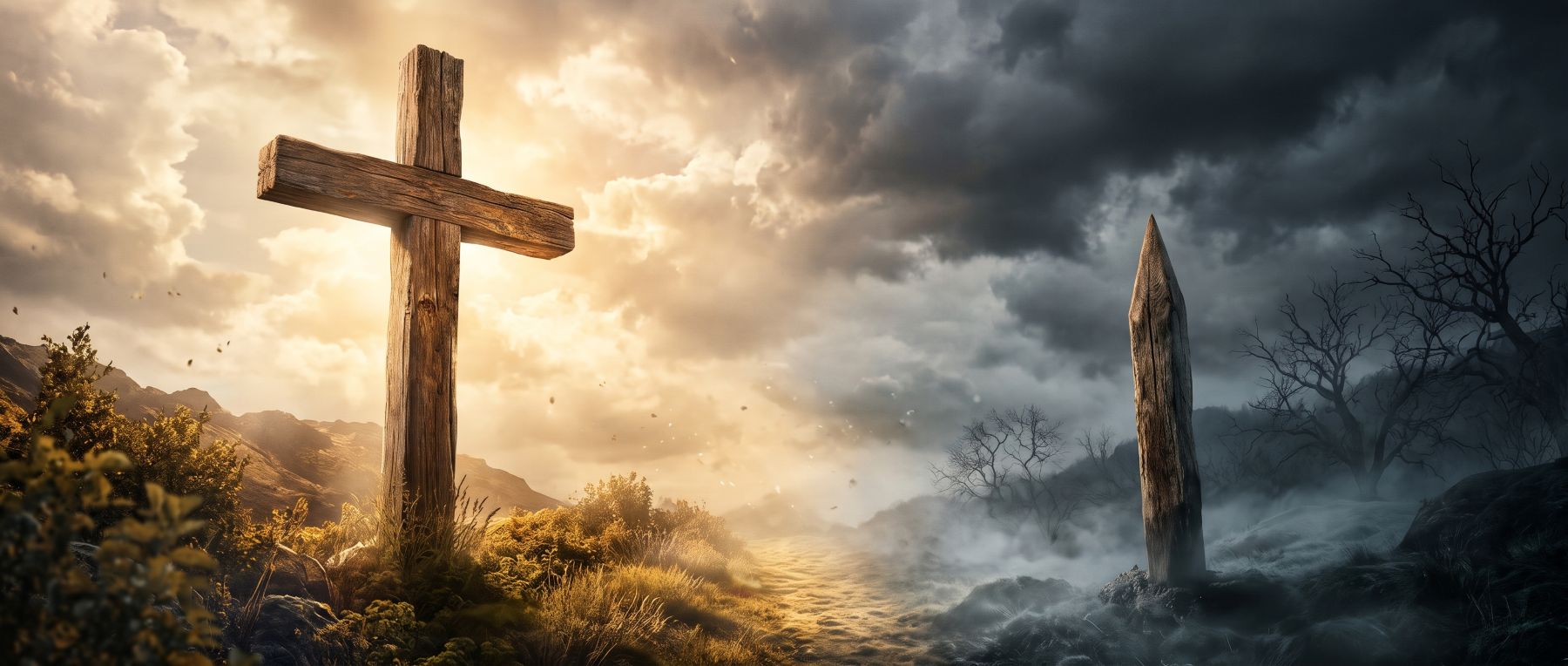
The parallels between vampire legends and Scripture go far beyond the theme of blood. In fact, the traditional vampire myth functions as a kind of anti-cross or antichrist, taking the instruments of Christ's victory and turning them into the monster's greatest dread. Consider the most famous weapon used to destroy a vampire in classic folklore: a sharp wooden stake driven straight through the heart. Why wood, and why must it be hammered into the creature's chest?
In the New Testament, the cross of Christ is repeatedly referred to as a tree or a piece of wood—an instrument of execution designed by Rome to inflict maximum shame and agony. Jesus Christ, the eternal Creator, allowed Himself to be nailed to that wooden cross. Iron spikes were driven through His hands and feet, pinning Him to the wood as He bore the weight of human sin. By dying on that wooden cross and rising from the dead, Jesus stripped Satan and death of their legal hold over humanity. As Colossians 2:14–15 explains, Christ blotted out the handwriting of ordinances that was against us, nailing it to His cross, and triumphed openly over principalities and powers.
In vampire folklore, it is precisely because Christ conquered evil on a piece of wood that a wooden stake becomes the ultimate weapon against an undead creature that feeds on human blood. Notice the mechanics of the legend: the wooden stake cannot simply be waved at the vampire; it has to be driven or hammered into the vampire's heart—much like a nail being driven into wood—to permanently destroy its power. Furthermore, in virtually every traditional vampire story, the mere sight of a Christian cross causes the creature to recoil in terror and agony. The wooden stake and the cross represent the exact same spiritual truth: evil cannot survive contact with the finished work of Calvary. Just as Jesus destroyed the power of sin and death on a wooden cross for all who look to Him for salvation, the wooden stake puts an end to the creature of darkness.
The Bat and the Dove: Winged Messengers in Conflict
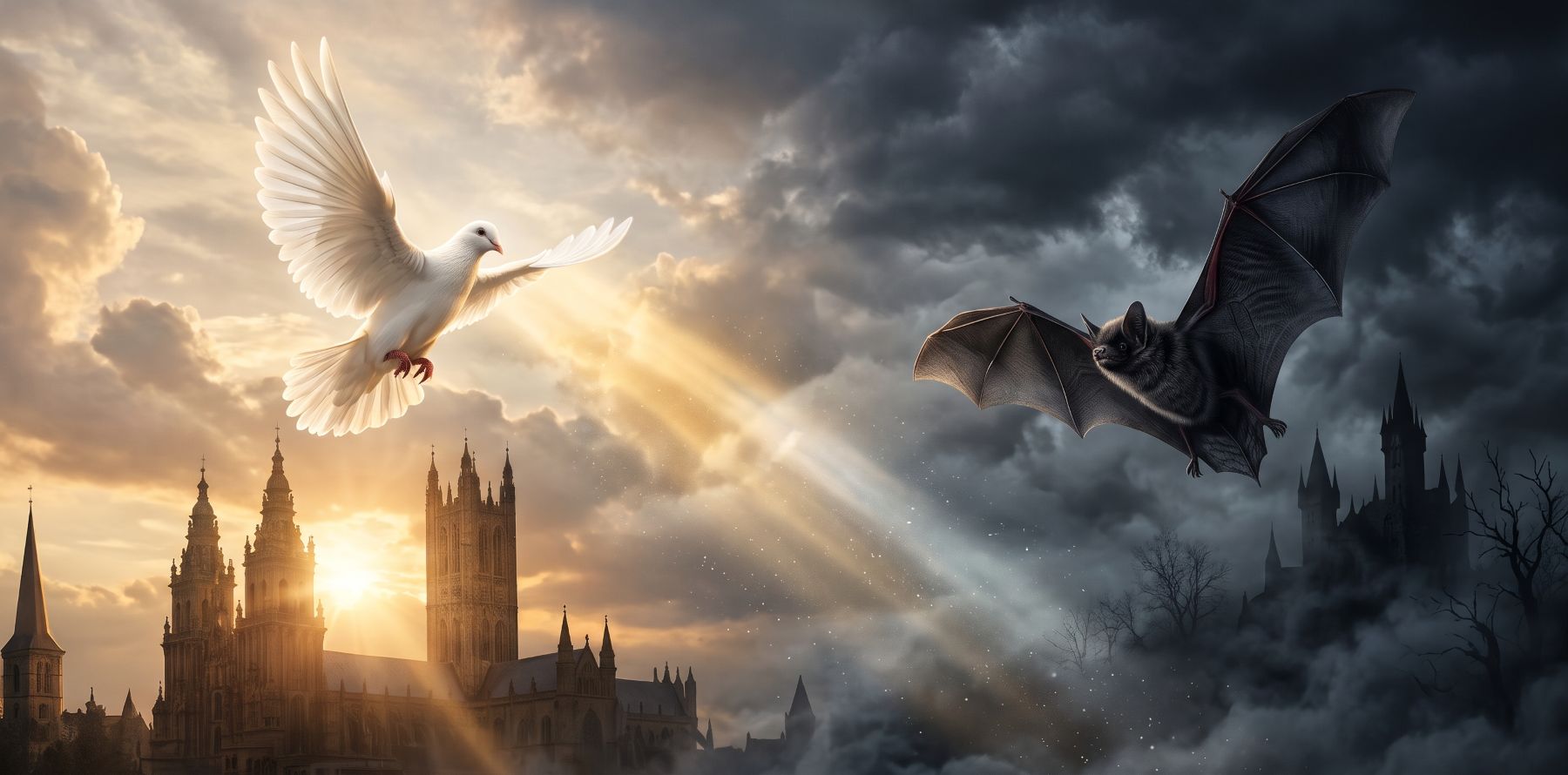
Another striking contrast between vampire mythology and Scripture involves the imagery of winged creatures and spiritual mission. According to traditional folklore, a vampire possesses the supernatural ability to transform into a bat so that it can silently travel great distances under the cover of night. Carried through the darkness on leathery wings, this creature flies out into the world to stalk, confront, and feed upon unsuspecting, innocent victims. The bat is a creature of caves, shadows, and nocturnal predation—an apt symbol for an evil being operating in the spiritual darkness of a fallen world.
When you turn to the Gospels, you find a dramatic spiritual parallel—and complete moral opposite—at the very beginning of Jesus' earthly ministry. In Luke 3:21–22, immediately after Jesus was baptized in the Jordan River, heaven opened and "the Holy Ghost descended in a bodily shape like a dove upon him, and a voice came from heaven, which said, Thou art my beloved Son; in thee I am well pleased." Here, the Spirit of God descends upon Christ in the form of a dove—a winged creature associated throughout Scripture with purity, peace, and innocence.
What happened immediately after that winged descent? Matthew 4:1 records: "Then was Jesus led up of the Spirit into the wilderness to be tempted of the devil." The Holy Spirit transported Jesus directly into the barren wilderness—not to prey upon the innocent, as the vampire does when carried into the world as a bat, but to confront Satan head-on, resist every temptation through the Word of God, and defeat the enemy of our souls. One winged form carries a predator into the world to destroy life; the other leads the Son of God into the wilderness to confront evil and win victory on behalf of mankind. Looking at these details side by side makes the parallels in vampires and the Bible truly remarkable.
Drinking Blood vs. The Lord's Supper and Sunlight vs. The Son
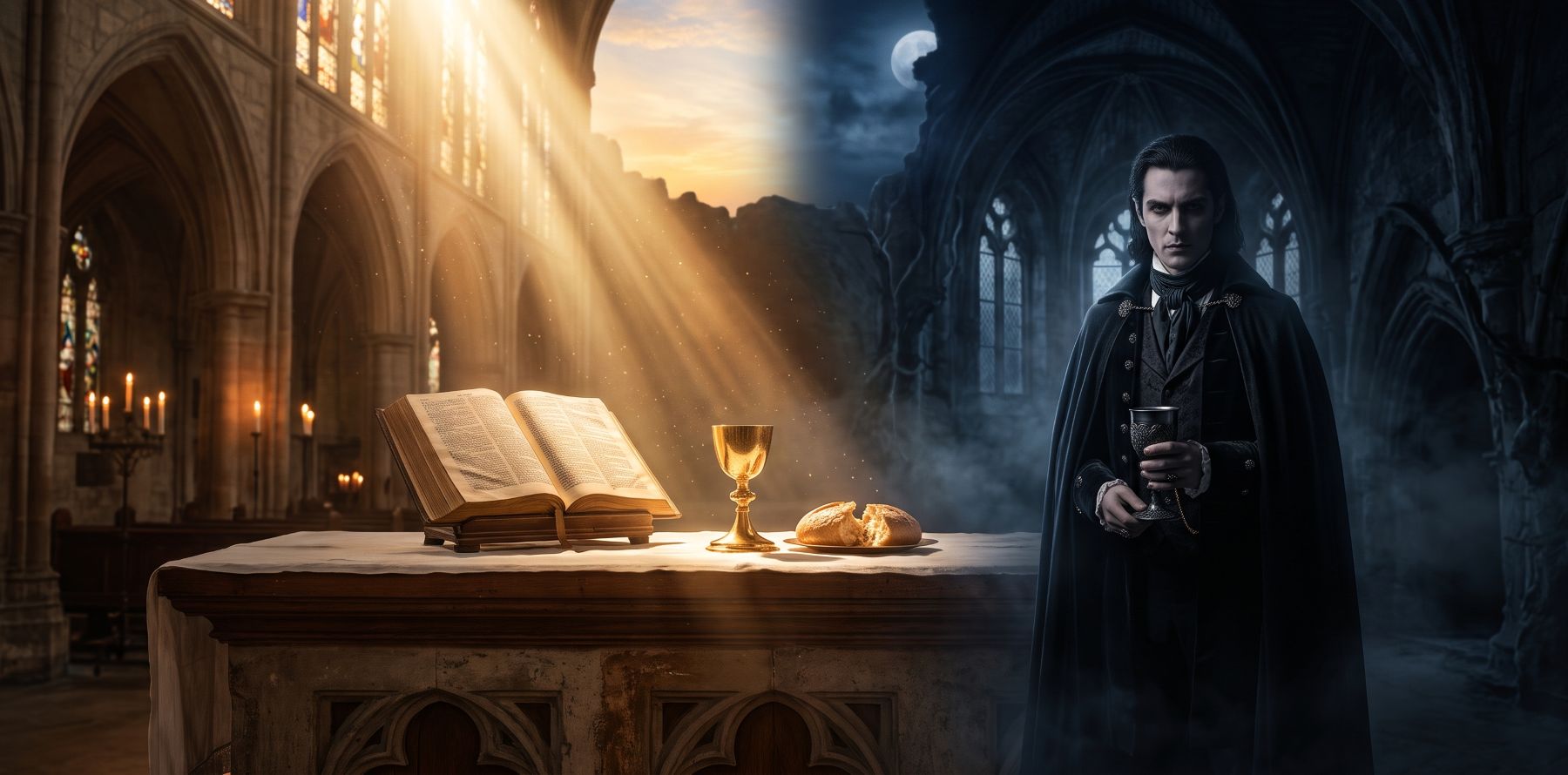
Two additional pillars of vampire lore—the compulsive drinking of blood and the fatal vulnerability to sunlight—also trace their roots directly back to core Christian doctrines. First, consider the act of drinking blood. In the Bible, God strictly forbade His people from consuming literal blood (Leviticus 17:10–14; Acts 15:29). Yet on the night before His crucifixion, Jesus instituted the ordinance of Communion—the Lord's Supper—giving believers a sacred, symbolic memorial of His sacrifice. In 1 Corinthians 11:25, the Apostle Paul recounts Christ's words: "After the same manner also he took the cup, when he had supped, saying, This cup is the new testament in my blood: this do ye, as oft as ye drink it, in remembrance of me." When Christians partake of the fruit of the vine at the Communion table, they are symbolically remembering the blood Christ willingly spilled to purchase their redemption. The vampire's literal, desperate consumption of human blood to stave off death is a grotesque mockery of the Lord's Supper—substituting physical violence for spiritual remembrance.
Second, consider what happens to a vampire when dawn breaks. In classic folklore, a vampire is strictly a creature of the night. It thrives in shadows, tombs, and midnight alleys, and it cannot remain outdoors when the sun rises. The moment direct sunlight touches the vampire, its power vanishes and the creature is utterly destroyed. Darkness has no defense against the rising sun; it can do nothing but flee or perish when the light arrives.
Scripture uses this exact imagery to describe Jesus Christ—the Son of God—and His relationship to a dark, fallen world. In John 8:12, Jesus declared, "I am the light of the world: he that followeth me shall not walk in darkness, but shall have the light of life." Just as the physical sun exposes and dispels the darkness of night, the Son of God exposes evil, breaks the grip of spiritual blindness, and drives back the works of darkness. As John 1:5 affirms, "And the light shineth in darkness; and the darkness comprehended it not." In vampires and the Bible, the rising sun that destroys the creature of the night mirrors the spiritual reality that evil cannot stand in the presence of Christ, the true Light of the World.
Vampires and The Bible: Are Vampires Actually Mentioned in Scripture?
After seeing so many vivid connections between vampire traditions and Christian theology, many readers naturally ask a direct question: are vampires ever mentioned by name in the Bible? The straightforward answer is no. You will not find the word "vampire" anywhere in the Old or New Testaments, because the vampire as we know it in books and movies is a product of human folklore that developed centuries after the biblical canon was closed.
However, the spiritual concepts behind those legends are thoroughly documented in Scripture. The Bible warns repeatedly about demonic forces, spiritual darkness, the occult, and the reality that Satan masquerades as an angel of light while seeking whom he may devour (1 Peter 5:8). Folklore often takes real biblical truths—the sacredness of blood, the power of the cross, the defeat of evil, and the eternal choice between light and darkness—and reshapes them into gothic fiction. Understanding the contrast between vampires and the Bible equips believers to look past Hollywood's fascination with the undead and point people back to the only real source of eternal life: the shed blood and empty tomb of Jesus Christ.
Additional Christian Study Resource:
For a helpful breakdown of how Christians should evaluate vampire myths and popular fiction through a biblical worldview, read What Does the Bible Say About Vampires? at GotQuestions.org.
Related Bible Studies on An Unseen World:


