The Bible and Reincarnation
The Ancient Origins of Rebirth
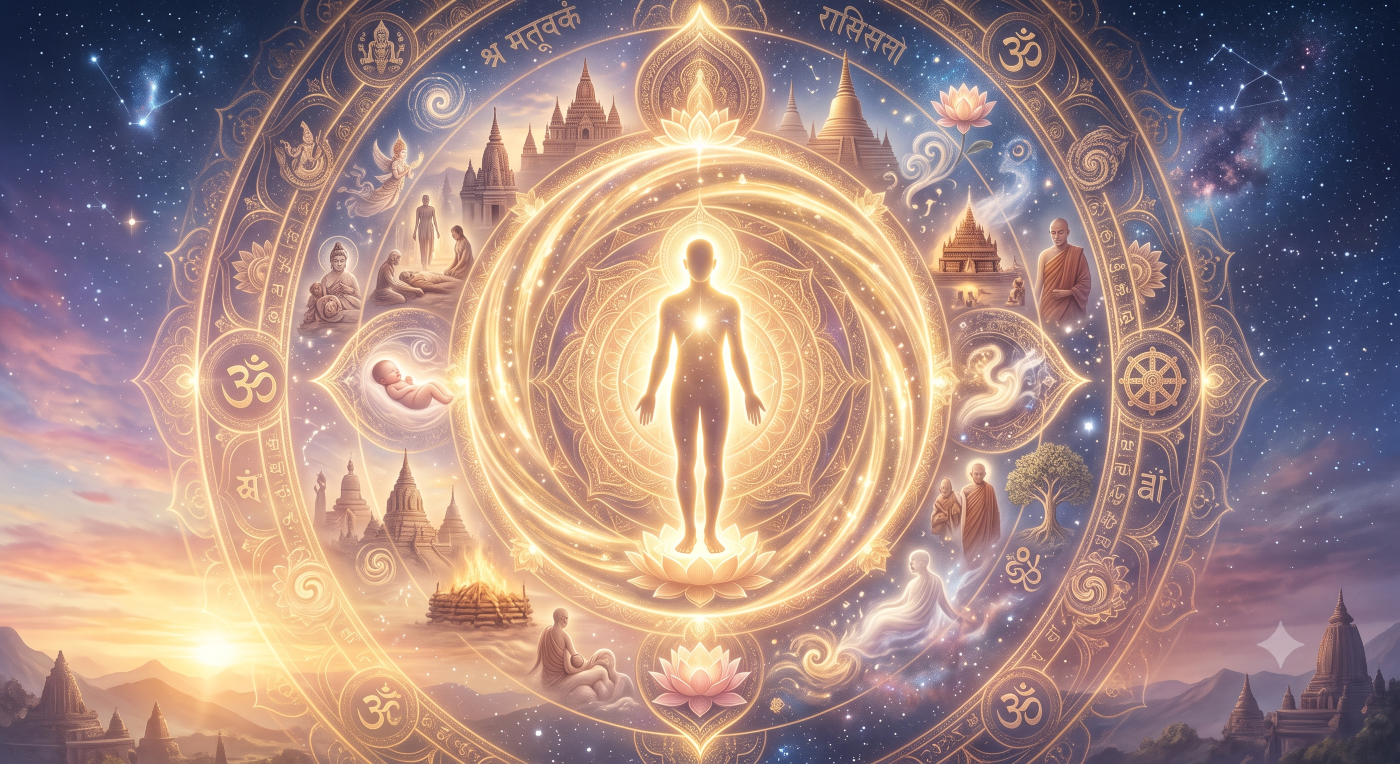
When exploring the Bible and reincarnation, many people begin by asking how ancient human history shaped our understanding of life after death. Throughout history, few questions have captivated the mind like what happens after our final breath. Among the various beliefs that have emerged across cultures, the concept of soul rebirth remains one of the most widely held worldwide. Before evaluating what Christian scripture teaches, it helps to understand where this idea originated and how it shaped global religious thought.
The idea that a human soul undergoes a repeating cycle of death and rebirth is foundational to Eastern spiritual traditions like Hinduism, Buddhism, and Jainism. In these traditions, the process is known as samsara—a continuous wheel of birth, death, and rebirth driven by the law of karma. Under this framework, every action in a person’s current life determines the nature, status, and physical form of their next life. A life lived with virtue and righteousness yields a higher rebirth, while a life marked by ignorance or malice leads to suffering or lower life forms. The ultimate objective in these eastern traditions is not to remain on the wheel forever, but to achieve liberation—known as moksha or nirvana—thereby breaking the continuous loop of physical earthly existence.
However, the concept was not exclusive to the Far East. Ancient Greek philosophers also explored similar ideas. Pythagoras taught a concept called metempsychosis, which posited the transmigration of the soul into new physical bodies after death. Later, Plato expanded on this idea in works like the Republic, suggesting that souls choose their next lives based on wisdom gained in previous existences. Over time, these philosophical ideas trickled into various Mediterranean cultures and esoteric sects.
As these diverse beliefs spread throughout the ancient Mediterranean world, early Jewish and Christian thinkers found themselves surrounded by competing worldviews regarding the fate of the human soul. This natural historical overlap leads many modern seekers to ask an important question: How do sacred Christian scriptures address these ancient concepts, and what light does Scripture shed on the topic?
What Does the Bible and Reincarnation Theology Reveal?
When evaluating the Bible and reincarnation, the starting point must be scripture's direct teachings regarding human destiny, life, death, and eternity. Rather than presenting human existence as a recurring loop, Biblical theology consistently frames human history and individual lives as linear journeys with a clear beginning, a purposeful middle, and a definitive end.
In Genesis, human creation is portrayed as a distinct, deliberate act of God. Man is created in the image of God (Imago Dei), given a unique personal identity, and placed on Earth for a specific purpose. Throughout the Old and New Testaments, an individual's life is presented as a unique opportunity to walk with God, make moral choices, and prepare for eternity. Scripture never depicts human beings as anonymous souls swapping temporary physical bodies across centuries.
Furthermore, Biblical anthropology emphasizes the profound unity of the human body and spirit. In Biblical thought, the physical body is not merely a disposable container or a temporary prison for the soul, but an integral part of who we are as human beings. When God redeems a human life, He does not just save an abstract spirit—He promises the ultimate restoration of the entire person, including a glorified physical body. This linear and embodied view of human life stands in direct contrast to the cyclic nature required by rebirth doctrines.
Hebrews 9:27: The Biblical Verdict on One Life
When studying the Bible and reincarnation, one specific verse stands out as the standard biblical argument against multiple earthly lives. Writing to early believers, the author of the Book of Hebrews delivers a concise, absolute statement regarding human mortality:
"And as it is appointed for men to die once, but after this the judgment..." — Hebrews 9:27 (NKJV)
This single verse presents three fundamental truths that directly contrast with the concept of soul transmigration:
- A Divine Appointment: Mortality is not a random or recurring mechanism. It is a sovereign appointment set by the Creator for every human life.
- The Principle of "Die Once": The text leaves no room for ambiguity or multiple attempts. Human beings do not experience a series of physical deaths across centuries; death occurs precisely once per individual.
- Immediate Account: Following that singular physical death, the very next spiritual event on the divine timeline is judgment—a formal evaluation before God—rather than a return to earth in another body to try again.
The surrounding context of Hebrews chapter 9 reinforces this truth by connecting human mortality directly to the sacrifice of Jesus Christ. The author explains that just as human beings die once, Christ was offered once to bear the sins of many. The singular nature of Christ’s sacrifice on the cross reflects and addresses the singular nature of human earthly existence.
Because every individual lives and dies only once, our choices, faith, and relationship with God in this present life carry eternal weight. Scripture encourages believers to treat every day as a gift, recognizing that today is the day of salvation and that our current earthly journey is our sole opportunity to embrace God's grace.
Pasages Misconstrued in The Bible and Reincarnation Arguments
Despite the clear overall narrative of Scripture, proponents of rebirth theories often point to a handful of specific Biblical passages, claiming they contain hidden evidence for multiple lives. Understanding these passages in their proper context clears up common misunderstandings and demonstrates the harmony of the Biblical text.
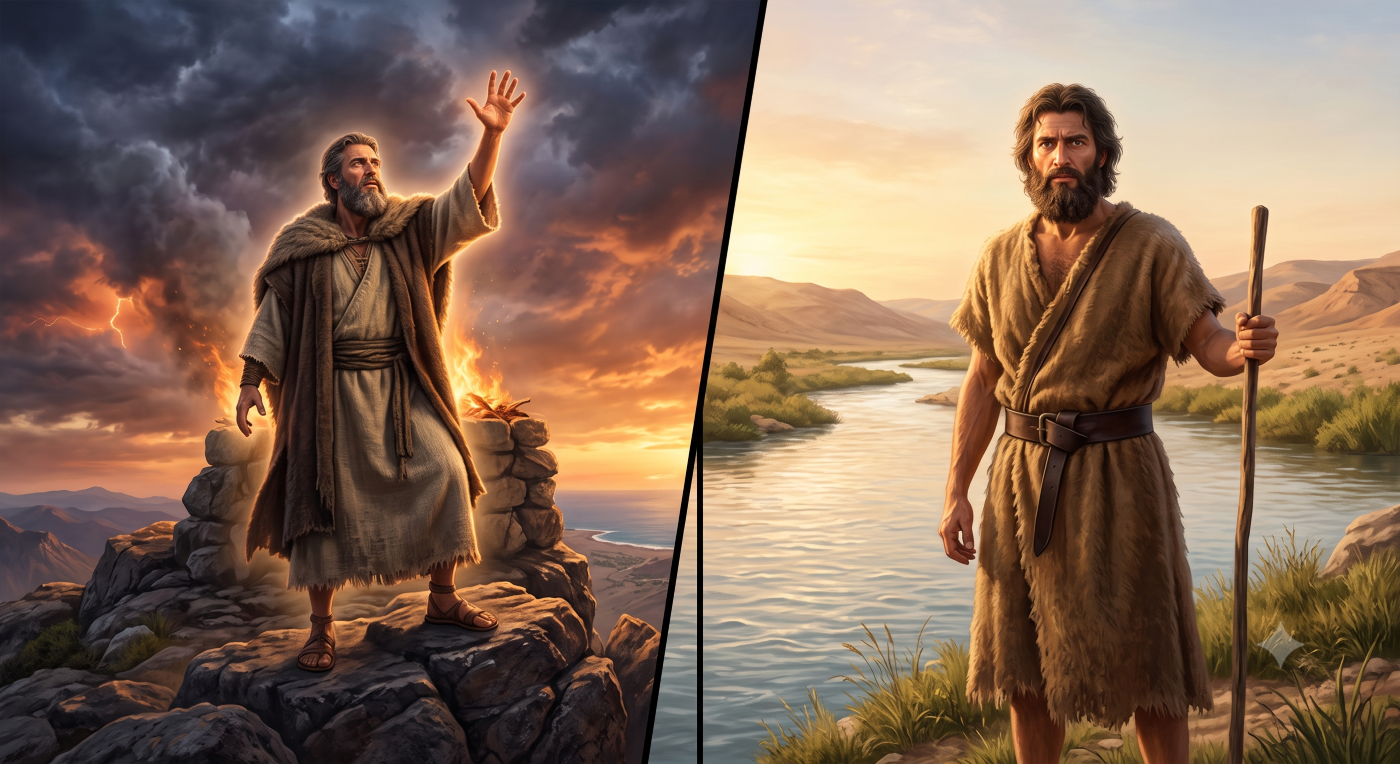
The most frequent argument centers on the relationship between Elijah the prophet and John the Baptist. In Malachi 4:5, the Old Testament prophesied that God would send "Elijah the prophet before the coming of the great and dreadful day of the Lord." Later, in the New Testament, Jesus made statements regarding John the Baptist that cause some readers to pause. In Matthew 11:14, Jesus declared, "And if you are willing to receive it, he is Elijah who is to come."
At first glance, some readers ask: Does this mean the soul of Elijah returned to Earth inside the body of John the Baptist?
A careful look at the whole of Scripture reveals a very different explanation:
- John's Own Words: When religious leaders directly asked John the Baptist in John 1:21, "Are you Elijah?", John plainly answered, "I am not."
- The Angelic Explanation: Before John was born, an angel announced his ministry to his father, Zacharias, in Luke 1:17, explaining that John would go before the Lord "in the spirit and power of Elijah."
The Biblical phrase "in the spirit and power of" refers to prophetic mantle, character, and mission—not physical or spiritual identity. Just as Elisha received a "double portion" of Elijah's spirit in the Old Testament without becoming Elijah, John the Baptist carried out a similar prophetic mission in the same power and bold spirit that Elijah had displayed centuries earlier. Furthermore, Elijah never actually died a physical death; 2 Kings 2 records that he was taken up to heaven in a whirlwind. Because Elijah had not died, he could not be reborn under any framework!
Born Again, The Man Born Blind, and Early Church History
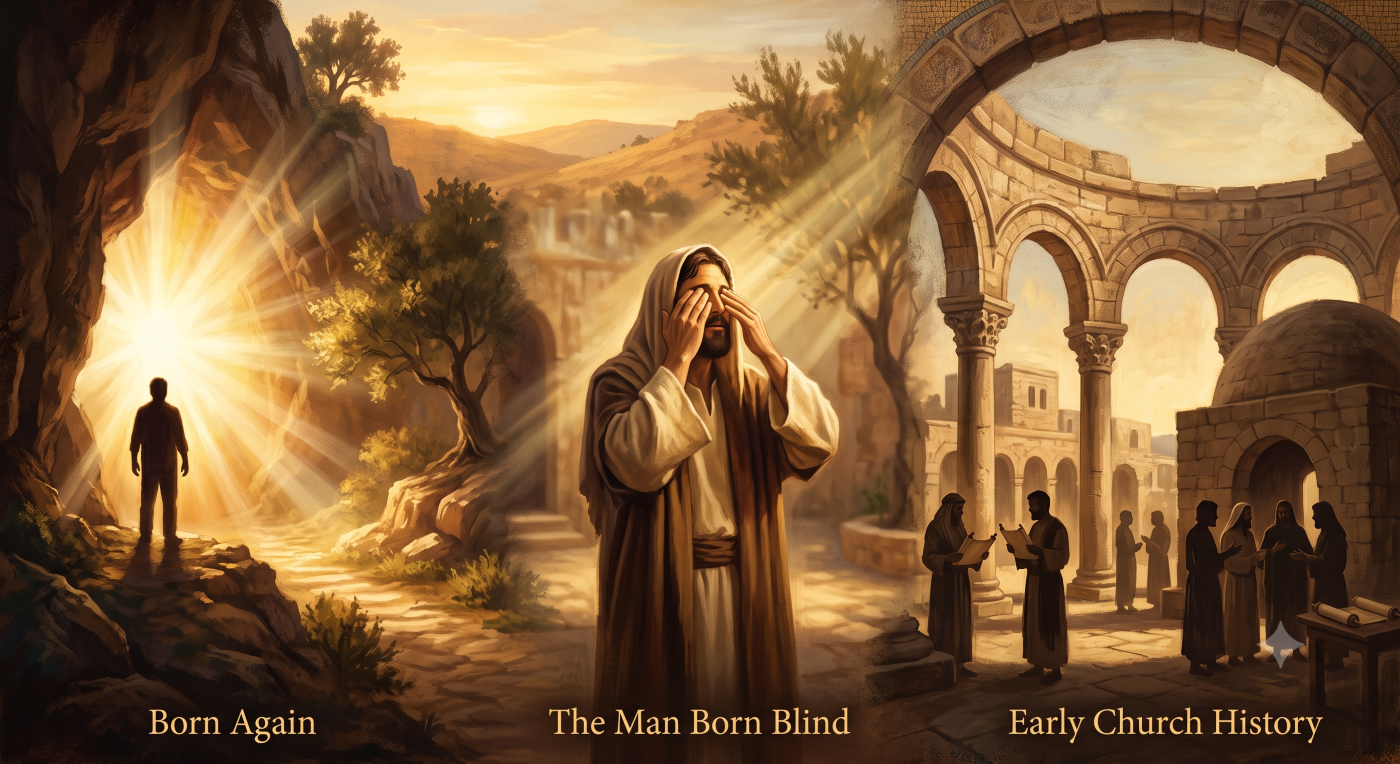
Two other passages are frequently cited by those attempting to merge scripture with cyclic rebirth traditions:
1. "Born Again" (John 3)
In John 3:3, Jesus famously tells Nicodemus, "Unless one is born again, he cannot see the kingdom of God." Nicodemus himself initially misunderstood Jesus, asking if a man could enter a second time into his mother's womb. Jesus quickly corrected this physical line of thought, clarifying in John 3:6: "That which is born of the flesh is flesh, and that which is born of the Spirit is spirit." Those researching the Bible and reincarnation often discover that Jesus was describing a spiritual regeneration brought about by the Holy Spirit—a transformation of the heart—not a physical rebirth into a new baby's body.
2. The Man Born Blind (John 9)
In John 9:2, Jesus’s disciples asked him regarding a blind man, "Rabbi, who sinned, this man or his parents, that he was born blind?" Some argue this implies the man could have sinned in a past life before being born. However, this question reflected a common contemporary Jewish debate about whether a child could sin inside the womb or if parents' sins brought immediate judgment. Jesus rejected the entire premise of their question, replying in verse 3 that neither was the cause, but rather "that the works of God should be revealed in him."
Was Reincarnation Removed from Scripture?
Another popular myth claims that early Church councils—specifically the Second Council of Constantinople in AD 553—edited the Bible and reincarnation references out of ancient texts. Historical records show this claim is unfounded. Thousands of ancient Biblical manuscripts dating back centuries before the Council of Constantinople match our modern translations. Early Christian writers like Irenaeus, Tertullian, and Origen explicitly wrote against transmigration theories, demonstrating that the early Church firmly rejected the concept from the very beginning based on apostolic teaching.
Does the Preexistence or Return of Jesus Prove Reincarnation?
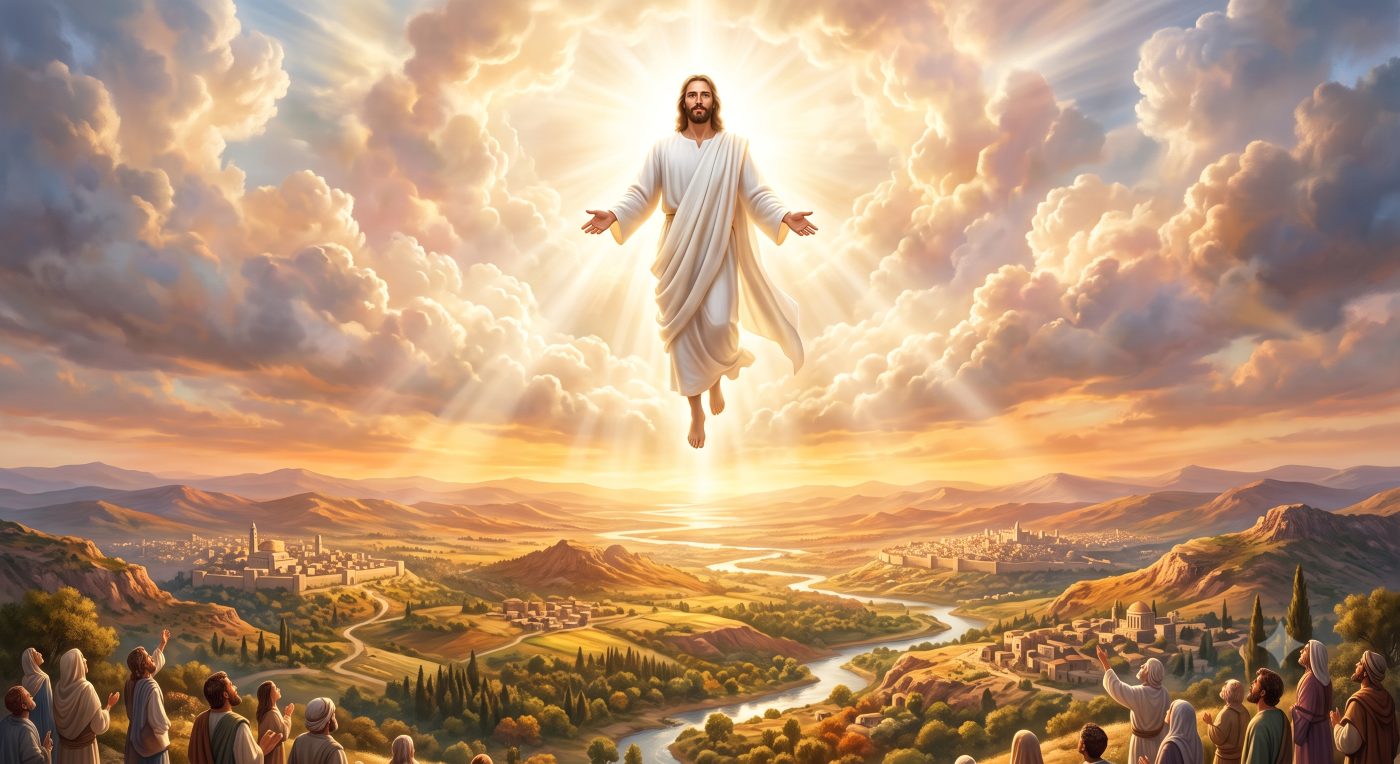
Another common argument used by proponents of soul transmigration involves the unique nature of Jesus Christ. Some argue that because Scripture teaches Jesus preexisted before His human birth, and because He promises to return a second time, this serves as biblical proof for reincarnation. However, examining the distinct theological definitions of Incarnation and Ascension reveals why Christ's journey is fundamentally different from cyclic rebirth.
1. Preexistence vs. Reincarnation (The Incarnation)
Scripture clearly teaches that Jesus, as the eternal Son of God and second Person of the Triune Godhead, existed before His earthly birth (John 1:1, John 8:58). However, His birth in Bethlehem was an Incarnation ("God manifest in the flesh"), not a reincarnation.
In reincarnation theories, a finite human soul migrates from one physical body into a completely new, separate physical body, forgetting its previous identities. In contrast, the Incarnation describes the eternal God taking on human nature a single time while remaining fully Himself. Jesus did not leave behind a former human body to enter a new baby's frame; rather, the eternal Word stepped into human history as a singular, unique person—Jesus of Nazareth.
2. The Second Coming vs. Re-Birth (The Ascension and Return)
The claim that Jesus's Second Coming implies reincarnation misinterprets how the Bible describes His return. Reincarnation requires a person to die, shed their old physical body, and be reborn as a helpless infant into a new family.
The New Testament describes the Second Coming in vastly different terms:
- No Second Death: Jesus died once on the cross, rose bodily from the dead, and lives forever. Romans 6:9 states, "Knowing that Christ, having been raised from the dead, dies no more. Death no longer has dominion over Him." Because He never dies a second time, He cannot be reincarnated.
- The Bodily Ascension and Return: When Jesus ascended into heaven, He did so in His resurrected physical body. Angels explicitly told the watching disciples in Acts 1:11, "This same Jesus, who was taken up from you into heaven, will so come in like manner as you saw Him go into heaven."
Jesus will not be born again as a baby to grow up under a new identity. He will return visibly in the same glorified, resurrected body He took up to heaven—descending in glory as the triumphant King.
Resurrection vs Reincarnation: The Hope of the Gospel
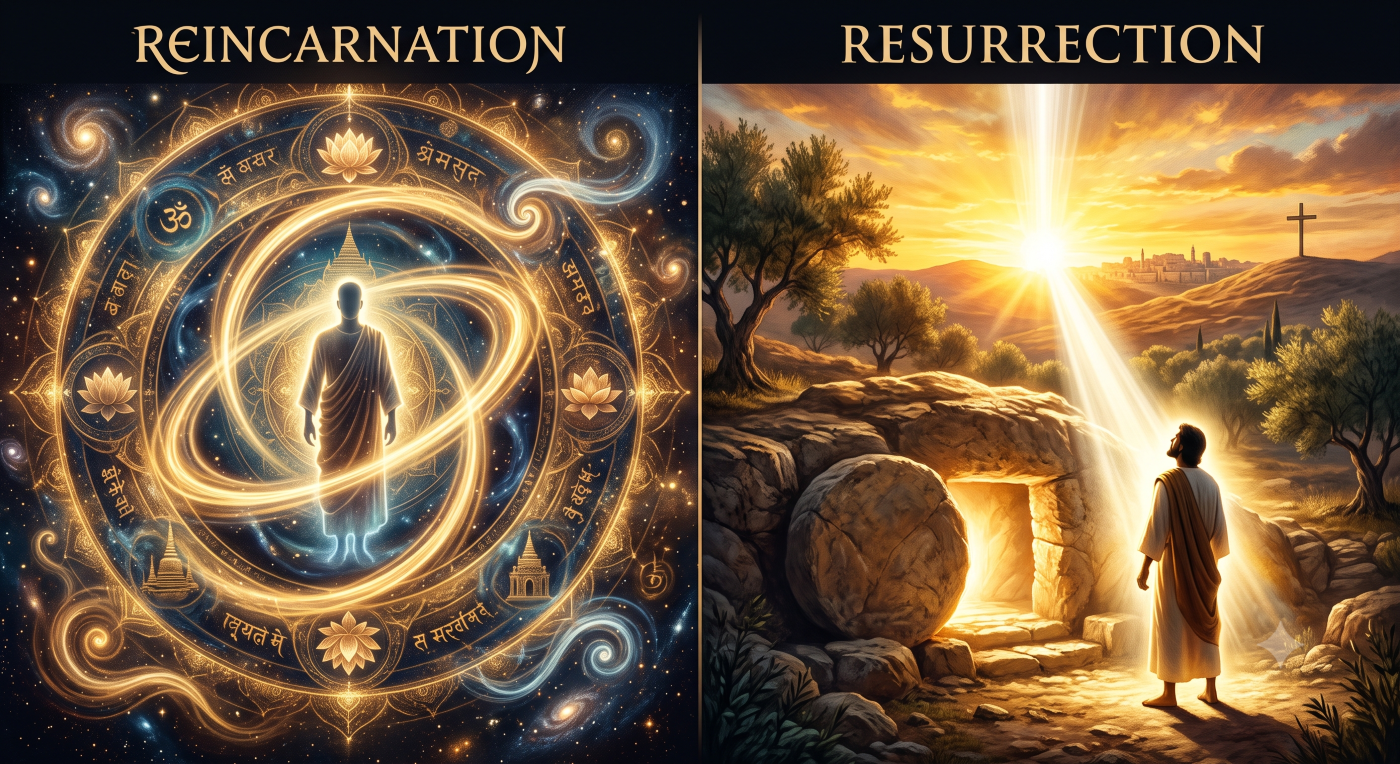
When exploring the Bible and reincarnation, the crucial distinction ultimately comes down to two completely different hopes: the cycle of rebirth versus the triumph of the Resurrection.
| Feature | Reincarnation Framework | Biblical Resurrection Framework |
|---|---|---|
| View of the Body | Disposable, temporary shell | Sacred, created, and ultimately glorified |
| Path to Salvation | Self-directed karma over many lifetimes | Grace through faith in Jesus Christ |
| Human History | Endless repeating cycle (samsara) | Linear progression with eternal purpose |
| Final Destiny | Dissolution or escape from physical form | Eternal life in a resurrected body |
The core message of the Christian Gospel is built entirely upon the physical resurrection of Jesus Christ from the dead. Jesus did not return as a different person, a new baby, or a different creature; He rose in the same body, transformed and glorified, bearing the marks of His love.
Because Christ rose, believers hold the firm promise of their own resurrection. The Bible promises that those who trust in Christ will not spend ages cycling through temporary bodies, striving to pay off moral debts. Instead, they receive immediate forgiveness and eternal life through God's grace.
Embracing the Promise of Eternal Life
When we compare worldly philosophies with the light of God's Word, the distinction becomes wonderfully clear. The Biblical message does not leave us trapped on an endless wheel of self-effort or uncertainty across multiple lifetimes. Instead, Scripture offers a message of profound value, purpose, and hope for the single life you are living right now.
As you reflect on the Bible and reincarnation, remember that God created you uniquely, loves you personally, and offers salvation as a free gift through Jesus Christ. Your life is not an accident, nor is it merely one chapter in a series of forgotten past lives. You have one precious life to know God, experience His love, and live out His purpose.
By placing your trust in Christ, you can rest in the absolute assurance that your future is secure—not in a cycle of endless rebirths, but in the glorious promise of eternal life and resurrection in the presence of God.
For further reading on how Christian scholars address common questions about past lives, physical death, and biblical resurrection, visit GotQuestions.org: What does the Bible say about reincarnation?
Related Biblical & Spiritual Studies
If you found this exploration of Scripture insightful, consider taking a deeper dive into these related topics on our site:
- Do Miracles Produce Faith? — Explore whether seeing supernatural signs truly brings about genuine, lasting faith, or if God's Word points to a deeper foundation.
- The Dangers Of Channeling Spirits — Examine what Scripture teaches regarding mediumship, spirit communication, and the spiritual risks behind channeling entities.
- What Is Heaven Like? — Discover what the Bible actually reveals about our ultimate home, the believer's future, and eternal life with God.
- Nostradamus Vs. Bible Prophecy — Compare the cryptic predictions of Nostradamus with the specific, verified track record of Biblical prophecy.


