Biblical Ethics of Cloning: Dangers, Science, and the Soul ine
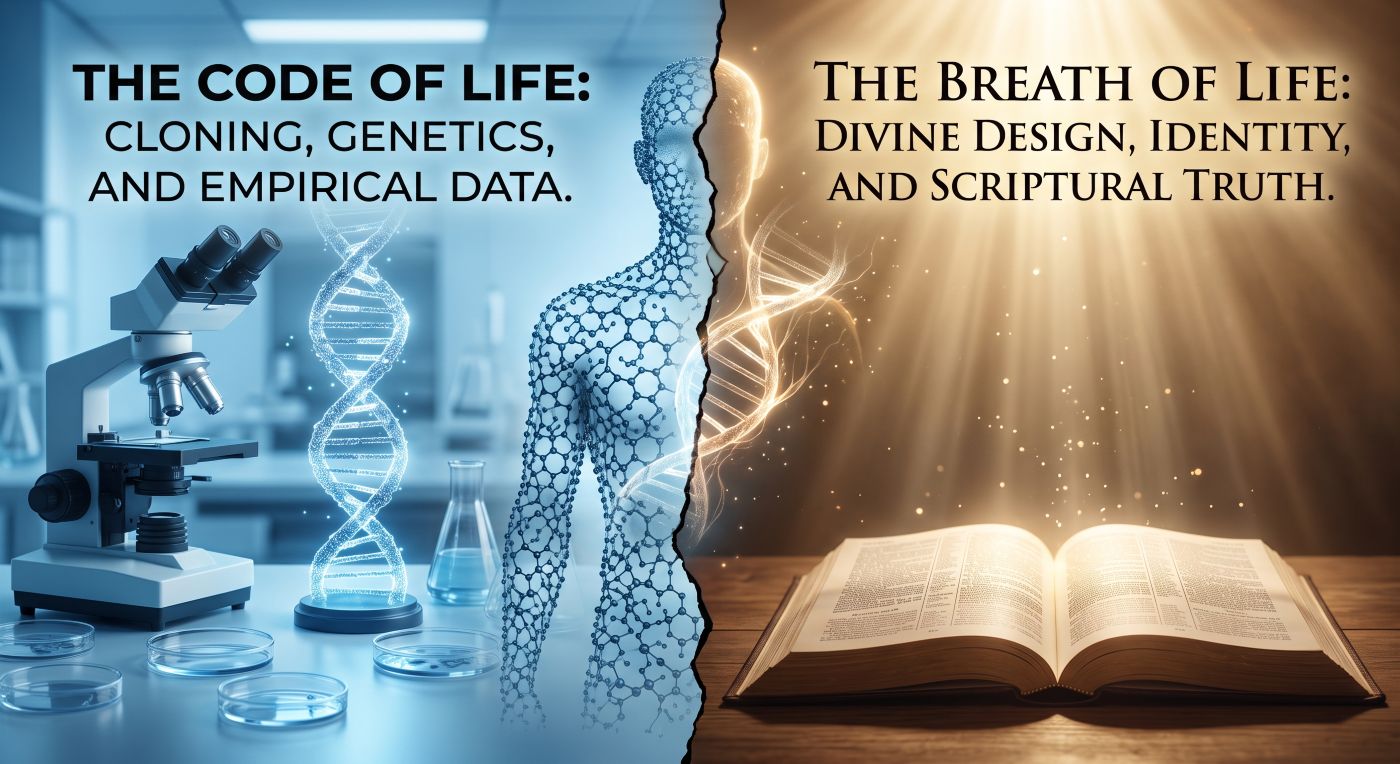
Your When we examine the modern movement toward genetic replication, we inevitably confront the biblical-ethics-of-cloning. To fully understand the controversy surrounding this technology, imagine a scenario where scientists extract DNA from an individual to cultivate, develop, and grow an exact genetic copy. The immediate temptation for secular humanity is to view this as a path toward a false sense of physical immortality—a belief that if one succumbs to disease, trauma, or aging, a replacement body could simply be grown. Yet, this ambition forces us to ask critical spiritual questions: Does a replicated human or animal possess a soul or a spirit, and are we stepping outside the boundaries established by God? By exploring the biblical-ethics-of-cloning, believers can evaluate the profound moral, ethical, and spiritual dangers of attempting to play God in the laboratory.
Defining Cloning: Somatic Cell Nuclear Transfer and Scientific Boundaries
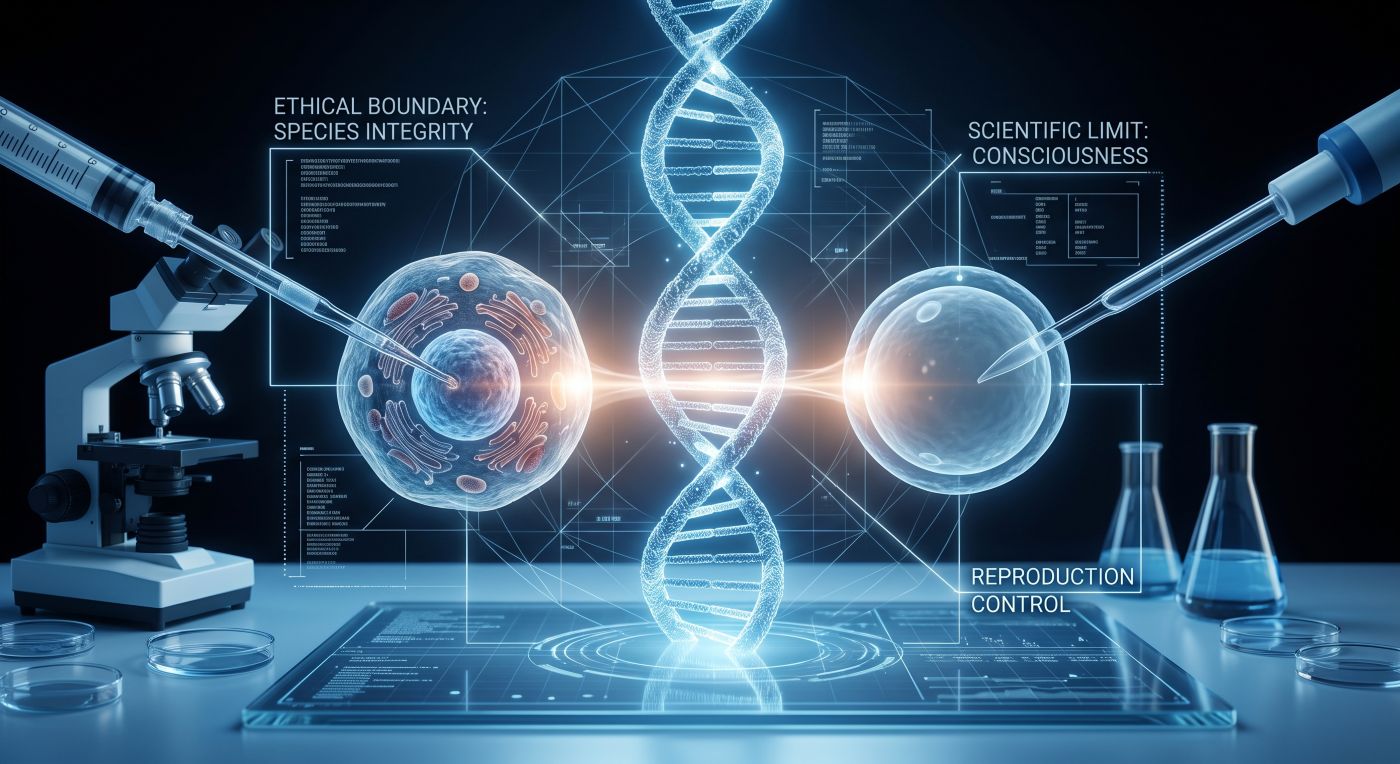
To address the biblical-ethics-of-cloning, we must first clarify what scientific cloning actually entails. In biological terms, cloning refers to the creation of a organism that is an exact genetic replica of another. The most common method used in advanced laboratories is Somatic Cell Nuclear Transfer (SCNT). In this process, scientists take an unfertilized egg cell, remove its nucleus (which contains its original genetic information), and replace it with the nucleus of a donor somatic cell—such as a skin or muscular cell. An electrical current or chemical trigger is then applied to stimulate cell division, creating an embryo with identical DNA to the donor.
While agricultural and therapeutic biotechnology advocate for these techniques to preserve livestock strains or generate donor tissues, applying this process to living organisms raises massive ethical dilemmas. When science moves from observed biology into the synthetic creation of duplicate life, it transitions out of pure research and enters the realm of moral accountability.
Scientific Milestones: What Has Mankind Actually Accomplished in Cloning?
While pop culture often frames cloning as futuristic fantasy, science has quietly made tremendous strides in genetic replication over the last several decades. What began in laboratories as simple cellular manipulation has expanded into livestock production, commercial pet duplication, and embryonic experimentation:
Key Milestones in Mammalian Cloning
- 1996 - Dolly the Sheep: First mammal cloned from an adult somatic cell (1 success out of 277 attempts).
- 2000s - Livestock & Pet Cloning: Cloning becomes commercialized for cattle, horses, and domestic pets.
- 2013-2014 - Human Embryonic SCNT: Successful creation of cloned human embryos for stem cell research.
- 2018 - Primate Cloning: First live births of cloned non-human primates (macaques) using adult cell nuclear transfer.
These scientific achievements reveal how close humanity has pushed toward the boundaries of replicating complex biological life. Yet, across all these milestones, science only operates with pre-existing biological materials—taking genetic code and egg cells that God created and re-assembling them. Man can recombine DNA, but he cannot speak life into existence out of nothing (ex nihilo).
The Tower of Babel and the Biblical Ethics of Cloning
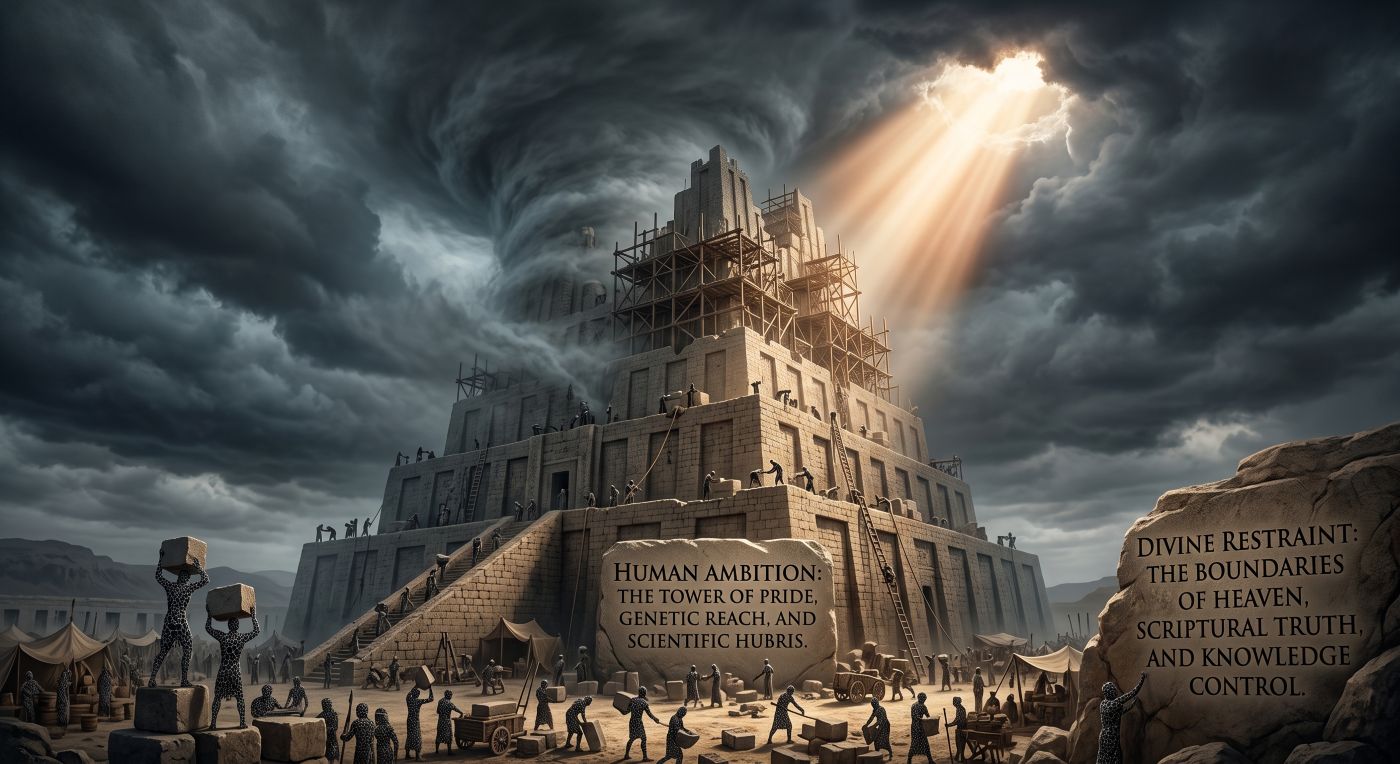
The modern drive to replicate life mirrors one of the earliest warnings recorded in Scripture. In Genesis 11:1–9, humanity gathered on the plain of Shinar with a unified purpose that excluded God:
"And they said, 'Come, let us build ourselves a city, and a tower whose top is in the heavens; let us make a name for ourselves, lest we be scattered abroad over the face of the whole earth.' But the Lord came down to see the city and the tower which the sons of men had built. And the Lord said, 'Indeed the people are one and they all have one language, and this is what they begin to do; now nothing that they propose to do will be withheld from them.'" (Genesis 11:4–6)
This historical passage reveals a profound truth about human nature: when men unite in technical ambition without divine submission, their unchecked potential leads directly to transgression. Verse 6 notes that "nothing that they propose to do will be withheld from them" if left alone long enough. Unless God directly intervenes or sets boundaries, mankind will relentlessly pursue whatever technological feats are physically possible—including the full duplication of living creatures.
The biblical-ethics-of-cloning reminds us that just because human ingenuity can accomplish something through collective research does not mean it should be done. The builders of Babel sought self-glorification and self-preservation apart from God; similarly, the push toward human duplication is driven by a desire to master life and death independently of the Creator.
| Aspect | Secular / Scientific | Biblical View |
|---|---|---|
| Life Origin | Biological assembly | Divine creation |
| Purpose | Biological continuation | Eternal fellowship |
| Human Identity | Genetic code | Imago Dei (God's image) |
| Authority | Human capability | Divine sovereignty |
Exploring the Biblical Ethics of Cloning and the Eternal Soul
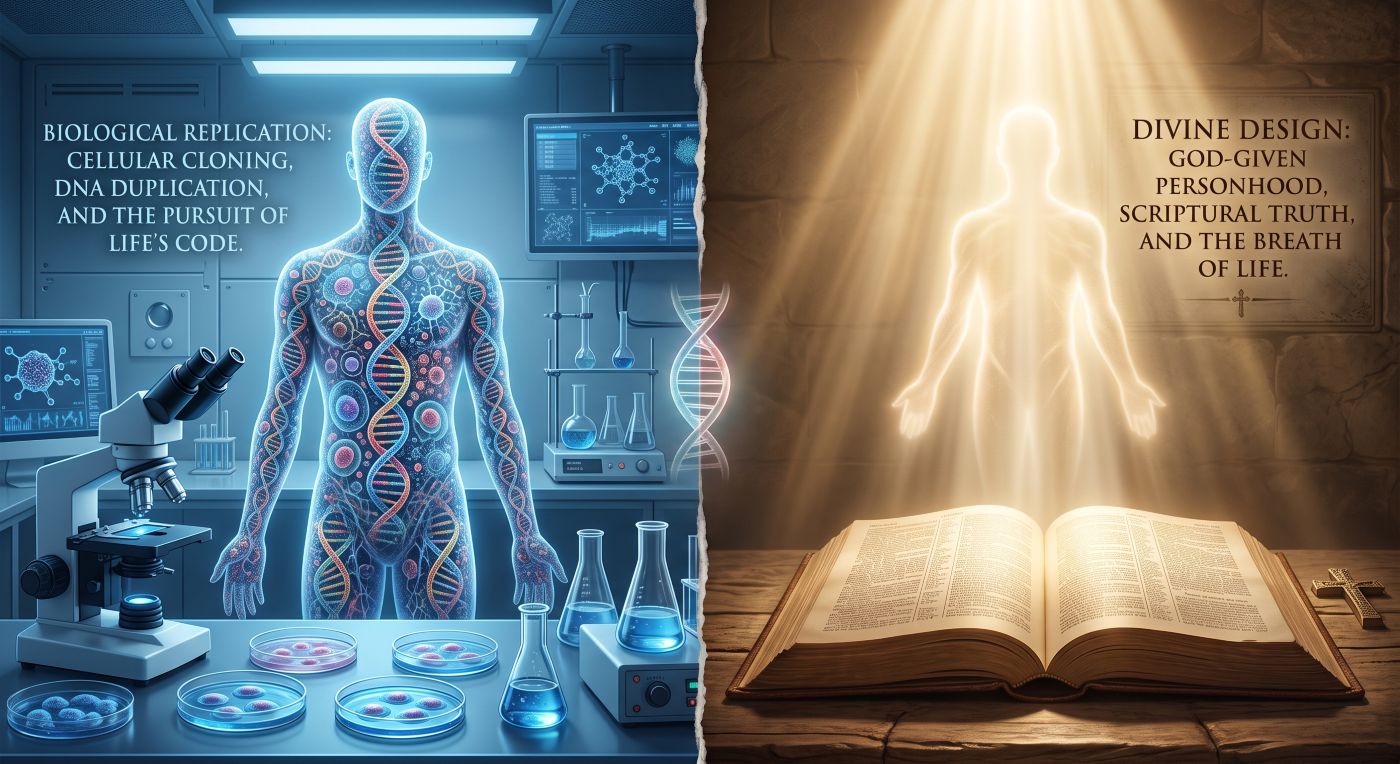
A fundamental question within the biblical-ethics-of-cloning involves the spiritual constitution of a cloned organism. To answer whether a cloned creature has a soul or spirit, we must examine how Scripture distinguishes animal life from human life.
In the Biblical text, animals are created with a physical life-force and emotional capacity, referred to in Hebrew as a nephesh (living soul). Ecclesiastes 3:21 acknowledges a distinction in spiritual destination:
"Who knows the spirit of the son of man, which goes upward, and the spirit of the animal, which goes down to the earth?"
Animals possess a soul in the sense of conscious awareness, instincts, and personal disposition, but they do not possess the divine breath (neshamah) that imparts an eternal spirit meant for moral accountability and direct communion with God. Mankind alone was created in the Imago Dei (the image of God):
"And the Lord God formed man of the dust of the ground, and breathed into his nostrils the breath of life; and man became a living being." (Genesis 2:7)
Human beings are triune or dual in nature (consisting of body, soul, and spirit). The soul (psyche) encompasses the mind, will, and emotions, while the spirit (pneuma) is the spiritual dimension that interacts with the Holy Spirit.
If scientists duplicate the physical body of a human or animal, what happens to the spiritual aspect? Only God can impart the breath of life. A cloned animal would retain biological functions and animal instincts, but its creation bypasses the natural order designed by God. In the case of a replicated human, if a live birth were ever permitted to occur, any spiritual life present would exist solely because God allowed it—not because human scientists forced His hand. However, attempting to manufacture human life artificially strips away the sacredness of God's direct design, treating an individual as a product rather than a unique soul made for His glory.
The Sanctity of Life: Cloning, Abortion, and Devaluing the Imago Dei
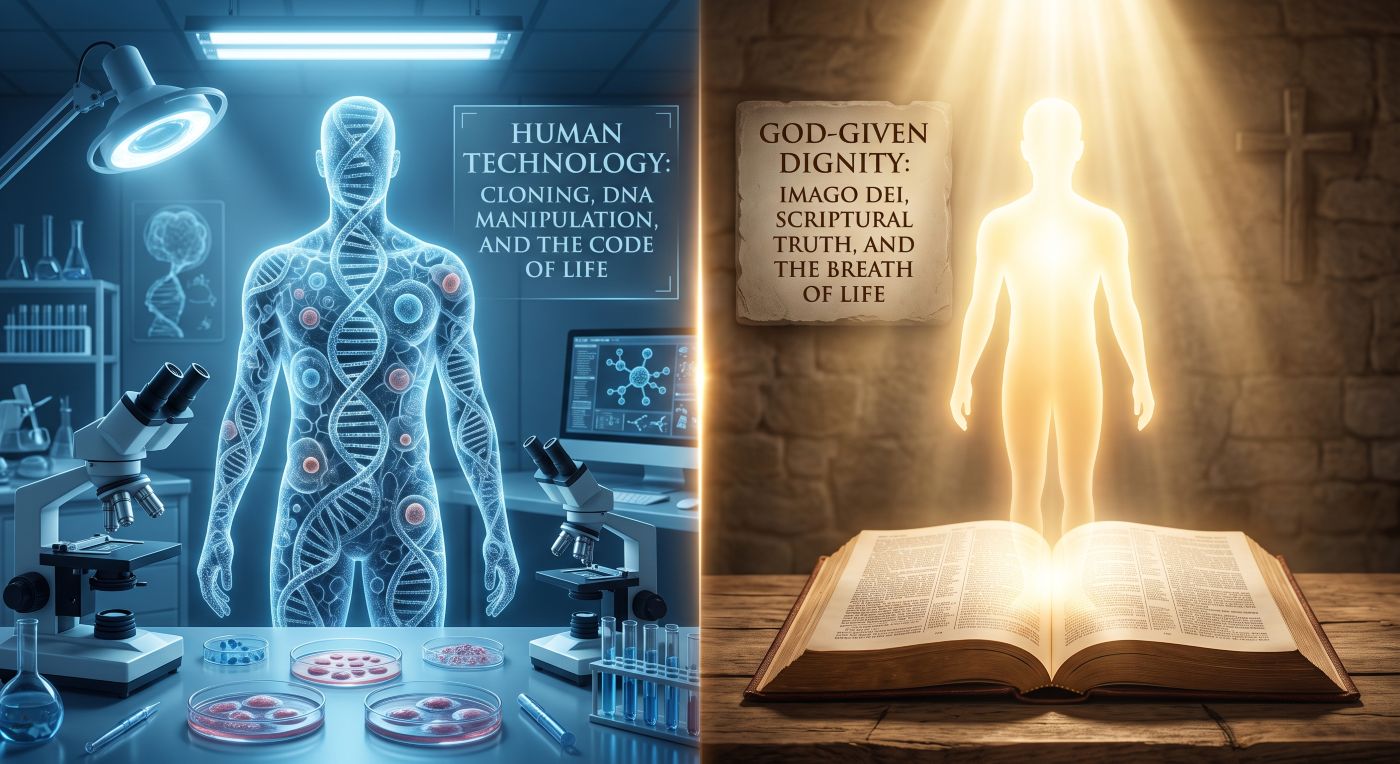
The moral crisis surrounding human cloning cannot be isolated from the broader societal devaluation of human life—most visibly seen in the modern issue of abortion. In both arenas, secular governments and bioethical institutions treat human fetuses and early-stage embryos as something less than human. When human life is reduced to tissue, cell clusters, or scientific inventory, society systematically rejects the fundamental truth that every human being is created in the Imago Dei (the Image of God).
In the case of therapeutic cloning, embryos are intentionally created in laboratories only to be destroyed and harvested for stem cells. This mirrors the logic behind abortion: the belief that a human life's value is conditional, determined only by its convenience, developmental stage, or usefulness to others. Yet Scripture explicitly denies that human worth is dependent on developmental age or physical independence:
"For You formed my inward parts; You covered me in my mother’s womb. I will praise You, for I am fearfully and wonderfully made; marvelous are Your works, and that my soul knows very well." (Psalm 139:13–14)
"Before I formed you in the womb I knew you; Before you were born I sanctified you..." (Jeremiah 1:5)
When state policies or scientific consensus determine that an unborn child or a cloned embryo lacks full humanity, they usurp God's authority. The biblical-ethics-of-cloning demands that we recognize the sanctity of life from its very inception. Whether in the womb or in a petri dish, treating image-bearers of God as disposable biological commodities opens a dangerous door to state-sanctioned utilitarianism—where the weak and vulnerable are sacrificed for the desires of the powerful.
Hollywood, Pop Culture, and the Dangers of Playing God
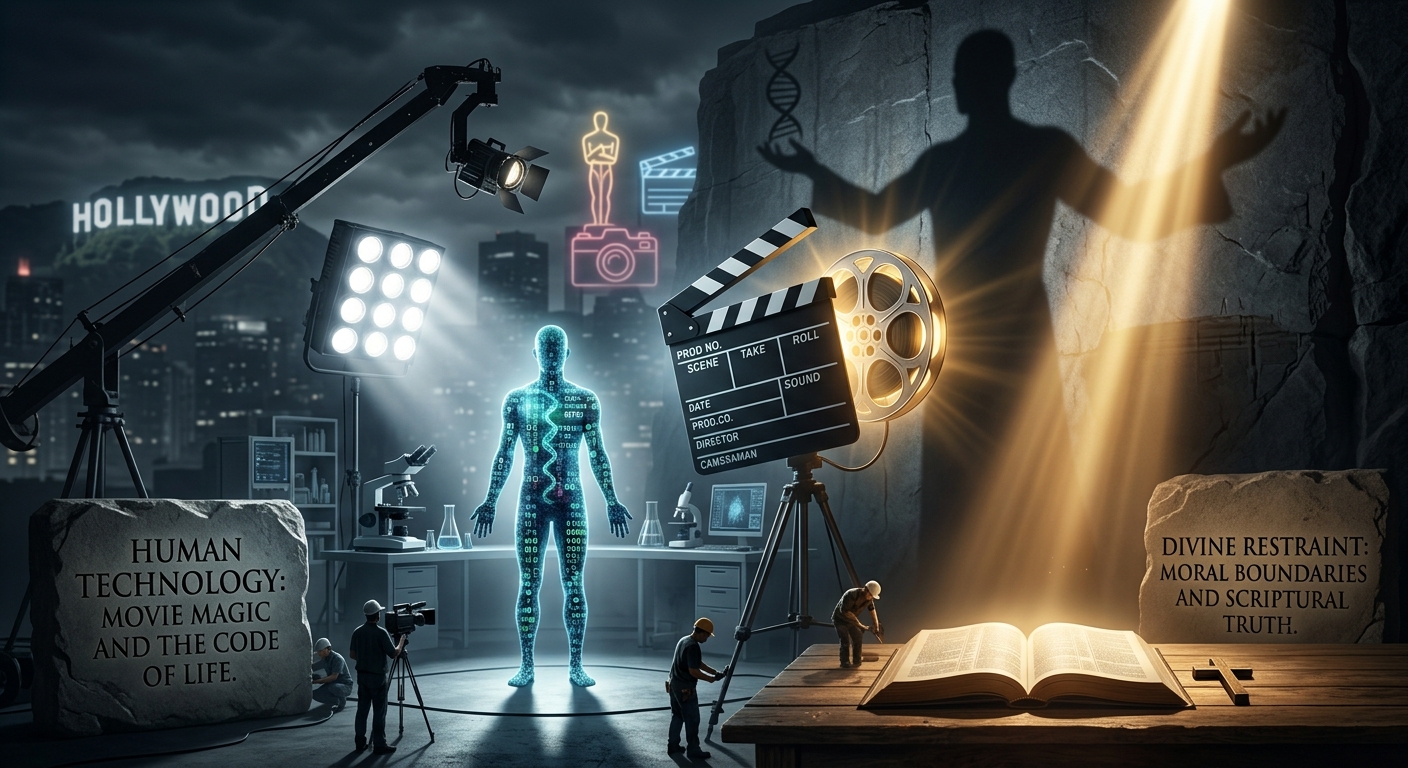
For decades, popular culture and cinema have grappled with the moral fallout of bio-engineering. Blockbuster movies have repeatedly used genetic replication as a central plot device, illustrating the inevitable chaos that ensues when humanity attempts to master nature:
- Jurassic Park (1993): Demonstrates the disastrous consequences of resurrecting extinct animal species for entertainment and profit, highlighting how hubris blinds scientists to unpredictable biological risks.
- The Island (2005): Explores the dark ethics of growing human clones in isolated facilities solely to serve as organ harvesting donors for the wealthy.
- Oblivion (2013) & The 6th Day (2000): Depict scenarios where human duplication strips individuals of their uniqueness, identity, and personal dignity, reducing human beings to expendable assets.
These cinematic depictions reflect a deeply rooted cultural awareness: when humans assume the role of Creator, the results are rarely beneficial. The narrative arc often echoes the classic theme of Dr. Frankenstein—where the ultimate monster is not necessarily the created entity, but the unbridled pride of the scientist who sought to engineer life without moral boundaries.
Moral Corruption and False Promises of Immortality
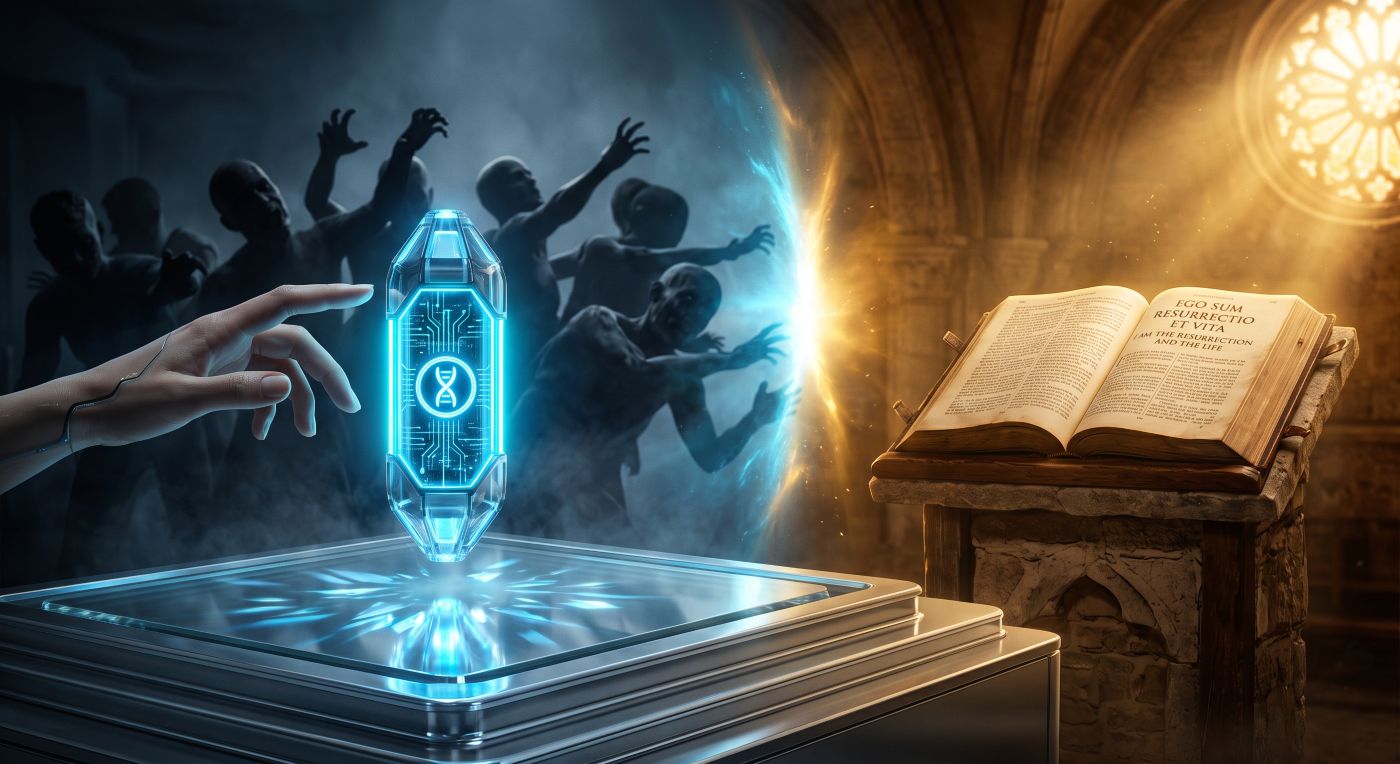
Examining the biblical-ethics-of-cloning exposes the false promises offered by secular science. Proponents argue that harvesting cloned embryonic cells will yield miraculous medical cures or allow individuals to achieve a form of physical continuation. Yet Scripture warns against re-defining moral boundaries under the guise of progress:
"Woe to those who call evil good, and good evil; Who put darkness for light, and light for darkness; Who put bitter for sweet, and sweet for bitter!" (Isaiah 5:20)
"For My people are foolish, They have not known Me. They are silly children, And they have no understanding. They are wise to do evil, But to do good they have no knowledge." (Jeremiah 4:22)
Attempting to achieve immortality through duplicated bodies is a tragic substitute for true eternal life. Anyone who maintains a personal relationship with Jesus Christ understands that physical death is not the final end, but a transition into eternal fellowship with God. In 1 Timothy 6:20, the Apostle Paul issues a timeless warning regarding secular philosophies that contradict divine truth:
"O Timothy! Guard what was committed to your trust, avoiding the profane and vain babblings and contradictions of what is falsely called knowledge..."
When scientific pursuits actively rebel against God's established creative boundaries, they fall into the category of knowledge separated from wisdom. Trying to fabricate life in the lab stems from the original temptation in the Garden of Eden: humanity’s desire to "be like God" (Genesis 3:5).
THE TOWER OF BABEL & BIOETHICS
The Biblical Path: Honoring the Sovereignty of God
The ultimate standard within the biblical-ethics-of-cloning rests on the absolute sovereignty and authority of God as the sole Giver of life. Job 12:10 reminds us:
"In whose hand is the life of every living thing, and the breath of all mankind."
Human life is not a commodity to be manufactured, duplicated, or harvested for spare parts. Every person born into this world is intentional, individually known by God from the womb (Psalm 139:13–16), and gifted with a unique identity that cannot be manufactured in a petri dish.
Rather than seeking physical self-preservation through speculative scientific duplication, believers are called to trust in the resurrection power of Jesus Christ. True life, identity, and eternal security are not found in replicating corruptible flesh, but in receiving the incorruptible spiritual renewal promised through the Gospel. As science advances, Christians must stand firm on biblical truth, proclaiming that God alone holds the authority over life, death, and the eternal soul.
Recommended External Resource
To explore further research and scholarly articles on human dignity, biotechnology, and christian bioethics, visit The Center for Bioethics & Human Dignity.
Explore More Biblical Studies & Mysteries
If you enjoyed this study on the biblical ethics of cloning, explore these other scripture-based investigations on our site:
- Dinosaurs and The Bible – Examine how massive creatures recorded in history and scripture align with the biblical timeline.
- Astrology and The Bible – Discover the spiritual dangers of horoscopes and what God's Word teaches regarding the heavens.
- NDEs: A Biblical Perspective – Analyze near-death experiences through the lens of Scripture and the reality of the afterlife.
- Cryptozoology and The Bible – Explore legendary creatures and unverified species through historical records and biblical context.