Nostradamus Vs Bible Prophecy: Finding Truth in Uncertain Times
Comparing the Evidence: Nostradamus Vs Bible Prophecy
In a world increasingly defined by global unrest and sudden catastrophes, many people find themselves searching for a glimpse into the future. This search often leads to a comparison of Nostradamus vs Bible prophecy, as seekers try to determine which source offers a reliable roadmap for what is to come. While the 16th-century French physician Michel de Nostredame—known as Nostradamus—has captivated the public imagination for centuries with his cryptic quatrains, his writings often leave more questions than answers. When we hold these human "visions" up to the light of Scripture, we find a stark contrast between the ambiguity of man and the absolute, inerrant authority of God's Word.
For the believer, the stakes are high. We are commanded to "test the spirits" and to discern truth from speculation. This page will examine the most famous predictions attributed to Nostradamus, particularly those involving the Twin Towers and world conflicts, and demonstrate why the Bible remains the only perfect source of prophetic truth.
The Appeal of Nostradamus
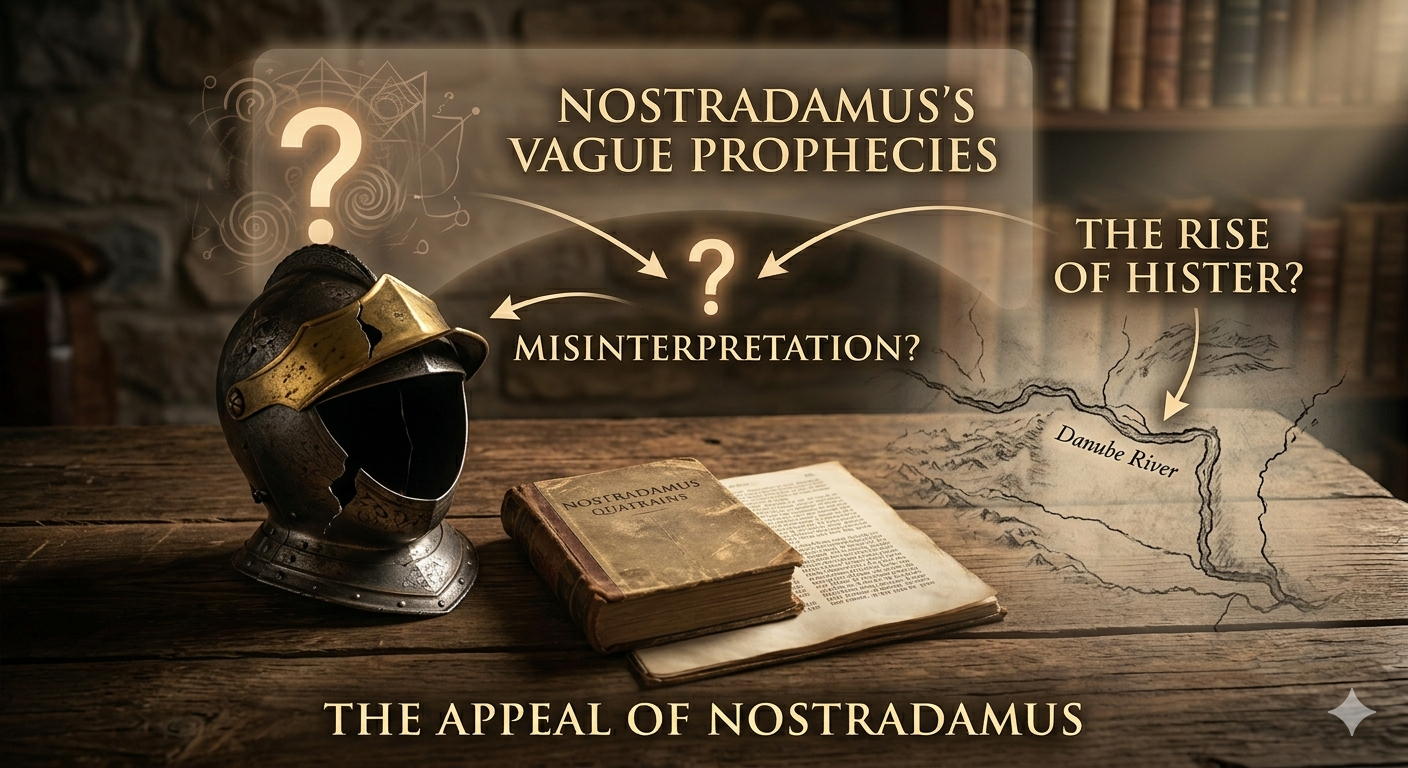
Nostradamus wrote in "centuries"—groups of 100 four-line verses called quatrains. To avoid persecution by the Inquisition, he used a mixture of French, Latin, and Greek, often employing heavy symbolism and anagrams. It is this very vagueness that has allowed his followers to "fit" his words into almost any historical event after it occurs.
There are three primary examples often cited by enthusiasts as proof of his "gift":
- The Death of King Henry II: Supporters claim Nostradamus predicted the 1559 death of the French King in a jousting accident, citing a verse about a "young lion" overcoming an "old" one on a field of combat by piercing his eye through a golden cage.
- The Rise of Hitler: Many point to the name "Hister" appearing in his quatrains. While it sounds like Hitler, Hister was actually the ancient name for the lower Danube River, which Nostradamus used geographically.
- The September 11th Attacks: This is perhaps the most famous modern application of Nostradamus vs Bible Prophecy. After the fall of the Twin Towers, several "quatrains" circulated online claiming he saw "two steel birds" and "fire from the sky" in the "New City." However, many of these were proven to be modern hoaxes or "Frankensteined" verses cobbled together to fit the tragedy. By comparing Nostradamus vs Bible Prophecy, we see that while the world scrambles to make sense of cryptic rhymes after a disaster, the Bible provides a steady, unchanging light that warns us of the end times long before they manifest.
The Problem of Ambiguity
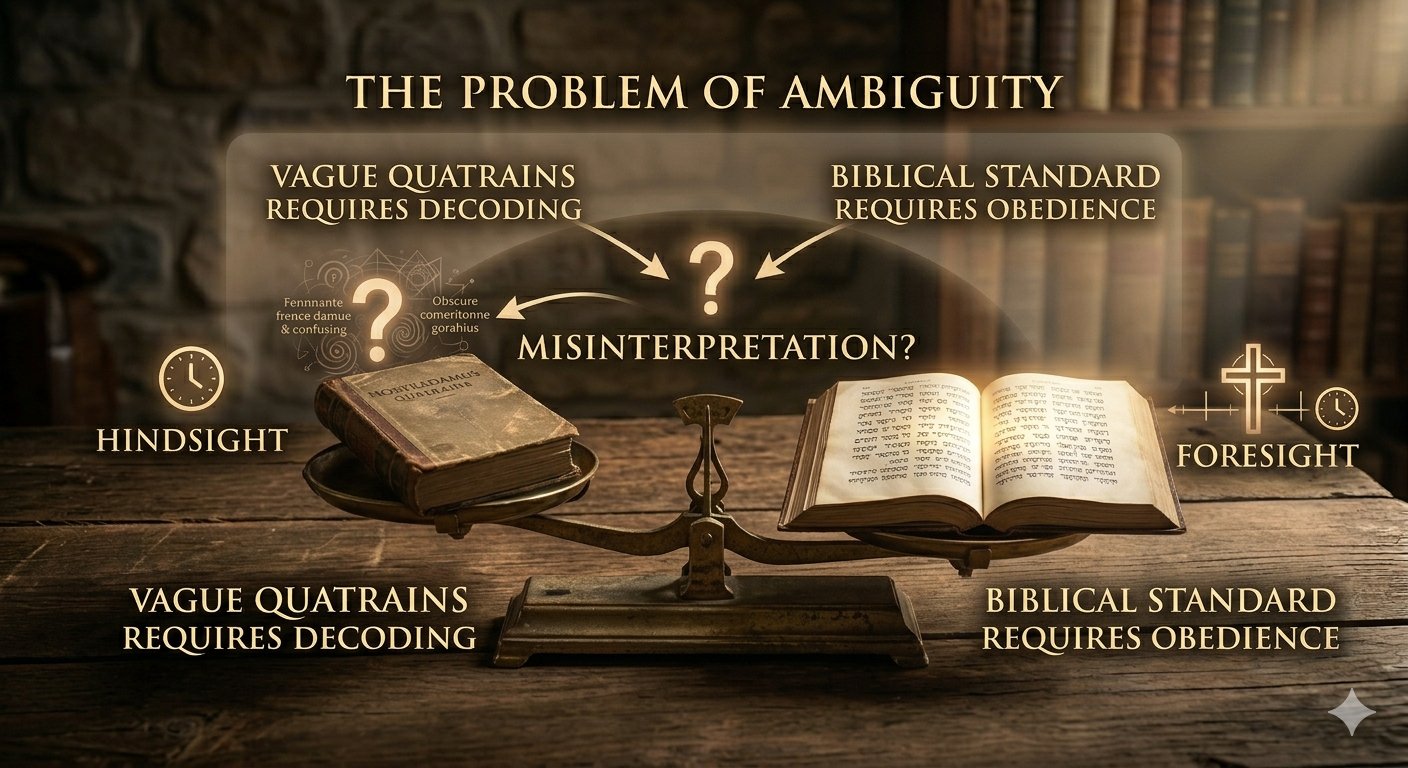
The fundamental issue with Nostradamus is that his "prophecies" are only understood in hindsight. A prophecy that can only be identified after the event has occurred offers no real guidance or warning. If a verse is so cryptic that it requires ten different translations to make sense, can it truly be called a prophecy?
Biblically, God sets a much higher bar for those who claim to speak of the future. In Deuteronomy 18:22, we are told that if a prophet speaks in the name of the Lord and the thing does not happen, that is a word the Lord has not spoken. There is no room for "close enough" or "symbolic hits" in the biblical standard.
The Precision of Biblical Prophecy
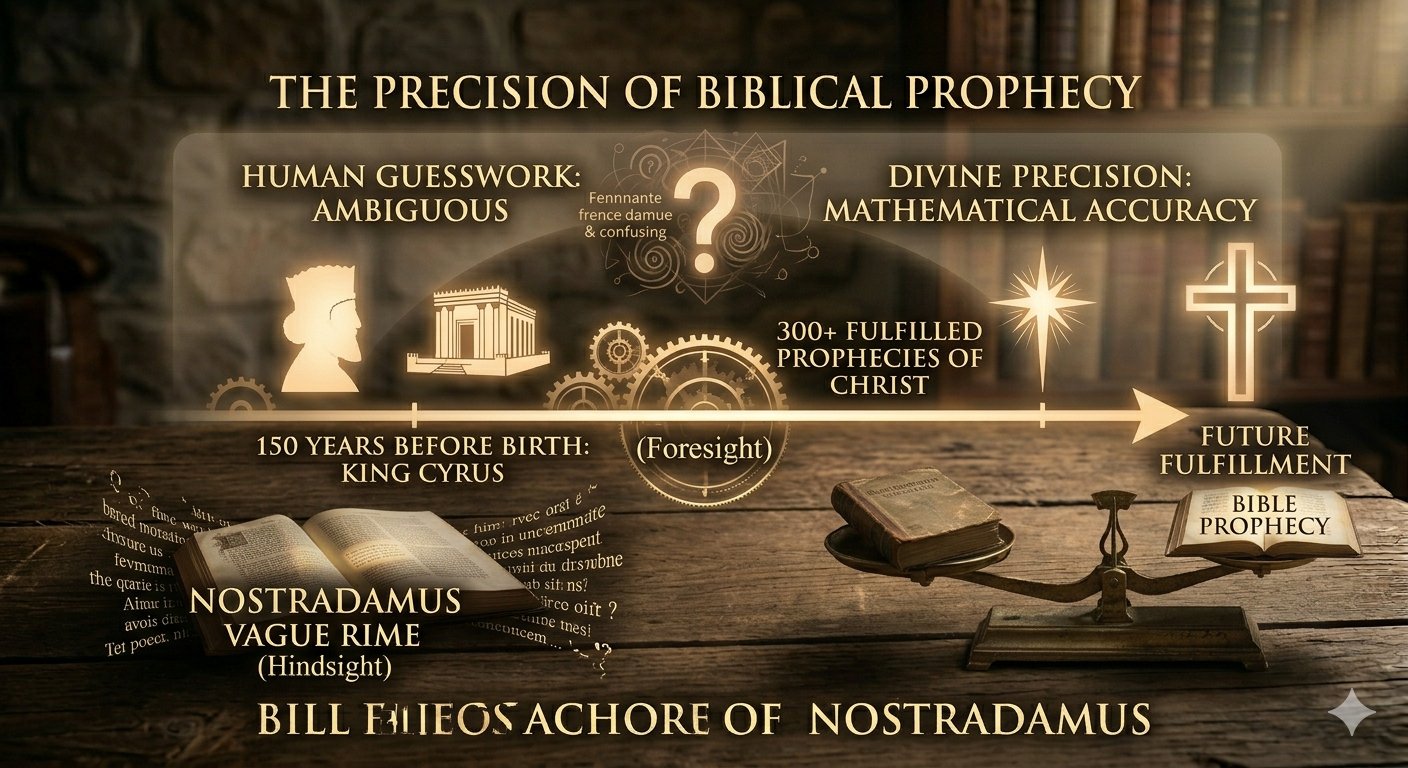
Unlike the poetic riddles of 16th-century mystics, Bible prophecy is characterized by "mathematical precision." The Bible contains roughly 2,500 prophecies, about 2,000 of which have already been fulfilled to the letter. There is no guesswork involved.
Consider the following contrasts in accuracy:
- Specific Names and Dates: In Isaiah 44:28 and 45:1, God named the Persian King Cyrus as the one who would allow the Jews to return and rebuild the Temple—roughly 150 years before Cyrus was even born. This isn't a vague reference to a "lion" or a "river"; it is a specific name and a specific decree.
- The Rise and Fall of Empires: In Daniel 2 and 7, God provided a detailed timeline of world empires—Babylon, Medo-Persia, Greece, and Rome—long before some of them even existed. The descriptions were so accurate that skeptics often try to claim Daniel must have been written after the fact, simply because they cannot fathom such precision.
- The First Coming of Christ: There are over 300 specific prophecies regarding Jesus Christ’s first coming, including His birthplace (Micah 5:2), the manner of His birth (Isaiah 7:14), and the exact details of His crucifixion (Psalm 22), written a thousand years before crucifixion was even invented as a form of execution.
The Source of the Vision
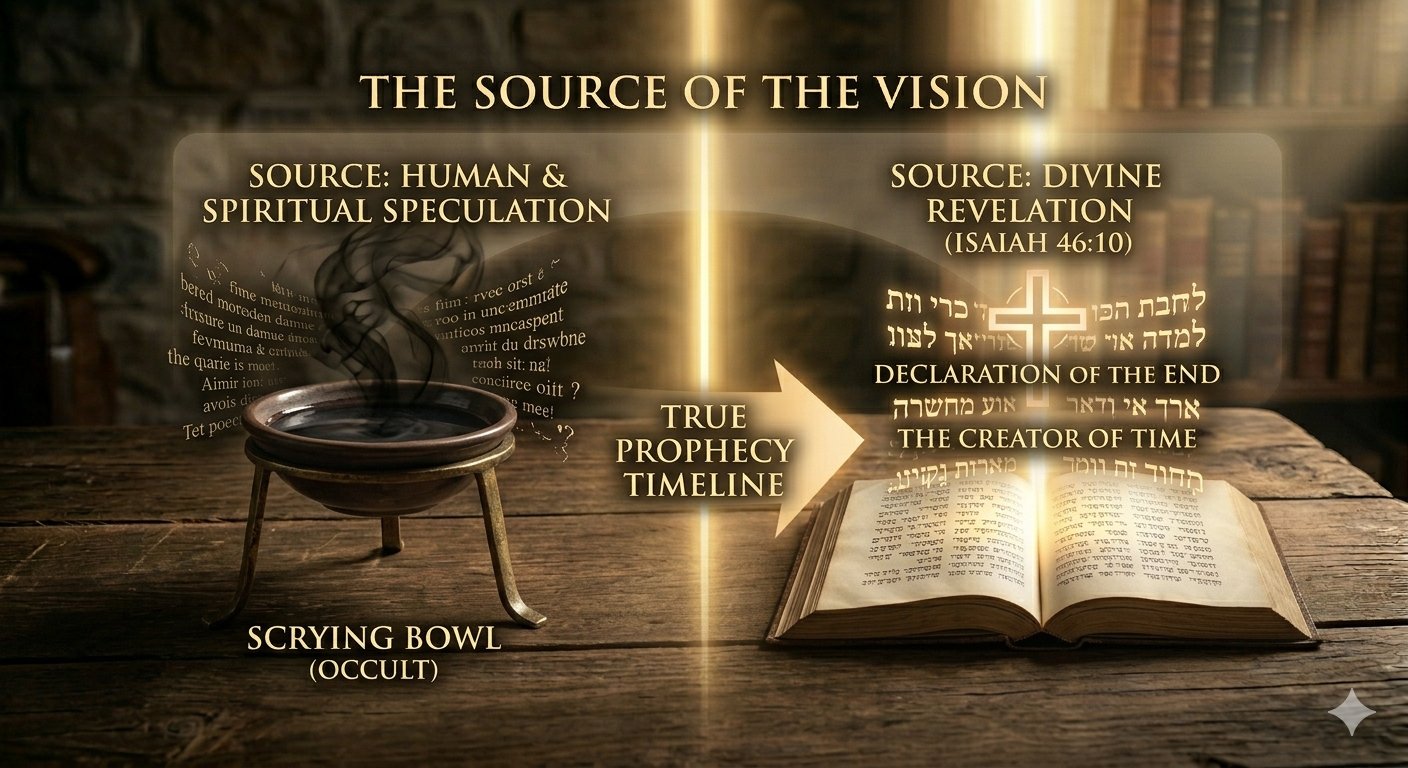
The difference in the Nostradamus vs. Bible prophecy comparison often comes down to the source. Nostradamus reportedly used "scrying"—staring into a bowl of water on a tripod—which is an occult practice. The Bible explicitly warns against seeking omens or using divination.
Biblical prophecy is not "fortune telling." It is the "declaration of the end from the beginning" by the Creator of time Himself (Isaiah 46:10). God provides prophecy for three reasons:
- To prove His sovereignty.
- To provide hope and comfort to believers.
- To call people to repentance.
While Nostradamus leaves his readers in a state of confusion and fear, wondering which "disaster" might be hidden in the next verse, the Bible provides a clear, unfolding plan of redemption that culminates in the return of Jesus Christ.
Nostradamus Vs Bible Prophecy: The Perfection of the Seventh Seal
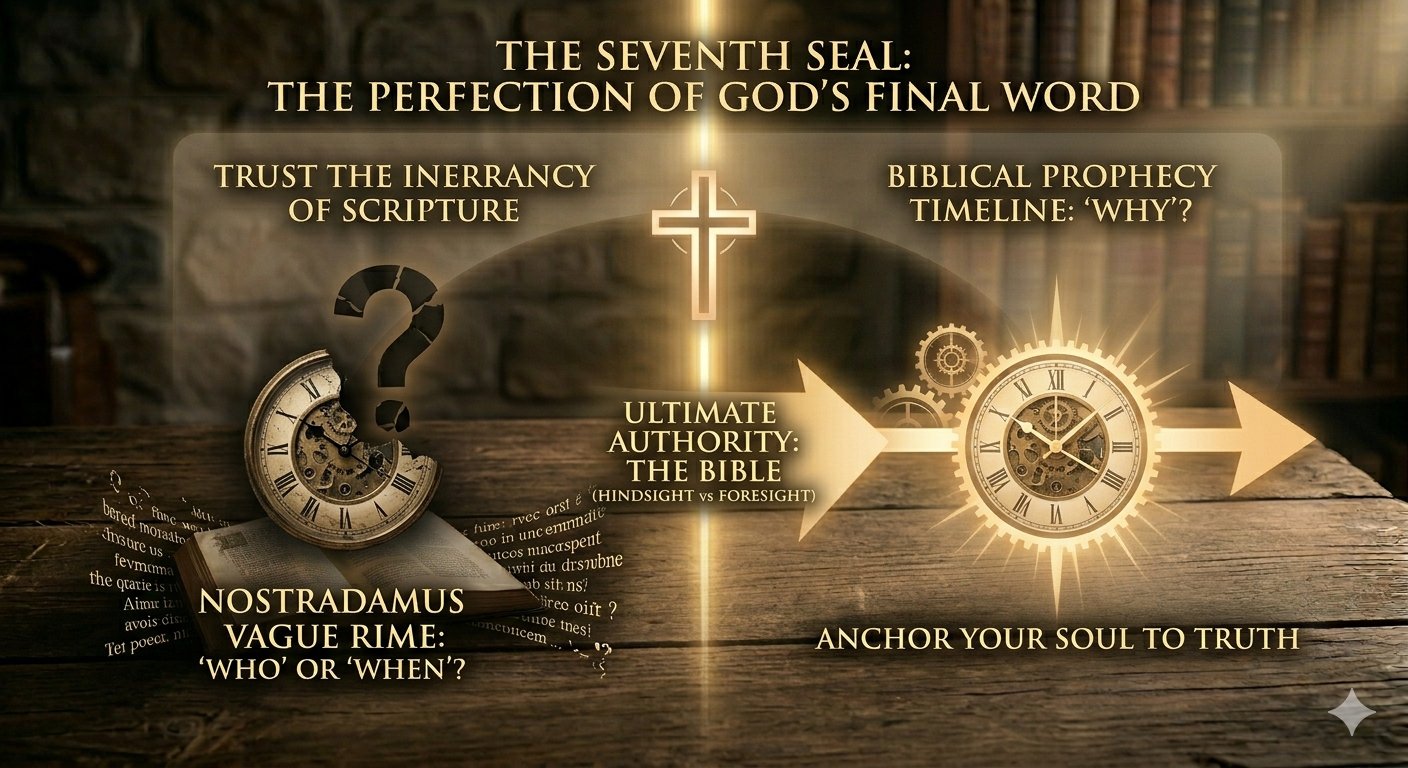
As you restructure your understanding of the future, it is vital to distinguish between "intriguing possibilities" and "absolute certainties." Nostradamus may offer a historical curiosity, but he cannot offer a firm foundation for your soul.
The "vague and unclear" nature of human seers stands in the shadow of the "sure word of prophecy" found in 2 Peter 1:19. When we look at the world today—at the tension in the Middle East, the shift toward globalism, and the "signs of the times"—we don't need a decoded quatrain to tell us where we are. We have the Word of God, which has never been wrong and never will be.
Trust in the inerrancy of Scripture. The Bible doesn't just predict the future; it reveals the One who holds the future in His hands.
The Completion of the Prophetic Plan
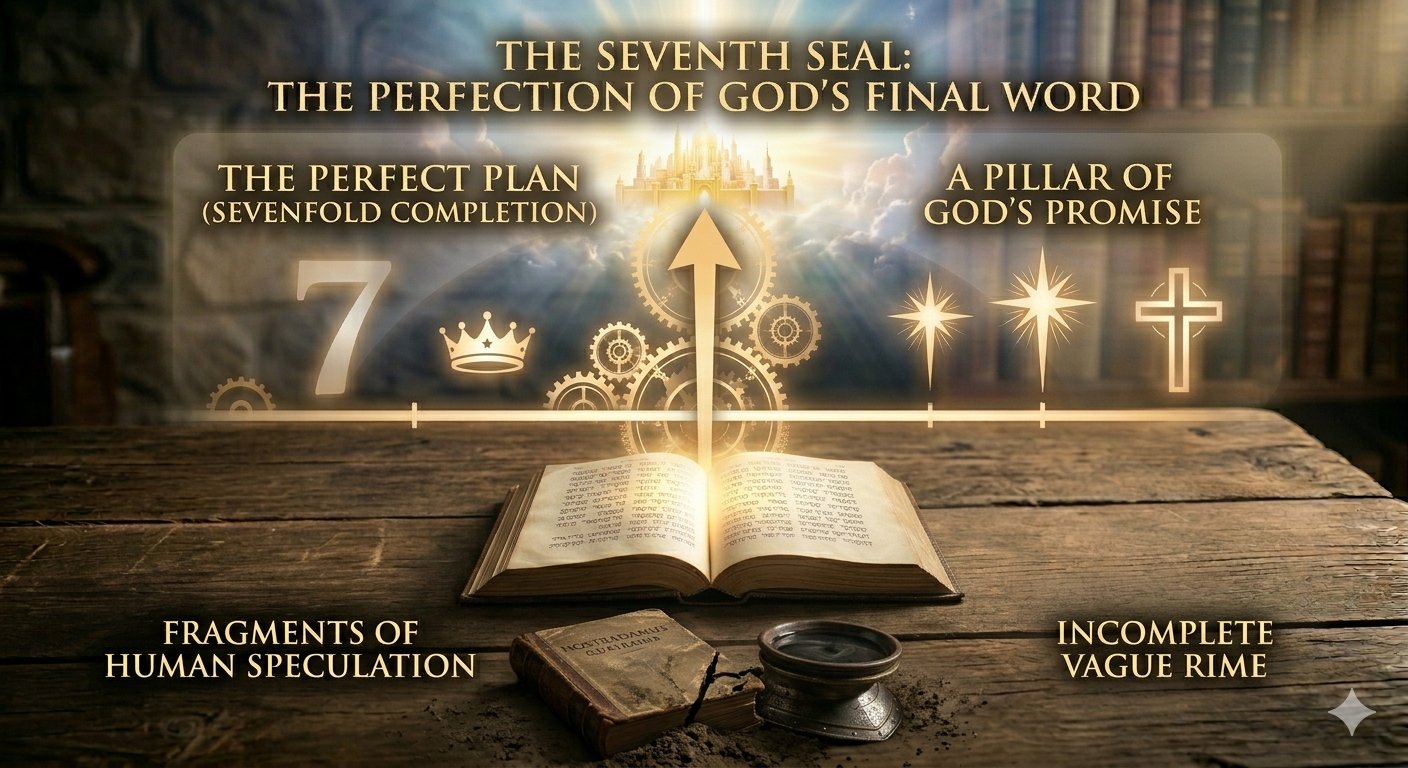
In the study of Nostradamus vs Bible prophecy, we must recognize that while human predictions are often a dead end, biblical prophecy is a journey toward a specific destination. The number seven in Scripture consistently points to "completeness" and "perfection"—from the seven days of creation to the seven seals of Revelation. This divine order is entirely missing from the chaotic and fragmented writings of secular seers. While Nostradamus leaves his readers hanging in a cycle of endless "centuries" with no clear resolution, the Bible concludes with a glorious and final restoration.
God’s prophetic plan is not just about identifying "who" or "when"; it is about the "Why." The ultimate goal of all biblical prophecy is the glorification of Jesus Christ and the establishment of His eternal kingdom. As we look at the current state of the world, we are not looking for a "hidden code" in a 16th-century poem; we are watching the final pieces of God's perfect puzzle fall into place.
The inerrancy of the Bible ensures that every "jot and tittle" will be fulfilled. We can rest in the assurance that the same God who accurately predicted the birth of Christ, the fall of Jerusalem, and the rebirth of Israel will be equally faithful to fulfill the promise of His return. This is the "blessed hope" that provides peace in an unseen world. By choosing the Bible as your ultimate authority, you are not just reading about history in advance—you are anchoring your soul to the only Truth that is truly perfect, complete, and eternal.
Further Biblical Study:
For a deeper dive into the theological dangers of seeking truth in secular quatrains versus the Word of God, you may find this resource helpful:
What is the Christian view of Nostradamus? - GotQuestions.orgDeepen Your Study: Truth vs. Tradition
The contrast between Nostradamus vs. Bible prophecy is just the beginning of understanding the "unseen world" through the lens of Scripture. To help you further distinguish biblical truth from modern myths and cultural trends, I have prepared several in-depth studies on topics that are often misunderstood:
- Mockers Of The Rapture: As we see the "signs of the times" unfolding, the Bible warns that scoffers will arise in the last days. Learn how to respond to those who doubt the return of Christ.
- Do Miracles Produce Faith?: Just as many are dazzled by the "signs" of Nostradamus, many seek modern miracles. We examine whether signs and wonders actually lead to a saving faith or if the Word of God is sufficient.
- Bible Verses About Zombies: Pop culture is obsessed with the "undead," but what does the Bible actually say about the resurrection, the state of the dead, and the physical manifestations mentioned in prophecy?
- What Is Heaven Like?: Nostradamus focuses on earthly destruction, but the Bible points us toward an eternal home. Discover the glorious reality of the place Jesus is preparing for those who trust in Him.


