The White Horse of the Apocalypse: Identity, Symbolism, and End-Times Prophecy
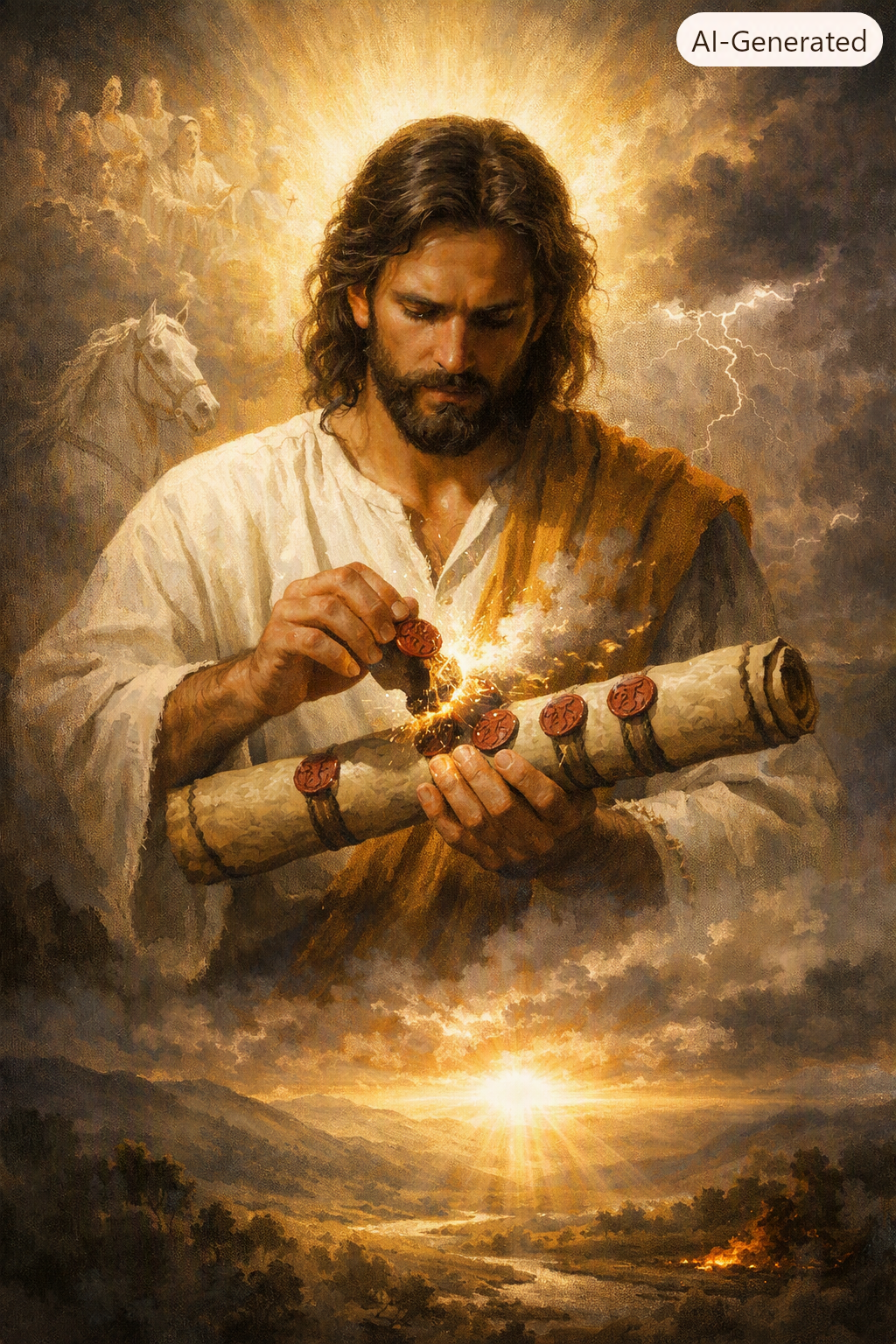
The image of a solitary rider on a white horse charging onto the stage of human history is one of the most striking and debated visions in all of biblical prophecy. Found in Revelation 6:1–2, the white horse of the apocalypse marks the dramatic opening of the Tribulation period:
"Now I saw when the Lamb opened one of the seals; and I heard one of the four living creatures saying with a voice like thunder, 'Come and see.' And I looked, and behold, a white horse. He who sat on it had a bow; and a crown was given to him, and he went out conquering and to conquer."
To understand the White Horse of the Apocalypse, one must first recognize who holds the scroll. It is Jesus Christ—the resurrected Lamb of God—who alone is worthy to break the seals and execute divine judgment upon the earth. Because Christ Himself opens the first seal from His throne in heaven, the rider on the white horse cannot be Jesus. Instead, this rider is summoned by one of the Four Living Creatures as a tool of divine judgment.
While many Bible scholars view this rider through a literal, future lens, history and theology have produced several contrasting interpretations. Is this rider a literal future dictator? A representation of the Roman Empire in the first century? A corrupt global religious system like the Catholic Church? Or merely a spiritual symbol of the ongoing struggle between good and evil? Exploring each major school of thought reveals how Christians throughout history have sought to understand this momentous apocalyptic sign.
The Futurist View: The Rise of the Antichrist As The White Horse Of The Apocalypse
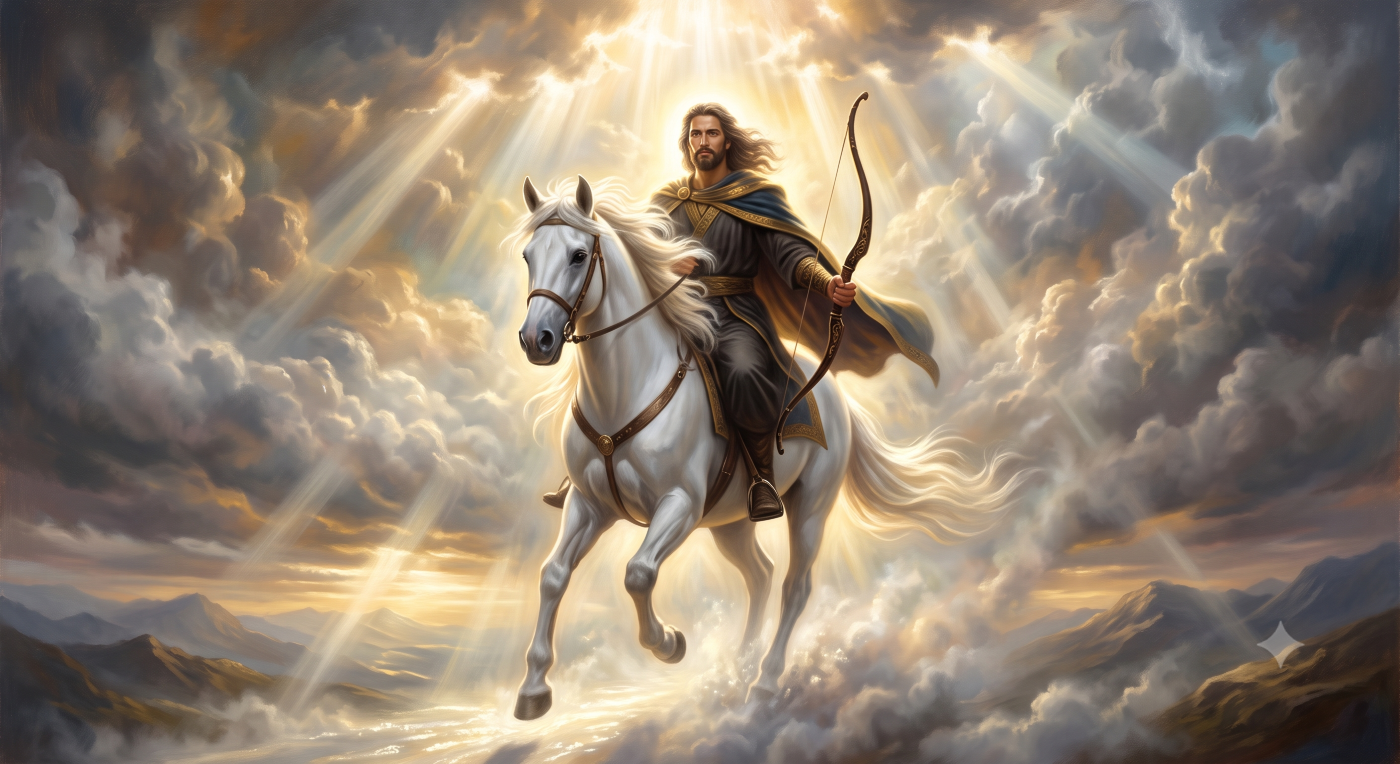
The Futurist view interprets Revelation chapters 4 through 22 as events that will take place in the literal, future end-times period known as Daniel's 70th Week, or the Tribulation. Under this framework, the rider on the white horse represents the arrival of a literal human ruler: the Antichrist, also known as the First Beast of Revelation 13 or the Man of Lawlessness (2 Thessalonians 2:3).
Proponents of the Futurist view point out key clues within the text of Revelation 6:2 that distinguish this rider as a master deceiver and Satanic counterfeit:
- The White Horse (A Counterfeit Messiah): White represents purity, victory, and righteousness. By appearing on a white horse, this ruler presents himself as a savior to a desperate world. He mimics Jesus Christ, who later appears in Revelation 19:11 on a literal white horse to bring true judgment.
- The Bow Without Arrows: The rider carries a bow, an instrument of war, but no arrows are mentioned. Futurists interpret this as symbolic of bloodless conquest—a diplomatic takeover or pseudo-peace treaty that unifies the nations before real war breaks out.
- The Stephanos Crown: The Greek word translated as "crown" here is stephanos, which refers to a victor's crown or a wreath given to a conqueror, rather than diadema, a royal crown of inherited kingship. This rider earns or assumes his authority through political conquest and charisma rather than divine right.
As the first seal breaks, this demonic peace hero establishes a brief, false peace on earth—likely making a seven-year covenant with Israel—only to be followed immediately by the fiery warfare of the Red Horse, the crushing famine of the Black Horse, and the widespread death of the Pale Horse.
The Historicist View: World Systems and the Roman/Papal Connection
Unlike Futurists who expect a single future tyrant, Historicists view Revelation as a sweeping panorama of human history unfolding continuous prophetic events from the days of the Apostle John until the Second Coming. Under this view, many scholars argue that the horses of Revelation do not represent individual men, but rather global political, military, or religious systems.
This perspective draws heavily upon Old Testament typology, specifically the visions found in the Book of Zechariah:
"I saw by night, and behold, a man riding on a red horse... 'These are the ones whom the LORD has sent to walk to and fro through the earth.'" (Zechariah 1:8–10) "The first chariot had red horses, the second chariot black horses, the third chariot white horses, and the fourth chariot dappled horses... 'These are the four spirits of heaven, who go out from their station before the Lord of all the earth.'" (Zechariah 6:2–5)
In Zechariah, the horses represent spiritual forces (ruach or winds) dispatched by God to patrol the earth and execute His will over nations. Applying this same framework to Revelation 6, Historicists argue that the four horsemen are not four sequential individuals, but four ongoing global phenomena.
The Catholic Church as the White Horse of The Apocalypse System
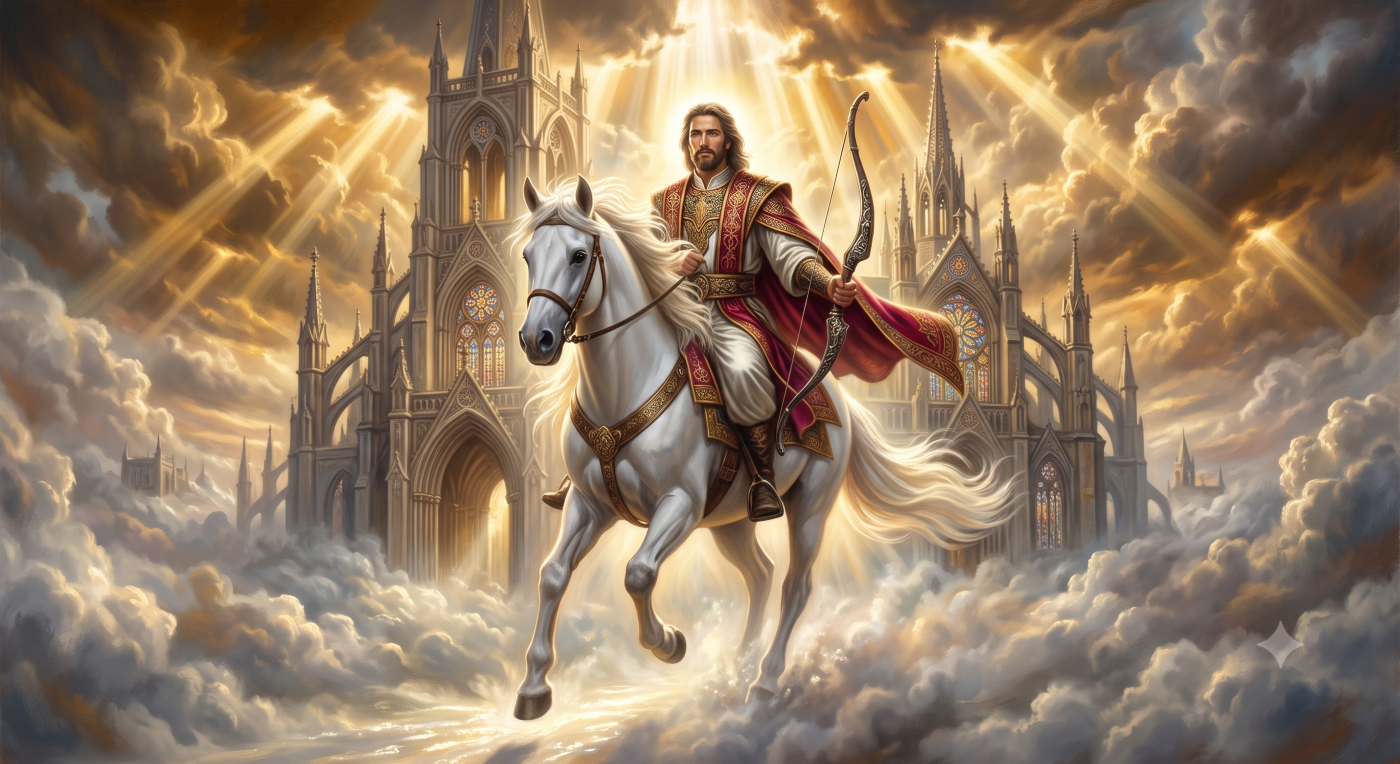
Within Historicism, a prominent interpretation identifies the rider on the white horse of the apocalypse as the Roman Catholic Church and the Papacy. Proponents of this view claim that the vision portrays the post-Apostolic church’s transformation into an imperial, coercive worldly system:
- Imperial Victory: The white horse is seen as the initial expansion of Christianity when it conquered the pagan Roman Empire under Constantine, appearing victorious and pure on the surface.
- The Bow and Crown: The bow represents the far-reaching influence of papal decrees and spiritual warfare, while the crown (stephanos) symbolizes the ecclesiastical dominance and temporal power assumed by the Papacy over European monarchs throughout the Middle Ages.
- Corrupted Conquest: Historicists argue that as the papal power "went out conquering," it gradually departed from biblical truth, giving rise to oppressive dogma, religious wars, and persecution—setting the stage for the corruption typified in later chapters of Revelation.
The Preterist View: First-Century Fulfillment and Its Critical Flaws
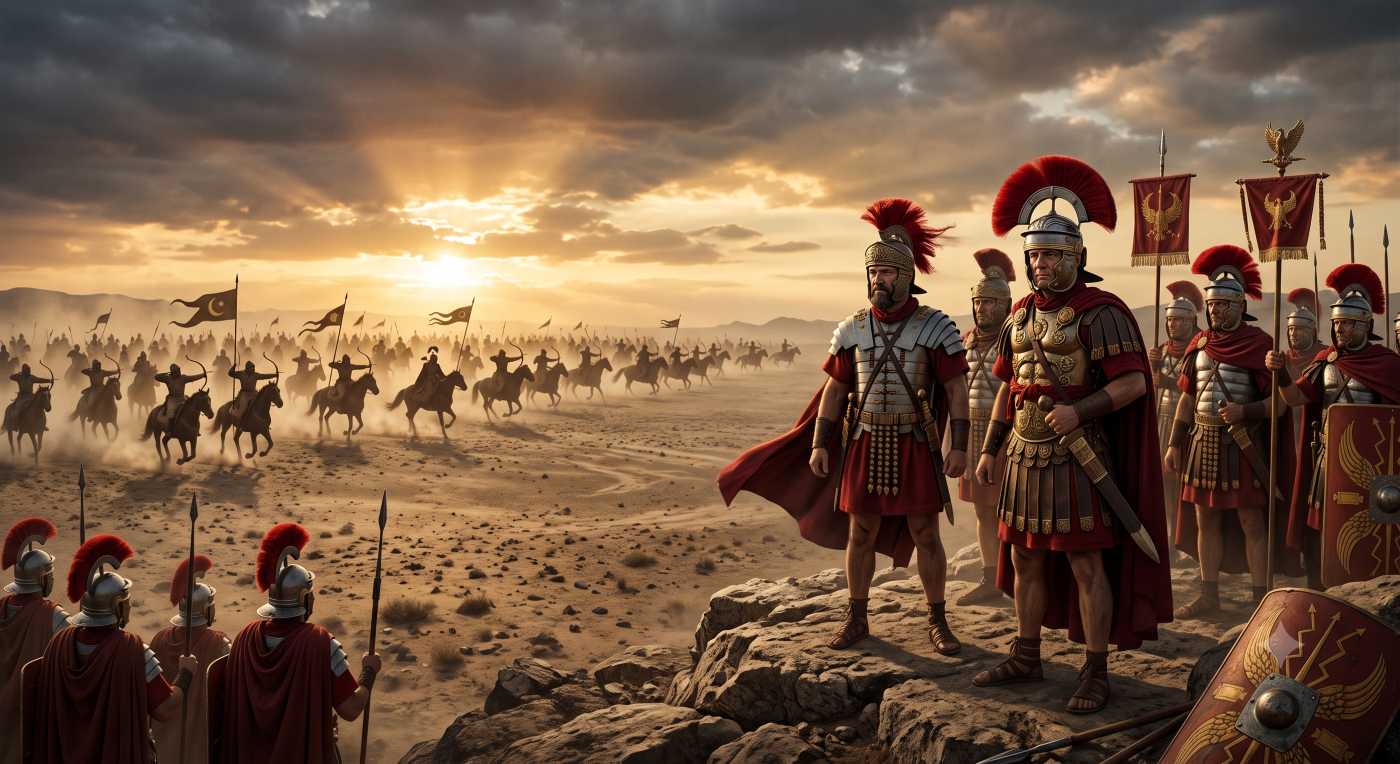
The Preterist view (from the Latin preter, meaning "past") holds that the vast majority of Revelation’s prophecies were already fulfilled in the first century AD. Preterists argue that John’s vision was written specifically for the early Church undergoing intense Roman persecution, and that the symbols in Revelation 6 point directly to events leading up to the destruction of Jerusalem in 70 AD.
Under the Preterist framework, the rider on the white horse is usually interpreted as:
- The Roman Empire or Roman Generals: Specifically figures like Vespasian or Titus, whose Roman legions swept through Judea "conquering and to conquer" between 66 AD and 70 AD. White was the color used by Roman commanders during victory triumph processions.
- The Parthian Threat: The bow was the trademark weapon of the Parthians—Rome's dread rival from the East—whose horsemen posed a constant threat to the empire's borders during the first century.
Why Preterism Collapses: The Problem of Dating Revelation
While Preterism attempts to anchor the white horse of the apocalypse firmly into first-century secular history, it faces severe theological and historical objections that render its conclusions highly improbable.
The most significant flaw in the Preterist position is the chronological date of the Book of Revelation.
- The Historical Evidence: Early Church fathers unanimously testify that John wrote the Book of Revelation toward the end of Emperor Domitian’s reign, around 95–96 AD. Irenaeus (c. 130–202 AD), a disciple of Polycarp (who was himself a direct disciple of the Apostle John), explicitly wrote: "For that [vision] was seen no very long time since, but almost in our day, towards the end of Domitian's reign."
- The Logical Impossibility: If Revelation was written in 95 AD under Domitian, it could not possibly be predicting the siege of Jerusalem and the destruction of the Second Temple, which occurred a quarter-century earlier under Vespasian and Titus in 70 AD. Prophecy by definition predicts future events; a book written in 95 AD describing 70 AD would be historical recap, not divine foreknowledge.
Furthermore, Preterism struggles to account for the magnitude of the judgments that follow the opening of the seals. The global devastation described in the Seal, Trumpet, and Bowl judgments—where billions perish, oceans turn to blood, and celestial bodies fall—far exceeds anything recorded during the localized Jewish-Roman War of the first century.
The Idealist View: Allegorical and Spiritualized Interpretations Of The White Horse Of The Apocalypse
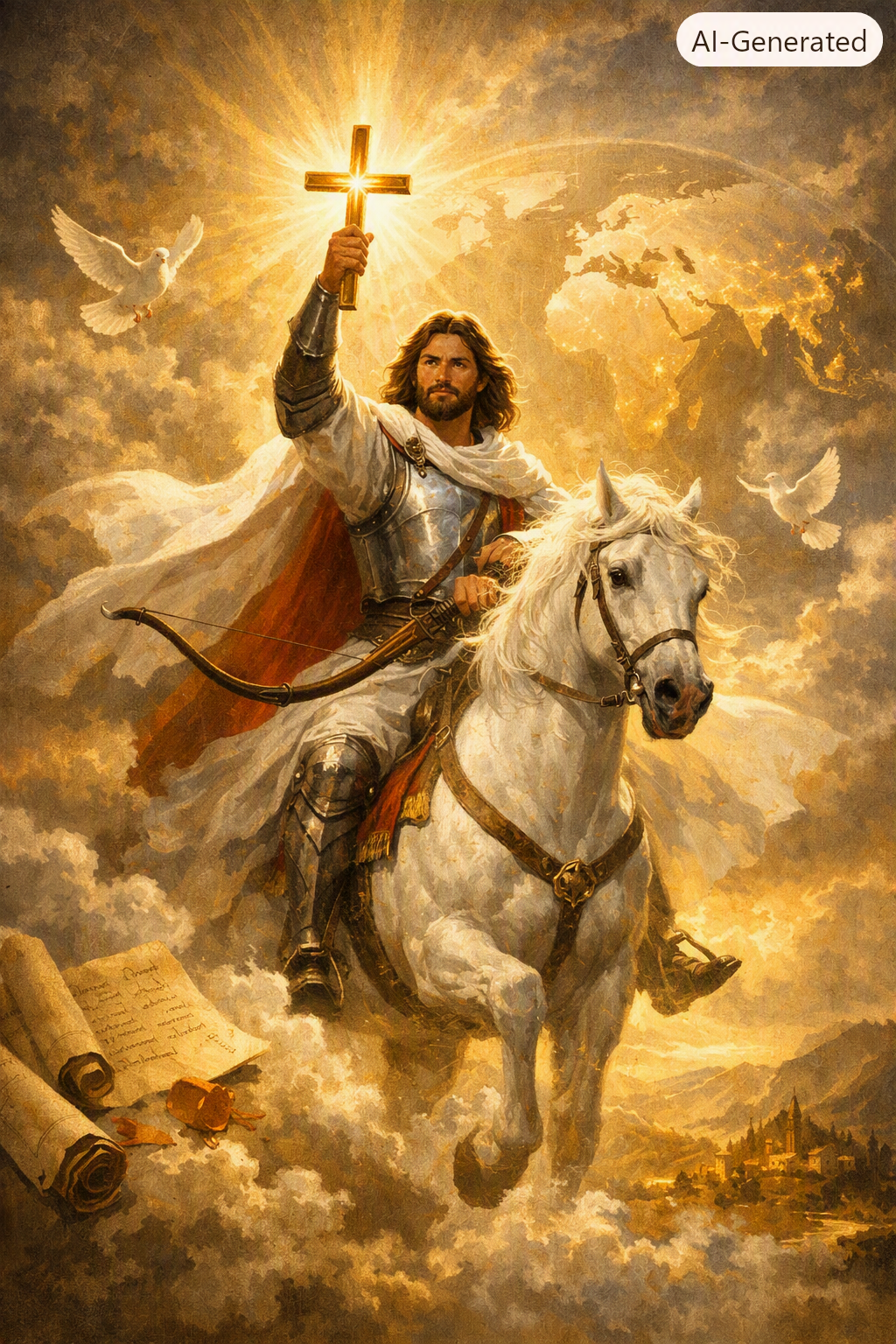
The Idealist view (sometimes called the Spiritual or Symbolic view) takes an entirely non-literal approach to Revelation and passages such as the white horse of the apocalypse. Idealists believe the book was never intended to predict specific historical events, whether past or future. Instead, they view Revelation as a timeless allegory depicting the ongoing spiritual struggle between the Kingdom of God and the forces of darkness throughout the entire Church Age.
Under the Idealist lens, the rider on the white horse does not represent a specific person or historical empire, but rather an abstract concept:
- The Unstoppable Spread of the Gospel: Some Idealists interpret the rider on the white horse as the Gospel itself going forth into all the world, conquering human hearts through spiritual victory.
- The Spirit of Militarism and Conquest: Other Idealists see the rider as a personification of human ambition, pride, and imperial expansion—the continuous human drive to dominate others that inevitably leads to war (Red Horse), economic collapse (Black Horse), and death (Pale Horse).
The Peril of Excessive Spiritualization
While allegorical interpretations can offer practical spiritual lessons, excessive spiritualization neutralizes the prophetic weight of Scripture. When text is detached from its plain, literal meaning, prophecy becomes an empty canvas where any interpreter can project their own subjective ideas.
If the White Horse of the Apocalypse is reduced to a generic symbol of "human pride" or "the triumph of truth," the precise details given by the Holy Spirit—the bow, the crown, the sequential relationship to the other seals, and the specific connection to the Tribulation—lose all objective meaning. God gave Revelation as a unveiling of real events to come, not an obscure puzzle of endless metaphors.
Comparing the Interpretations: A Summary Overview
To clearly visualize how these major theological frameworks interpret the first seal of Revelation, consider the key differences below:
| Interpretive View | Primary Identity of the Rider | Target Time Period | Key Biblical Foundation | Main Weakness |
|---|---|---|---|---|
| Futurist | The Antichrist (False Messiah) | Future 7-Year Tribulation | Rev 6:1–2, 2 Thess 2:3, Dan 9:27 | Unfulfilled until the end-times begin |
| Historicist | World System / Catholic Church | Continuous (Apostolic Age to Return) | Zech 1:8–10, Zech 6:1–5 | Highly subjective identification of historical events |
| Preterist | Roman Imperial Army / Titus | Past (Pre-70 AD) | Rev 1:1 ("things which must shortly happen") | Contradicted by 95 AD authorship date |
| Idealist | Gospel Victory or World Ambition | Timeless Allegory (All Ages) | Non-literal allegorical reading | Strips prophecies of objective, literal fulfillment |
Why the Identity of the First Rider Of The White Horse Of The Apocalypse Matters
The identity of the rider on the white horse of the apocalypse is not merely an academic exercise or a topic for theological debate; it dictates how a believer reads the entire Book of Revelation.
When we examine Revelation 6 in light of the whole counsel of God's Word, the Futurist interpretation stands firm as the most biblically consistent framework. Because Jesus Christ Himself opens the seal, He releases a literal series of judgments upon an unrepentant world. The rider on the white horse represents Satan’s ultimate counterfeit ruler—a world leader who promises peace with a bow and a crown, only to plunge humanity into unprecedented destruction.
Recognizing the White Horse as the deceptive harbinger of the Tribulation serves as a solemn reminder for believers today: true peace will never come through human political systems, false religious empires, or self-proclaimed world saviors. Eternal victory and true righteousness belong exclusively to the real King of Kings, who will one day descend on a true white horse to establish His reign forever (Revelation 19:11–16).
Related Biblical Studies & Prophetic Insights
Explore more in-depth analyses of biblical prophecy, the afterlife, spiritual discernment, and end-times events:
- Wicca Vs. The Bible: Examining Modern Witchcraft - How do modern neopagan practices compare to the absolute truth of Holy Scripture? Discover what the Bible teaches regarding spiritual authority, nature worship, and divine law.
- Is Soul Sleep Biblical? What Happens at Death? - Does the soul enter an unconscious state after physical death, or is awareness immediate? Unpack the Scriptures behind soul sleep versus direct entry into the presence of God.
- The Battle Of Armageddon: Prophesied Climax of History - Where does the final confrontation take place, who gathers there, and how does Christ return to overcome the armies of the world? Read a detailed study of Revelation 16 and 19.
- Is Hell Real? Understanding Eternal Retribution - Examine Jesus Christ’s own teachings regarding the reality, nature, and justice of Hell, and how divine grace provides the only way of salvation.


