Saul to Paul Transformation: From Zealous Persecutor to Apostle of Grace
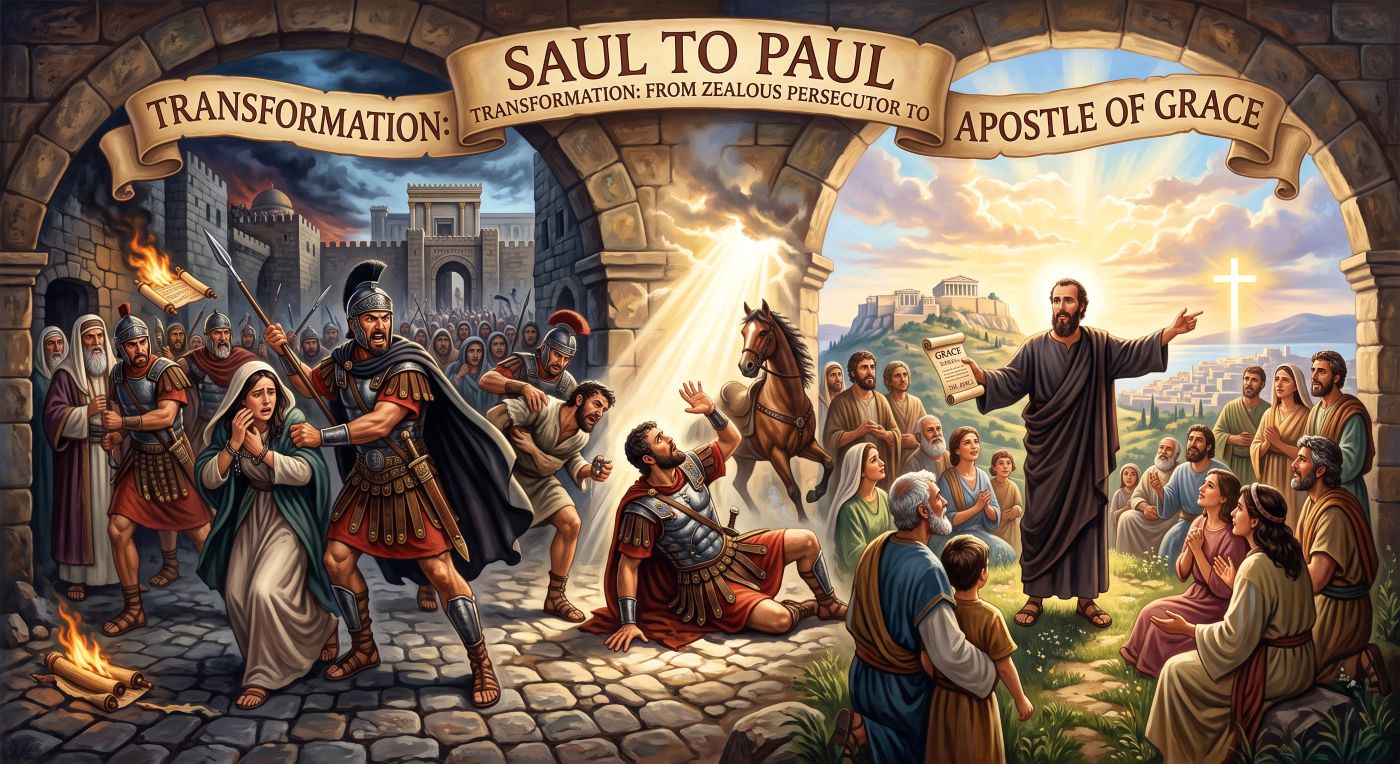
The Saul to Paul transformation stands as one of the most dramatic, radical, and influential turnarounds in human history. In the early days of the Christian movement, few names struck fear into the hearts of believers like Saul of Tarsus. Raised as a strict Pharisee and educated under the renowned teacher Gamaliel, Saul was a man driven by fierce religious zeal. He was not merely a passive observer of the emerging Church; he was an energetic, highly disciplined, and relentless champion of Jewish tradition who viewed followers of "The Way" as dangerous heretics. In his own mind, rounding up men and women, dragging them off to prison, and approving their executions was a holy duty. Yet, this zealous persecutor underwent a total spiritual overhaul during a single encounter on a dusty highway. Understanding the Saul to Paul transformation offers profound insight into God’s sovereign grace, the nature of true repentance, and how self-righteous religious zeal can blind us to the actual voice of God.
The Persecutor’s Zeal: Blindly Serving God Through Cruelty
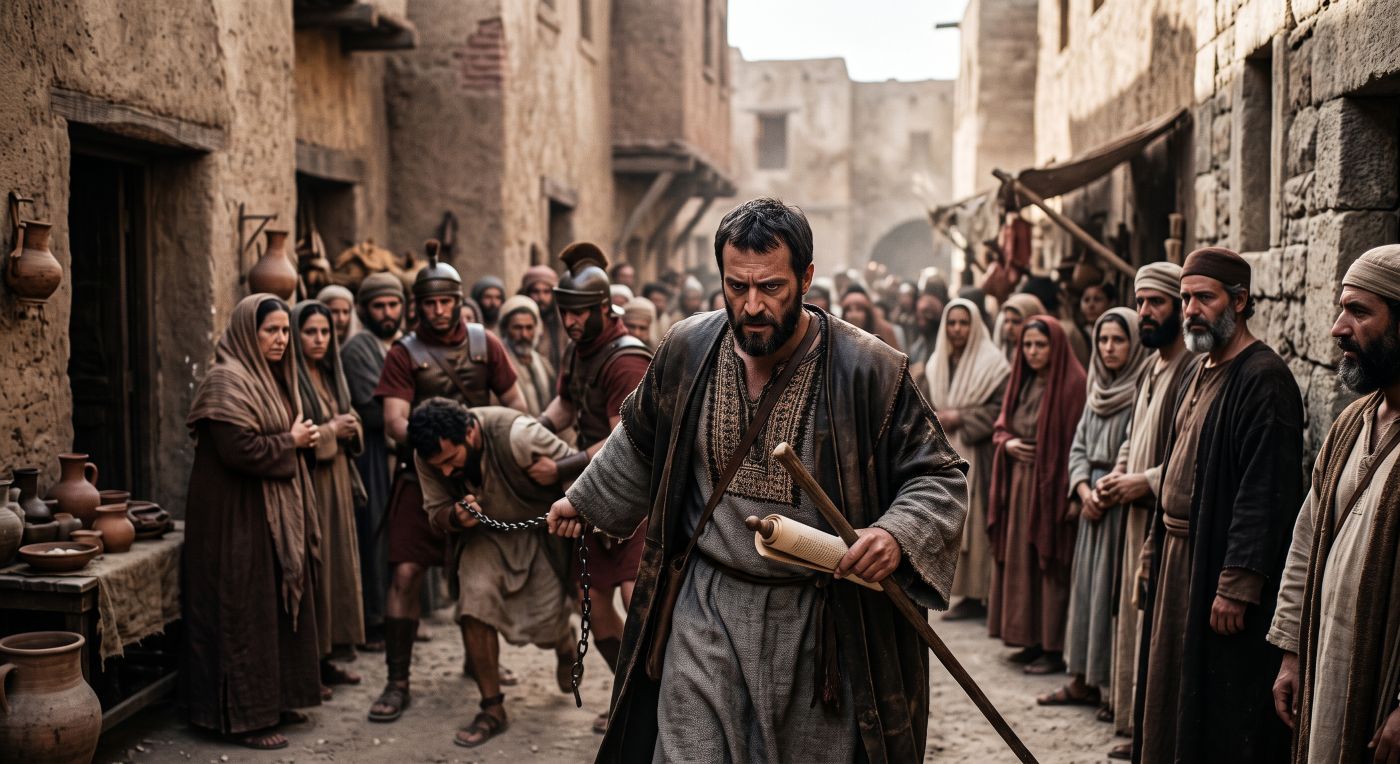
To fully appreciate the scope of the Saul to Paul transformation, we must first examine the mindset of Saul before his life was upended. Saul was not a villain in his own eyes. By every cultural and religious standard of his day, he was an exemplary, devout servant of the Almighty. In his letter to the Philippians, he later described his background: circumcised on the eighth day, of the tribe of Benjamin, a Hebrew of Hebrews, and in regard to the law, a Pharisee.
Saul believed with every fiber of his being that the followers of Jesus of Nazareth were blasphemers who threatened the purity of Israel. When Stephen—the first Christian martyr—was stoned to death, Saul stood by in active agreement, holding the garments of those who threw the stones (Acts 8:1). Following Stephen's death, Saul went on a crusade to destroy the infant Church:
"Saul began to destroy the church. Going from house to house, he dragged off both men and women and put them in prison." — Acts 8:3
Saul was convinced he was doing God a favor. He was acting out of misplaced devotion, operating under the dangerous illusion that violence, coercion, and religious intimidation were legitimate tools for honoring the Creator.
The Modern Parallel: Zeal Without Knowledge Today
This tragic aspect of Saul’s early life is not merely an ancient historical detail; it reflects a continuous trend throughout human history. Today, persecution against Christians continues across the globe, often carried out by religious zealots who mistakenly believe they are serving God by eradicating those who worship Jesus.
Just as Saul believed his actions were righteous, modern persecutors operate under a severe spiritual deception. Whether through violent oppression, political silencing, or physical harm, zeal without truth always leads to tyranny. Saul’s story stands as a sober reminder that sincere religious conviction, if detached from God's true character and love, can drive individuals to commit horrific acts in the name of holiness.
The Road to Damascus: The Turning Point in the Saul to Paul Transformation

Saul’s crusade reached its peak when he obtained official letters from the High Priest in Jerusalem authorizing him to travel over a hundred miles north to Damascus. His goal was simple: locate any followers of Jesus and bring them back in chains. However, as Saul approached the city, his life was forever altered.
"As he neared Damascus on his journey, suddenly a light from heaven flashed around him. He fell to the ground and heard a voice say to him, 'Saul, Saul, why do you persecute me?' 'Who are you, Lord?' Saul asked. 'I am Jesus, whom you are persecuting,' the voice replied." — Acts 9:3–5
In an instant, Saul’s entire worldview collapsed. The light was so overwhelming that it blinded him, requiring his companions to lead him by the hand into Damascus. For three days, Saul remained blind and refused to eat or drink.
This moment represents the heart of the Saul to Paul transformation. Jesus did not strike Saul dead in judgment; instead, He revealed Himself in glory. Crucially, Jesus asked, "Why do you persecute me?" This statement declared that to attack believers is to attack Christ Himself. Saul realized with crushing clarity that in his quest to defend God, he had actually been fighting against Him.
Ananias and Barnabas: Instruments of Healing and Acceptance

Ananias: Overcoming Fear to Lay Hands on the Persecutor
A key element of this divine intervention was God's use of ordinary, faithful believers to facilitate the Saul to Paul transformation.
In Damascus, God called a disciple named Ananias in a vision, instructing him to go to the house of Judas on Straight Street and pray for Saul. Ananias was understandably terrified. He knew Saul's reputation and responded, "Lord, I have heard many reports about this man and all the harm he has done to your holy people in Jerusalem" (Acts 9:13).
Yet, God gave Ananias a clear revelation regarding Saul's purpose:
"Go! This man is my chosen instrument to proclaim my name to the Gentiles and their kings and to the people of Israel. I will show him how much he must suffer for my name." — Acts 9:15–16
Ananias obeyed. He went to Saul, laid his hands on him, and addressed him with remarkable warmth: "Brother Saul..." Immediately, something like scales fell from Saul's eyes, his sight was restored, and he was baptized.
Barnabas: Bridging the Gap in Jerusalem
Later, when Saul returned to Jerusalem, the local disciples were terrified of him, doubting that he was truly a believer (Acts 9:26). It was Barnabas—whose name means "Son of Encouragement"—who stood up for Saul, took him to the apostles, and testified to his genuine conversion. Without Barnabas's intervention, the early Church might have long remained distant from the man God selected to write much of the New Testament.
Debunking the Myth: Did God Change Saul's Name to Paul?
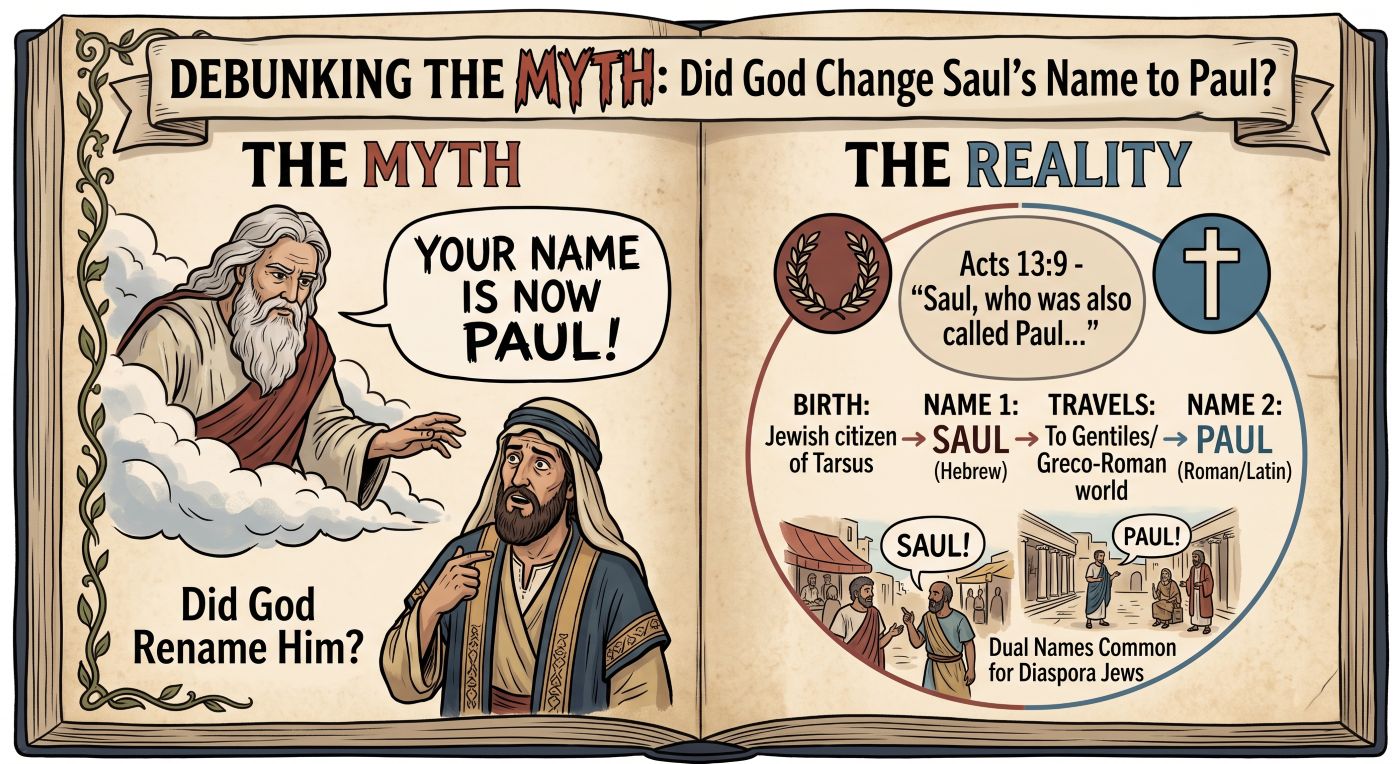
A widespread misconception in Christian teaching is that God officially changed Saul’s name to Paul at his conversion, similar to Abram becoming Abraham or Jacob becoming Israel. However, a careful reading of Scripture reveals a different reality that enriches our understanding of his ministry.
Saul was born in Tarsus, a major Greco-Roman city, granting him Roman citizenship alongside his Jewish heritage. As was common for Jews living in the Roman world, he carried two names from birth:
- Saul (Sha'ul): His Hebrew name, used within Jewish circles.
- Paul (Paulos): His Roman/Latin name, used when interacting with the wider Gentile world.
In Acts 13:9, during his first missionary journey, Luke writes: "Then Saul, who was also called Paul..." From that point forward, as his primary mission shifted toward preaching to the Gentiles, Scripture naturally refers to him as Paul. He did not discard his heritage; rather, he used his Roman identity to build bridges and spread the Gospel across the Mediterranean.
Spiritual Blindness vs. Sight: The Meaning of the "Scales"

The physical blindness Saul experienced for three days served as an outward reflection of his internal spiritual condition. Though he was a master of the Old Testament Law, he had been spiritually blind to the Messiah standing right in front of him.
When Ananias prayed for him, Luke records that "immediately, something like scales fell from Saul’s eyes, and he could see again" (Acts 9:18). This moment symbolized a profound spiritual reality:
- Illumination of the Truth: Saul suddenly understood how the Law, the Prophets, and the Psalms all pointed directly to Jesus Christ.
- Shift from Self-Righteousness to Grace: He realized that salvation could never be earned through legalistic rule-keeping or violent zeal, but only received as a free gift through faith in Christ.
- A New Purpose: His physical vision returned alongside a clear spiritual vision for his life’s calling as an apostle.
The Saul to Paul transformation illustrates that true spiritual sight begins when we acknowledge our own blindness and surrender to the light of Christ.
Conclusion: No One Is Beyond the Reach of God's Grace
The complete Saul to Paul transformation stands as a powerful testament to the unlimited reach of God's redemption. If God could transform the most feared enemy of the early Church into its greatest missionary, no individual is too lost, too hardened, or too far gone to be saved.
For anyone who feels their past mistakes are too severe for forgiveness, Paul's life offers enduring hope. As Paul himself later wrote to Timothy:
"Here is a trustworthy saying that deserves full acceptance: Christ Jesus came into the world to save sinners—of whom I am the worst. But for that very reason I was shown mercy so that in me, the worst of sinners, Christ Jesus might display his immense patience as an example for those who would believe in him and receive eternal life." — 1 Timothy 1:15–16
The story of Saul turning to Paul reminds us that religious pride and self-righteous zeal lead to destruction, but an encounter with the living Jesus brings light, purpose, and everlasting life.
Recommended External Resource
Want to explore more details about Paul's encounter on the road to Damascus? Read an in-depth theological overview at GotQuestions.org.
Read "What happened on the Damascus Road?" →Related Deep-Dive Bible Studies
If you found encouragement in the story of Saul's transformation, explore these related studies on God's incredible grace, mercy, and forgiveness:
- The Redemption of King Manasseh – Discover how one of the most wicked kings in Israel's history experienced God's extraordinary mercy through true repentance.
- 7 Lessons From Jonah – A practical look at God's patience, running from His calling, and the power of second chances.
- Can A Satanist Be Forgiven? – An earnest look at Scripture to answer whether anyone is truly beyond the reach of Christ's redeeming grace.
- The Doctrine Of Grace – Unpack the foundational Biblical teaching of unmerited favor and how God's grace transforms a believer's life.