The Staggering Mathematics Behind the Miracles of the Exodus
When we read the biblical account of the Israelites leaving Egypt, it is easy to visualize a small group of people walking through a desert. However, the true scale of the Miracles of the Exodus is often lost in translation. We aren't talking about a small nomadic tribe; we are discussing a nation of approximately 3.5 million people. When you apply modern logistics, mathematics, and engineering principles to the journey of Moses and the Hebrews, the sheer magnitude of God’s provision moves from "impressive" to "mathematically impossible" without divine intervention.
The Exodus was not just a spiritual journey; it was a logistical nightmare that would baffle the greatest military minds of the 21st century. To sustain a population of that size in a desolate wilderness for four decades requires resources that defy natural explanation. In this exploration, we will break down the "impossible" numbers behind the Miracles of the Exodus to see just how big our God truly is.
Crossing the Red Sea: A Three-Mile Wide Path to Freedom
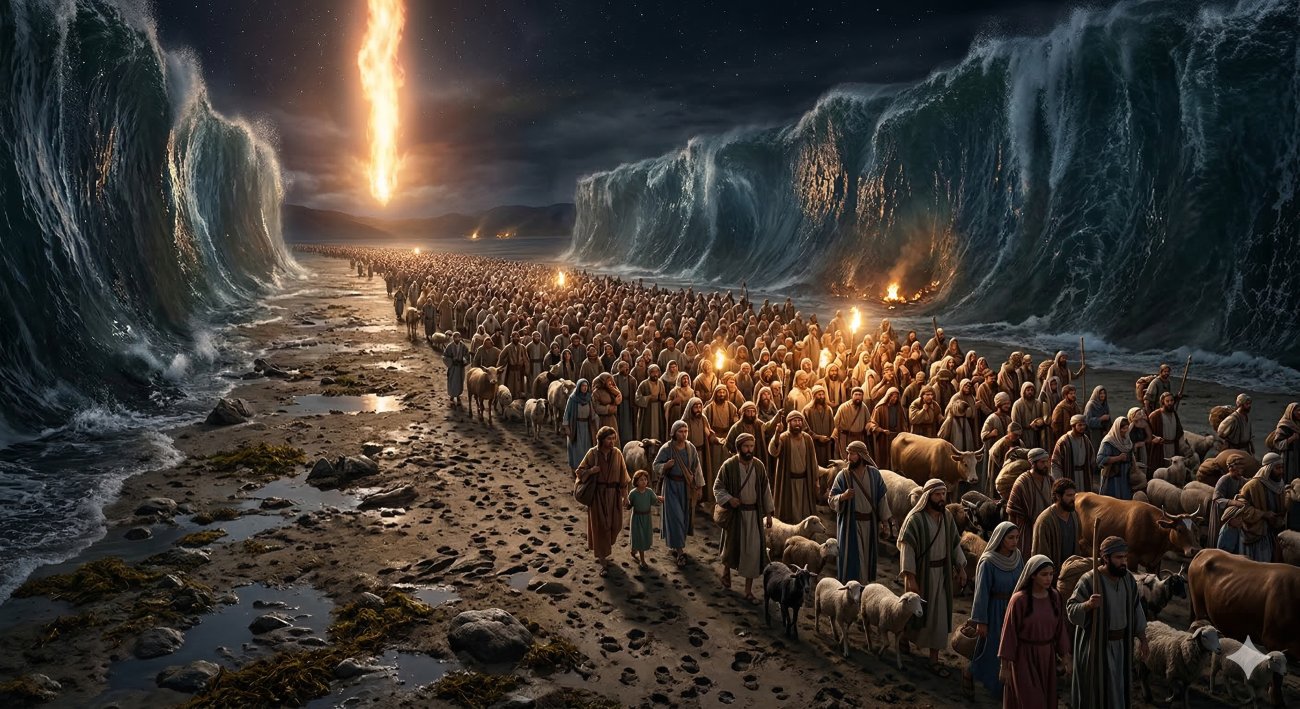
One of the most iconic Miracles of the Exodus is the parting of the Red Sea. We often see movies depicting a narrow corridor with walls of water on either side, where the Israelites walk two-by-two or in small groups. However, the math tells a very different story. If 3.5 million people traveled in a narrow line (double file), the line would have been nearly 800 miles long. For the last person in line to reach the other side, it would have taken 35 days and nights of continuous walking.
But the Bible tells us they crossed in a single night.
To accomplish this feat in a matter of hours, the "dry land" provided by God couldn't have been a simple path. Mathematically, for 3.5 million people—including the elderly, children, and livestock—to cross in one night, the opening in the sea had to be at least three miles wide. This would allow the Israelites to walk 5,000 abreast. Imagine the scale: a three-mile wide canyon through the heart of the sea, perfectly dry and ready for travel. This specific detail of the Miracles of the Exodus highlights that God doesn't just make a way; He makes an abundant way that provides safety for every single soul in His care.
Feeding the Multitude: The Logistics of Daily Manna
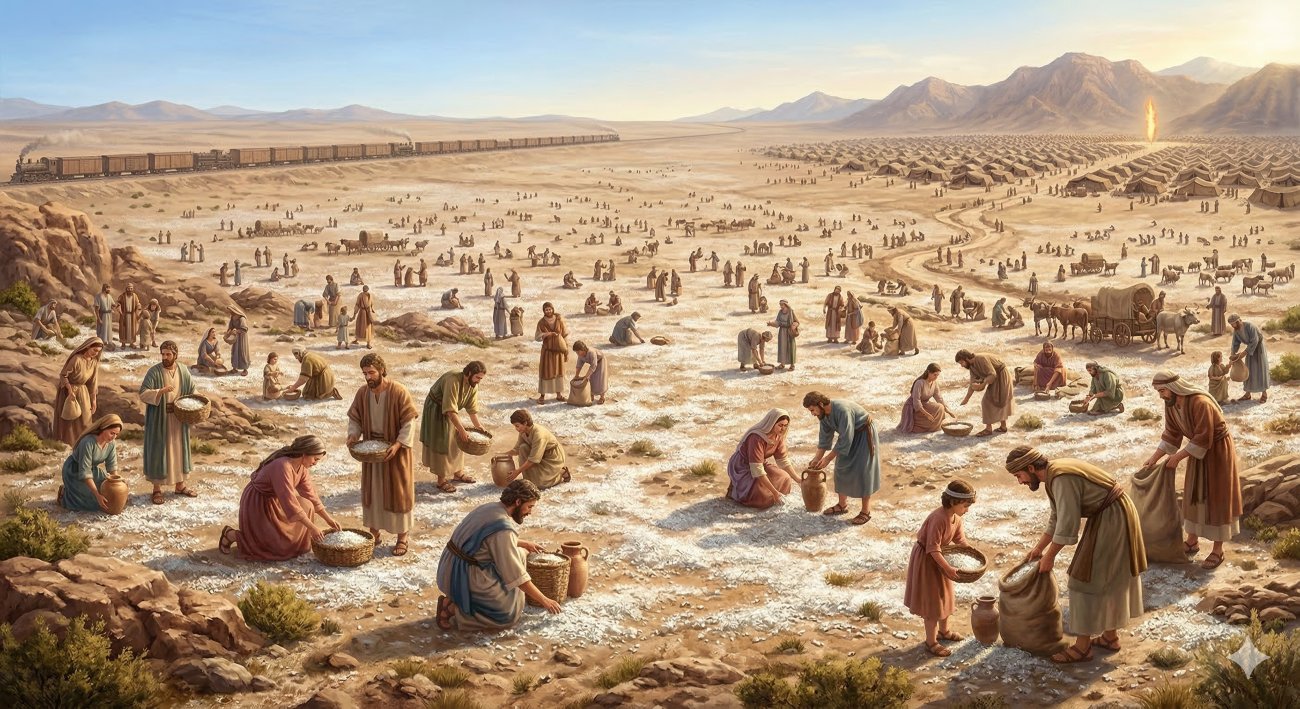
Once across the sea, the next challenge was survival in a "barren land." According to the Quartermaster General of the Army, to provide the bare minimum of food for 3.5 million people, Moses would have needed 1,500 tons of food every single day. To put that into a modern perspective, it would take two freight trains, each a mile long, arriving every morning to deliver the necessary rations.
And that is just the food. To cook that food, they would have needed firewood. The math suggests they would require 4,000 tons of wood daily—another several freight trains worth of fuel—just to prepare their meals.
The Miracles of the Exodus provided exactly this through the manna from heaven. For 14,600 days (40 years), the ground was covered with "bread from heaven." There was no supply chain, no warehouses, and no infrastructure. There was only the consistent, miraculous hand of God. When we consider the "Daily Manna," we aren't just looking at a snack; we are looking at a logistical miracle that would cost billions of dollars in today's economy, executed perfectly every morning without fail.
Eleven Million Gallons: The Miracle of Water from the Rock
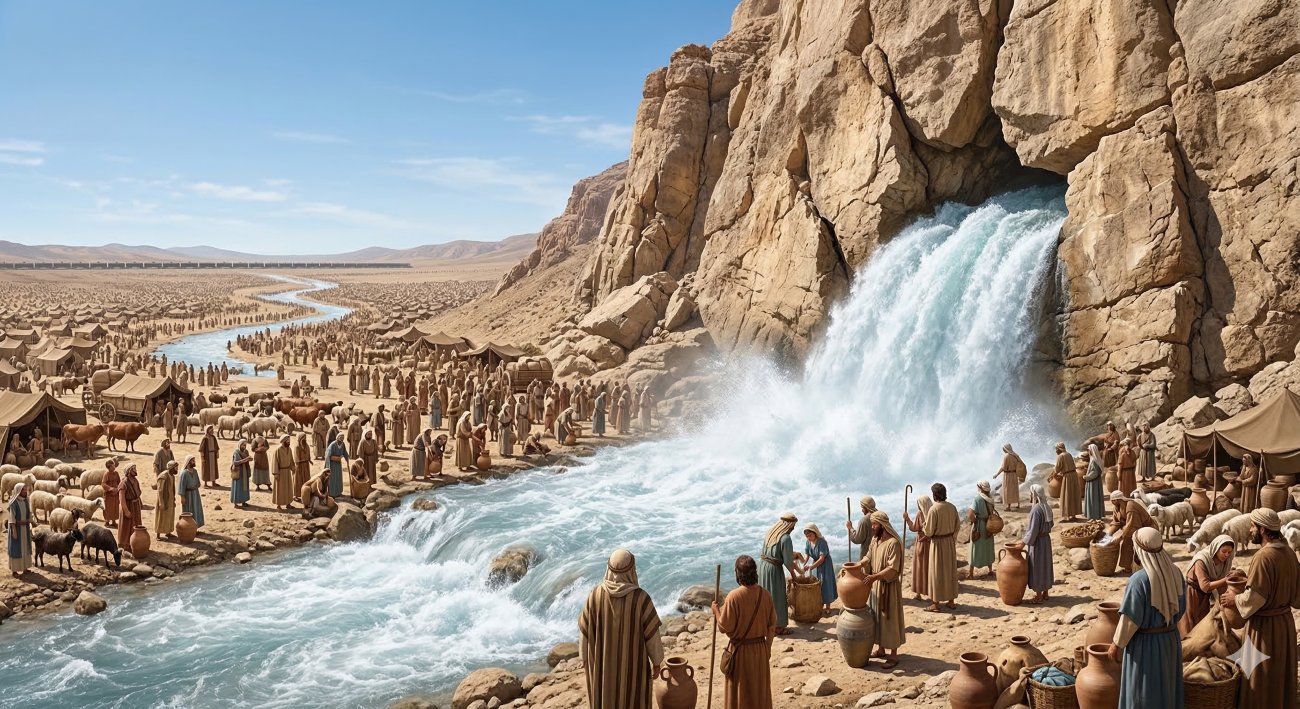
While food is essential, water is an immediate necessity for life in the desert. For a population of 3.5 million people to have enough water for drinking and basic washing, it would require 11,000,000 gallons of water every day. If you were to transport that water by rail, you would need a freight train of tank cars stretching 1,800 miles long.
When Moses struck the rock at Horeb, it wasn't a trickling spring. To satisfy the thirst of millions and their vast herds of livestock, the water must have gushed out with the force of a mighty river. This is one of the most under-appreciated Miracles of the Exodus. In a place where rain is a rarity and wells are non-existent, God turned a flinty rock into a reservoir. The physical volume of water required proves that the Exodus was a continuous, high-energy miracle that never ceased for forty years.
A Campground the Size of Rhode Island
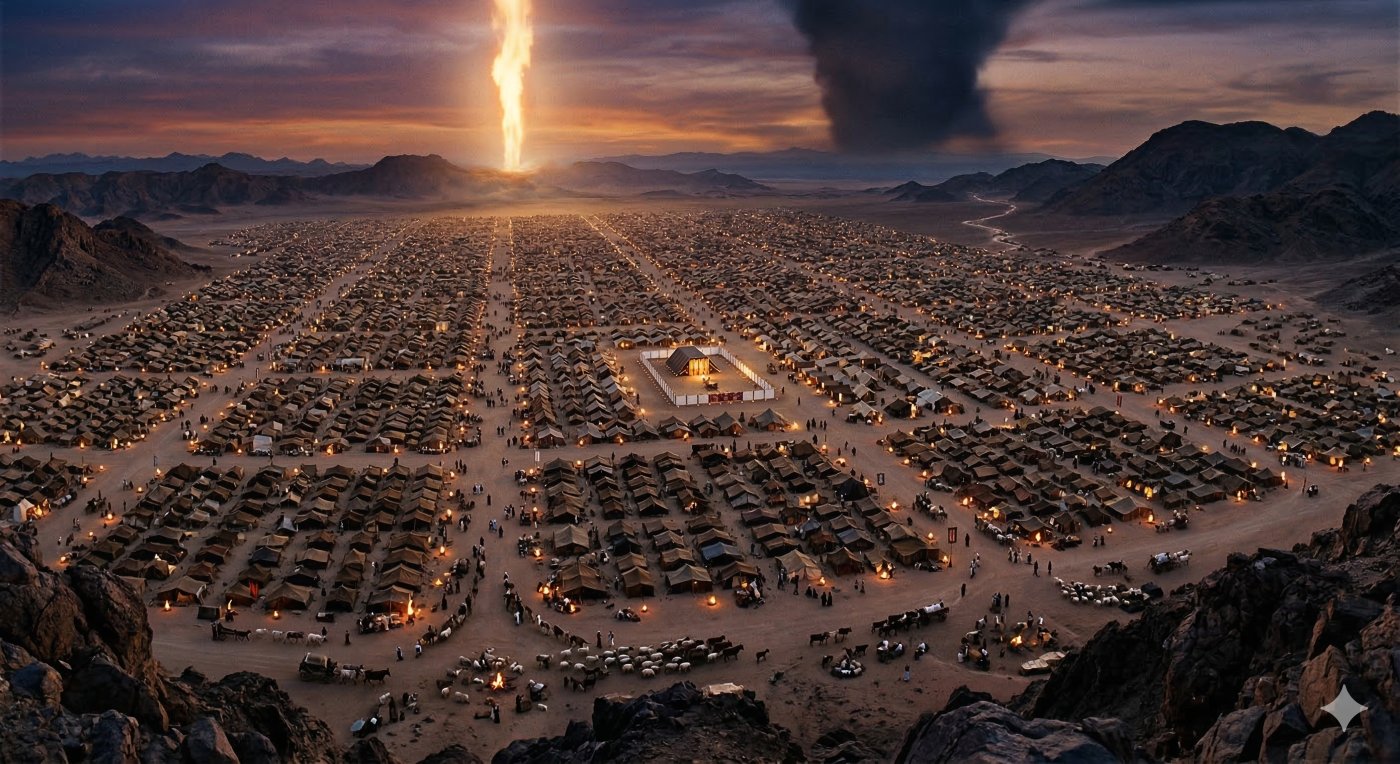
Where do you put 3.5 million people when the sun goes down? The logistics of the "Camp of Israel" are staggering. To give every family a modest amount of space for their tents and animals, they would require a campground of approximately 750 square miles. To visualize this, the Israelites needed a space roughly two-thirds the size of the state of Rhode Island every time they stopped for the night.
Imagine the organization required. Moses didn't have GPS, radios, or a quartermaster corps. Yet, the Bible describes an orderly camp, arranged by tribe, moving and settling at the direction of a pillar of cloud by day and a pillar of fire by night. This pillar was yet another of the Miracles of the Exodus, acting as a supernatural thermostat. It provided shade from the blistering 120-degree desert sun during the day and warmth and light during the freezing desert nights.
The Miracles of the Exodus: Clothing and Health
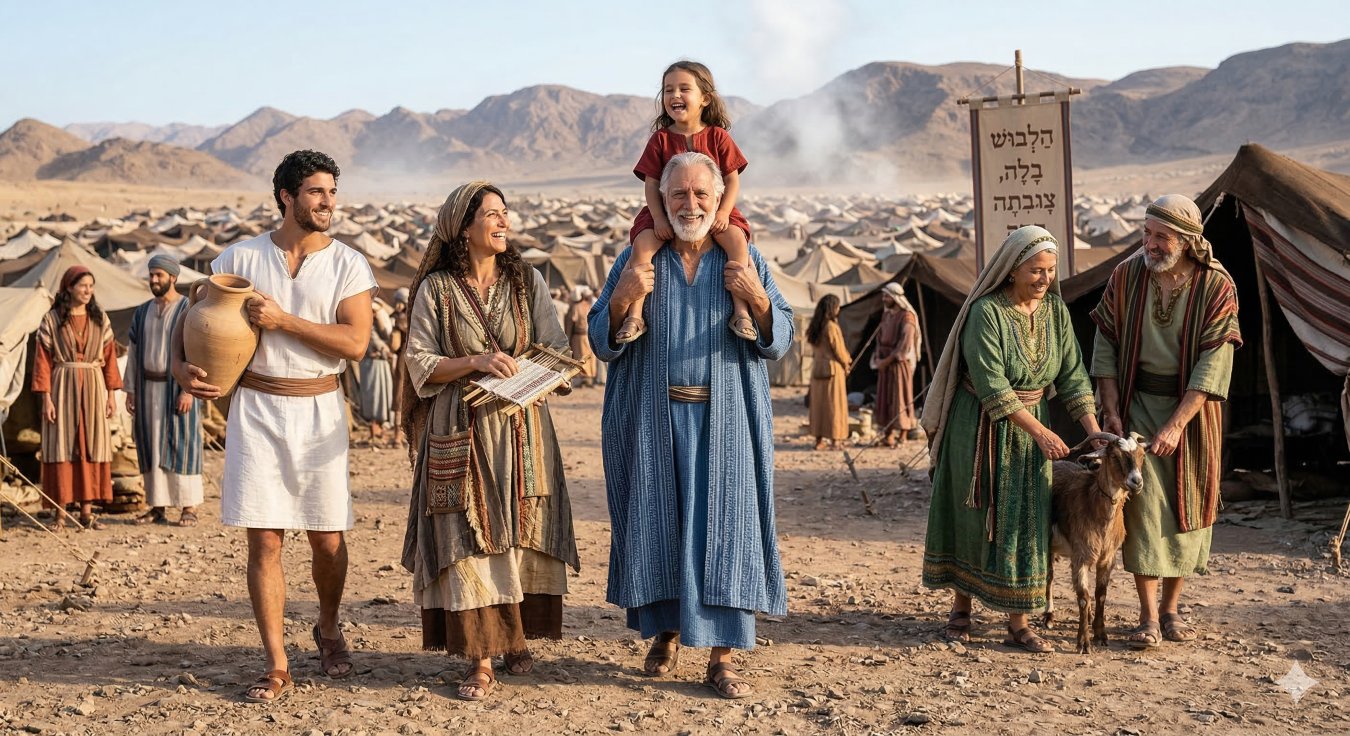
Finally, we must consider the wear and tear of forty years of travel. In Deuteronomy 8:4, Moses reminds the people: "Your clothes did not wear out and your feet did not swell during these forty years."
Think about the math of clothing 3.5 million people. There were no textile mills, no department stores, and no leather tanneries in the Sinai wilderness. Under normal circumstances, shoes would disintegrate and fabric would rot in the harsh desert conditions within months. Yet, for 480 months, not a single sandal strap broke due to age, and not a single robe became threadbare. This "silent miracle" happened every second of every day.
Furthermore, the physical health of the people was a miracle in itself. Psalm 105:37 says, "He brought them forth also with silver and gold: and there was not one feeble person among their tribes." To have a population of millions with zero "feeble" (infirm or sick) people is medically impossible. It suggests a level of divine health that bypassed the natural aging and disease processes.
The Pillar of Cloud and Fire: Divine Climate Control
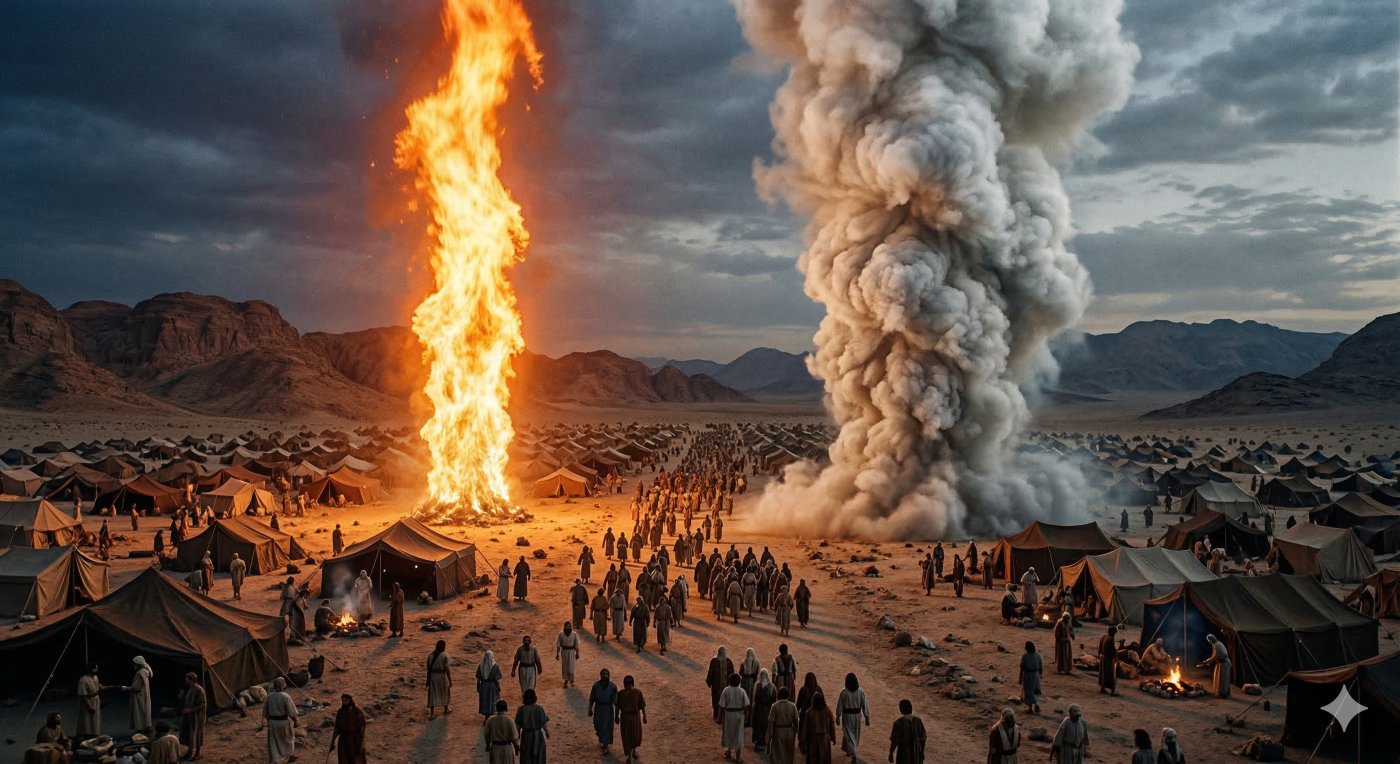
Among the most visible Miracles of the Exodus were the Pillar of Cloud by day and the Pillar of Fire by night. While we often view these as simple navigational beacons, the physical reality was far more profound. The Sinai desert is a land of extremes—sweltering, lethal heat during the day and bone-chilling cold at night. For 3.5 million people to survive these conditions without permanent shelter, they required a miracle of environmental engineering.
Mathematically, the "Cloud" had to be massive enough to provide shade for a camp spanning 750 square miles. Imagine a supernatural canopy that blocked the ultraviolet rays of the desert sun, keeping the temperature bearable for millions of people and their livestock. Without this shade, the water requirements we discussed earlier would have doubled or tripled due to heat exhaustion.
When the sun set, the miracle shifted. The Pillar of Fire provided more than just light; it provided heat. Desert temperatures can plummet to near freezing once the sun goes down. The Pillar of Fire acted as a central heating system for the entire nation, ensuring that the "Miracles of the Exodus" covered every physical need, from visibility to thermoregulation. This constant presence meant that for 40 years, the Israelites never spent a single moment in total darkness or extreme exposure. It was a 24-hour, 365-day-a-year demonstration of God’s protective power over His people.
Conclusion: The God of the Impossible
When we add up the trains of food, the 1,800-mile long water tankers, the three-mile wide sea crossing, and the Rhode Island-sized campground, we realize that Moses didn't "figure this out." He didn't have a plan because no human plan could suffice. Moses simply had faith.
The Miracles of the Exodus serve as a permanent reminder that the God who provided for 3.5 million people in a wasteland is the same God who looks after your daily needs. If He can part a sea three miles wide and bake bread on the desert floor for forty years, He can certainly handle the "impossible" situations in your life today. The mathematics of the Exodus prove one thing: with God, the numbers always add up to a miracle.
Biblical Foundations for the Miracles of the Exodus
The staggering scale of the Miracles of the Exodus is documented throughout the Pentateuch and the Psalms. These verses provide the primary source material for the logistics of the crossing, the daily provision, and the supernatural protection experienced by the Israelites:
- The Red Sea Crossing: "Then Moses stretched out his hand over the sea, and all that night the Lord drove the sea back with a strong east wind and turned it into dry land. The waters were divided, and the Israelites went through the sea on dry ground, with a wall of water on their right and on their left." — Exodus 14:21-22
- The Daily Manna: "The people of Israel ate the manna forty years, until they came to a habitable land. They ate the manna until they came to the border of the land of Canaan." — Exodus 16:35
- Water from the Rock: "He opened the rock, and water gushed out; it flowed through the desert like a river." — Psalm 105:41
- The Pillar of Cloud and Fire: "By day the Lord went ahead of them in a pillar of cloud to guide them on their way and by night in a pillar of fire to give them light, so that they could travel by day or night." — Exodus 13:21
- Divine Health and Clothing: "Your clothes did not wear out and your feet did not swell during these forty years." — Deuteronomy 8:4
The Archaeology and Logistics of the Red Sea Miracles
Deepen Your Study of the Unseen World
The Miracles of the Exodus demonstrate God’s absolute authority over the physical world, but His power extends just as deeply into the spiritual realm. To truly understand the nature of God’s interaction with humanity, it is helpful to look at how He handles our past, our spirits, and our eternal future.
If you found the logistics of the desert journey fascinating, you may also want to explore these related biblical studies:
- What does the Bible Say About Spirits, Ancestors and The Afterlife? – Discover the biblical boundaries between our world and the next, and why the "Ancestors" mentioned in the Exodus were so central to the Israelite identity.
- What Are The Benefits Of Grace? – The same God who provided manna to a grumbling nation provides unmerited favor to us today. Learn how the miracles of provision are a foreshadowing of the grace we receive through Christ.
- The Repentance Of King Manasseh – Even after witnessing great miracles, Israel often turned away. This study examines how one of Israel’s most rebellious kings found forgiveness, proving that no one is beyond the reach of God's mercy.
- Are Ghosts In The Bible? – Just as we analyzed the physical reality of the Red Sea crossing, we can analyze what the Scripture actually says about spiritual manifestations and "ghostly" appearances.


