The Truth About Snake Handling in Churches: History, Scripture, and Law
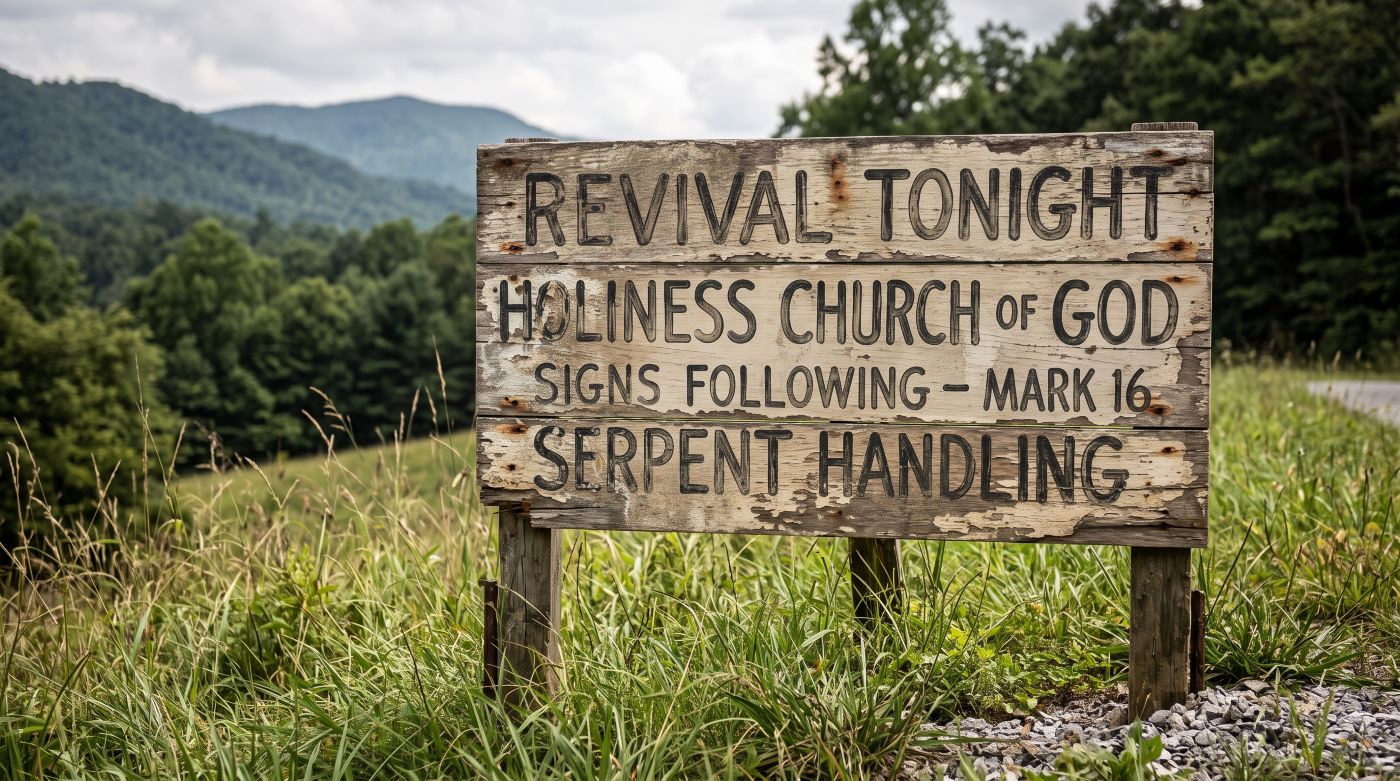
Among the diverse spectrum of religious practices found across North America, few traditions provoke as much mystery, fascination, and intense debate as snake handling in churches. To the uninitiated, the idea of intentionally picking up highly venomous pit vipers—such as timber rattlesnakes and copperheads—during a Christian worship service seems almost unbelievable. Yet, for a small, dedicated group of believers tucked primarily into the valleys and mountain hollows of the Appalachian region, taking up serpents is viewed not as a reckless display, but as an essential act of obedience to the Word of God.
My own introduction to the real-world presence of this tradition occurred quite unexpectedly years ago. I was sitting at a fellowship potluck dinner following a traditional Protestant Sunday service, enjoying food and casual conversation with fellow churchgoers. I struck up a conversation with a visitor sitting nearby. As we talked about faith and worship, he looked at me with an unmistakable intensity in his eyes and said, "You haven't experienced worship like I have." He never explicitly mentioned a congregation name or a specific road, but his subtle references and tone made it abundantly clear what he was talking about. He was actively attending a sanctuary where snake handling in churches was observed as part of the regular service. That brief conversation revealed just how close, yet entirely hidden, these quiet congregations operate within local communities.
Understanding the phenomenon of snake handling in churches requires stepping back from sensationalized headlines and examining the movement through several distinct lenses: its historical origins, its core biblical claims, the legal framework surrounding it, and the very real physical dangers endured by those who practice it.
The Origins of Snake Handling in Churches: Born in Bradley County
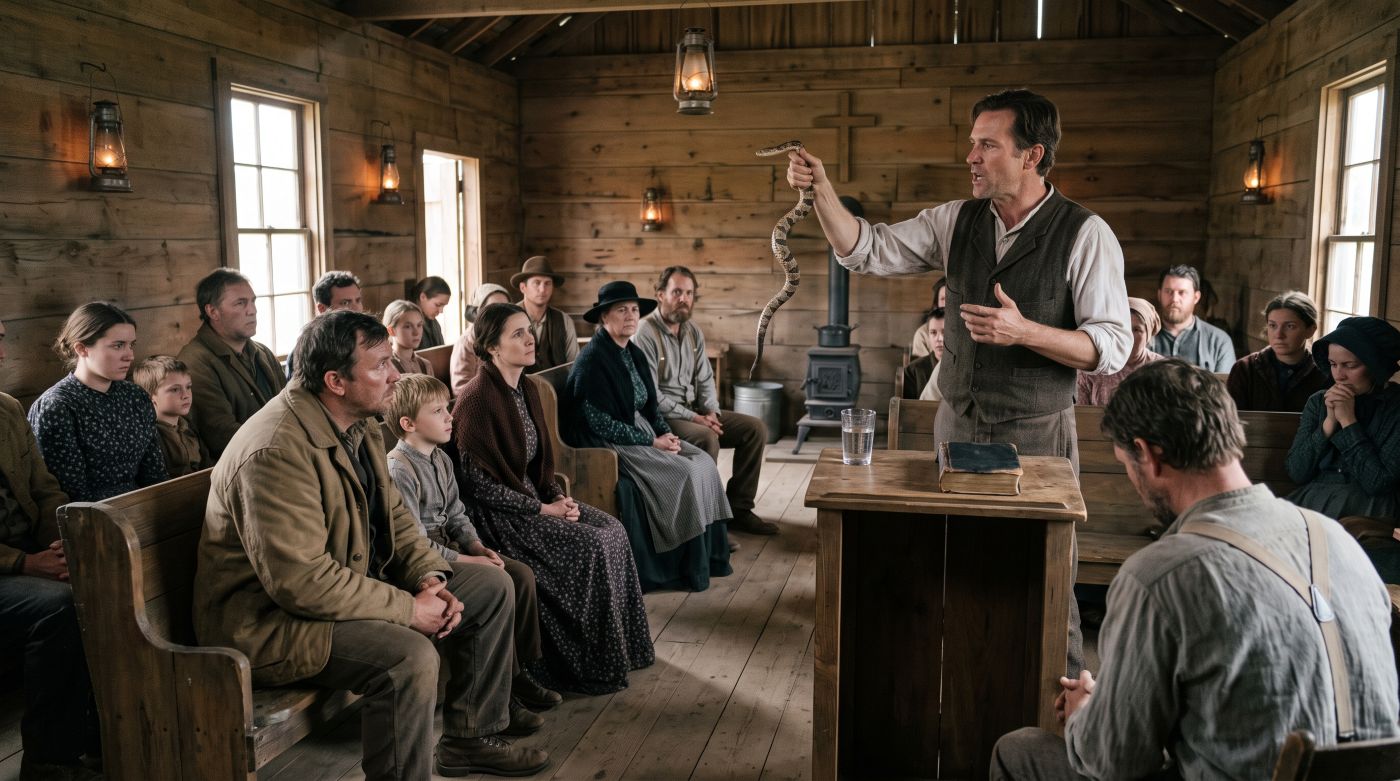
While many people assume this movement began centuries ago in remote European sects or colonial American colonies, its documented history actually traces back to a very specific time and place. The practice of snake handling in churches officially originated in 1909 right in Bradley County, Tennessee.
The founder of the movement was an itinerant Holiness preacher named George Went Hensley. Born in rural Appalachia, Hensley was deeply influenced by the Holiness-Pentecostal revival movements sweeping through the American South at the turn of the 20th century. According to local historical accounts and tradition, Hensley was preaching on Sale Creek Mountain in nearby Hamilton County and Bradley County when he claimed to have received a direct revelation from God regarding the spiritual mandate to take up serpents.
To test his faith and prove the truth of his revelation, Hensley captured a live, venomous timber rattlesnake, brought it to a religious gathering in Grasshopper Valley in Bradley County, and lifted it up before the congregation while preaching. He suffered no bites during that initial demonstration, which believers interpreted as an indisputable sign of divine protection and Holy Spirit empowerment.
From its humble beginnings in Bradley County, Hensley took his message on the road. He traveled extensively through Tennessee, Kentucky, Virginia, West Virginia, and North Carolina, holding tent revivals and establishing independent congregations. These churches came to be known collectively as the Holiness Church of God in Jesus Name or similar Pentecostal Holiness variations. Though never adopting a centralized corporate hierarchy, these independent mountain churches formed a tight-knit network bound together by shared ritual, literal biblical interpretation, and deeply personal experiences of faith.
What the Bible Says About Taking Up Serpents
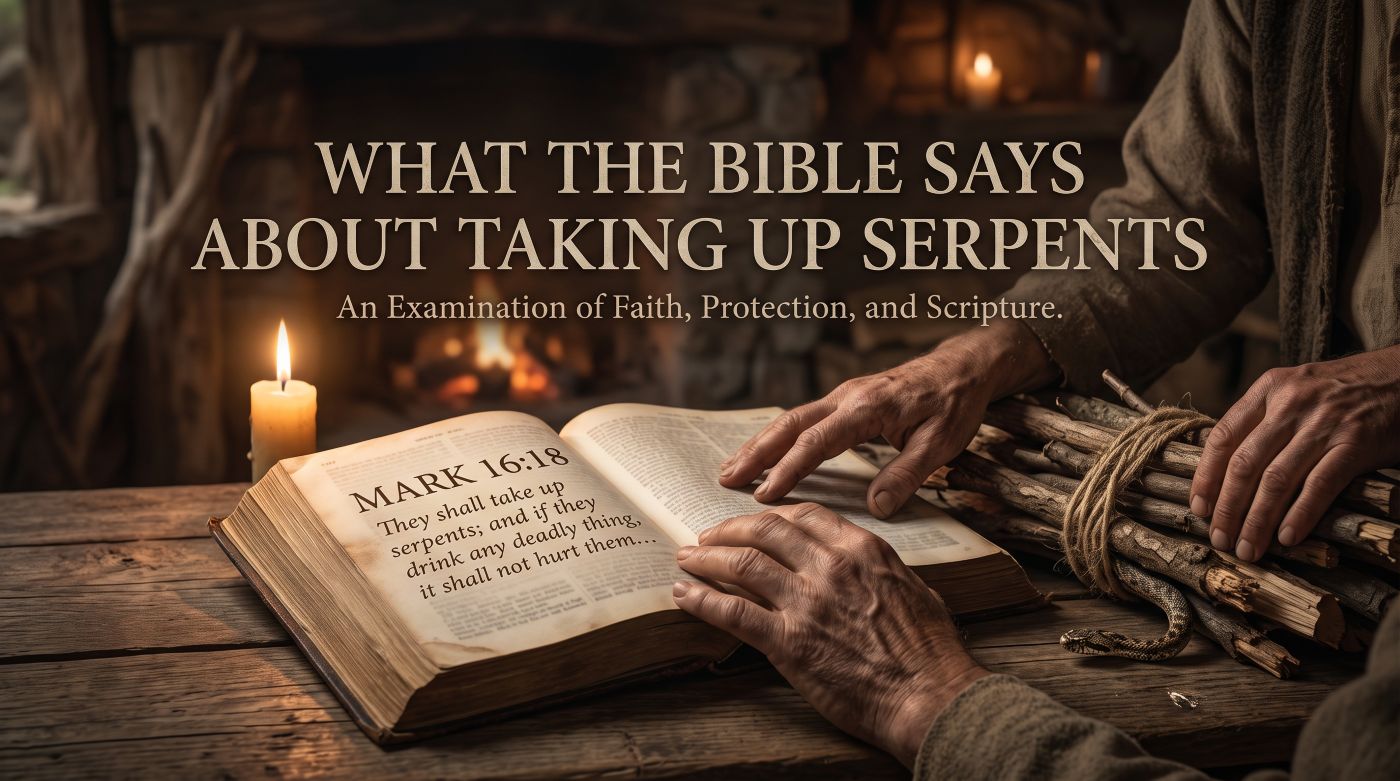
To understand why believers engage in what external observers view as extreme risk, one must examine their theological foundation. Proponents of snake handling in churches root their entire worship style in a literal reading of a specific passage from the King James Version of the New Testament.
The primary scriptural justification is derived from the Gospel of Mark, specifically Mark 16:17–18:
"And these signs shall follow them that believe; In my name shall they cast out devils; they shall speak with new tongues; They shall take up serpents; and if they drink any deadly thing, it shall not hurt them; they shall lay hands on the sick, and they shall recover."
Known among scholars as the "Longer Ending of Mark," this passage outlines five specific "signs" that followers of Jesus are said to demonstrate. While mainstream Christian denominations interpret these verses allegorically, historically, or as representative of first-century apostolic miracles, serpent-handling congregations view them as a binding, ongoing commandment for true believers today. In their view, if a believer truly possesses the Holy Spirit, they should expect to demonstrate all five signs—speaking in tongues, casting out demons, healing the sick, handling poisonous snakes, and sometimes drinking lethal substances like strychnine or lye.
Believers also point to another key passage in the New Testament to support their convictions. In Acts 28:3–5, the Apostle Paul is shipwrecked on the island of Malta:
"And when Paul had gathered a bundle of sticks, and laid them on the fire, there came a viper out of the heat, and fastened on his hand. And when the barbarians saw the venomous beast hang on his hand, they said among themselves, No doubt this man is a murderer... But he shook off the beast into the fire, and felt no harm."
While mainstream biblical scholars note that Paul's encounter was an accidental bite rather than a deliberate, ritualized act during a worship service, serpent handlers see it as proof that God supernaturally neutralizes snake venom for his anointed servants.
The Theological Debate
Mainstream Christian theologians and biblical scholars strongly contest the practice, relying on several core arguments:
- Textual Criticism: Most modern biblical scholars note that Mark 16:9–20 is absent from the oldest and most reliable Greek manuscripts of the Gospel of Mark (such as Codex Sinaiticus and Codex Vaticanus), suggesting it was added by later scribes.
- Prohibition Against Testing God: Opponents cite Matthew 4:7, where Jesus responds to Satan during His temptation in the wilderness by quoting Deuteronomy 6:16: "Thou shalt not tempt the Lord thy God." Mainstream theologians argue that deliberately putting oneself in physical danger to force a divine intervention constitutes tempting God.
- Context of First-Century Miracles: Most Christian traditions view the miraculous signs of the apostolic era as unique foundational miracles meant to validate the early Gospel message rather than standard weekly worship practices.
Legal Status: What the Law Says About Serpent Handling
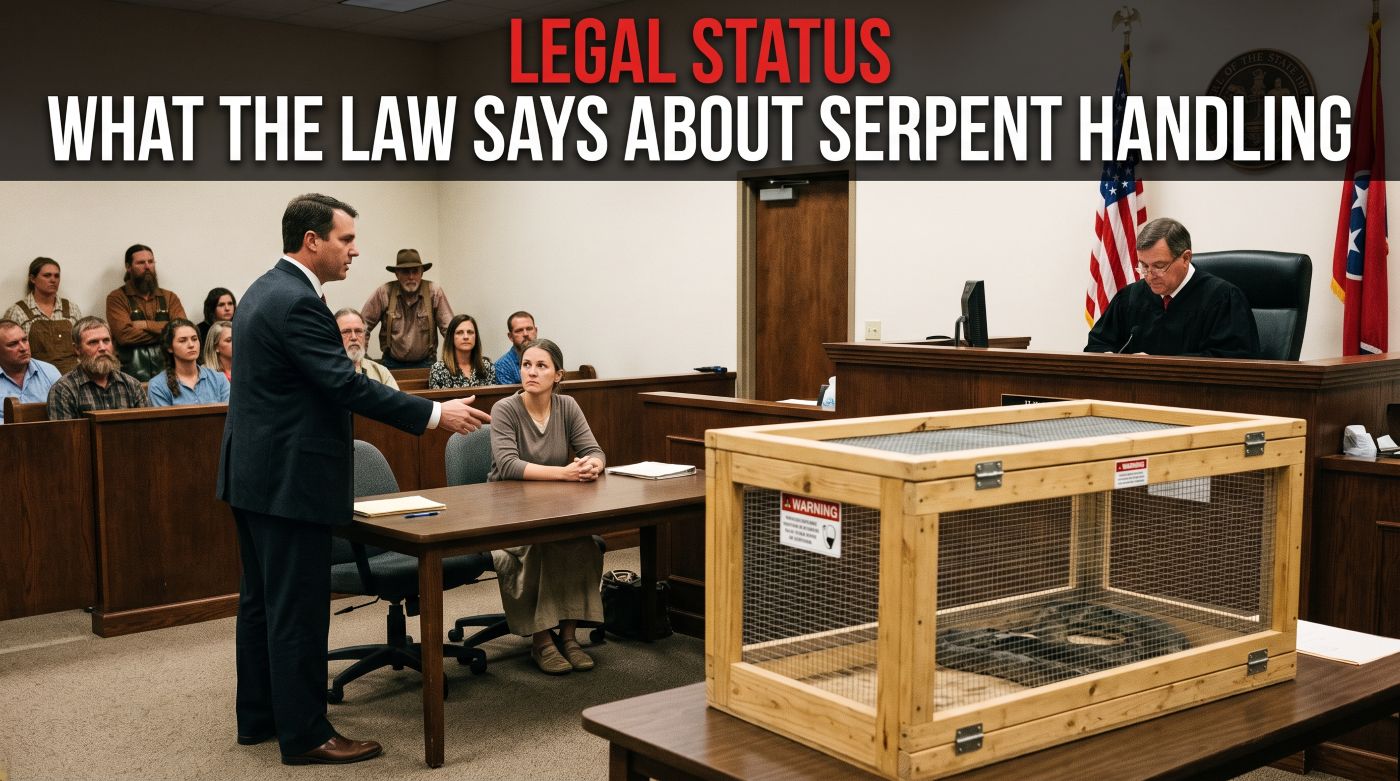
As the practice spread throughout the Appalachian region during the 1920s and 1930s, tragic fatalities inevitably followed. State legislatures and municipal governments stepped in to pass laws prohibiting the handling of dangerous reptiles in public or religious settings.
Today, the legal landscape surrounding the tradition is heavily weighted against it:
- State Bans: The majority of southeastern states—including Tennessee, Kentucky, Virginia, North Carolina, and Alabama—have explicit statutes making it illegal to handle, display, or exhibit dangerous, venomous reptiles in a manner that endangers human life. In Tennessee, for example, state law explicitly classifies the handling of poisonous snakes in a way that threatens public health and safety as a misdemeanor crime.
- First Amendment Boundaries: Practitioners have repeatedly challenged these bans in state and federal courts, arguing that anti-snake handling laws violate their First Amendment rights to the free exercise of religion. However, courts have consistently ruled against them. Under established constitutional jurisprudence, while the government cannot restrict religious beliefs, it maintains a compelling state interest in regulating religious conduct if that conduct poses a direct threat to public safety, human life, and health.
- Wildlife & Poaching Laws: Beyond direct bans on the act itself, wildlife conservation laws heavily restrict the collection, possession, and transport of native venomous snakes. States regulate wildlife permits, and possessing timber rattlesnakes or copperheads without proper state authorization is a violation of game laws. In 2013, high-profile wildlife operations resulted in the confiscation of illegally held vipers from prominent Appalachian pastors.
Because of these stringent laws, congregations that still practice the tradition operate with extreme discretion. Services are held in private, rural sanctuaries, often located down unpaved mountain roads, far away from public scrutiny and law enforcement oversight.
The Physical Dangers and Human Toll
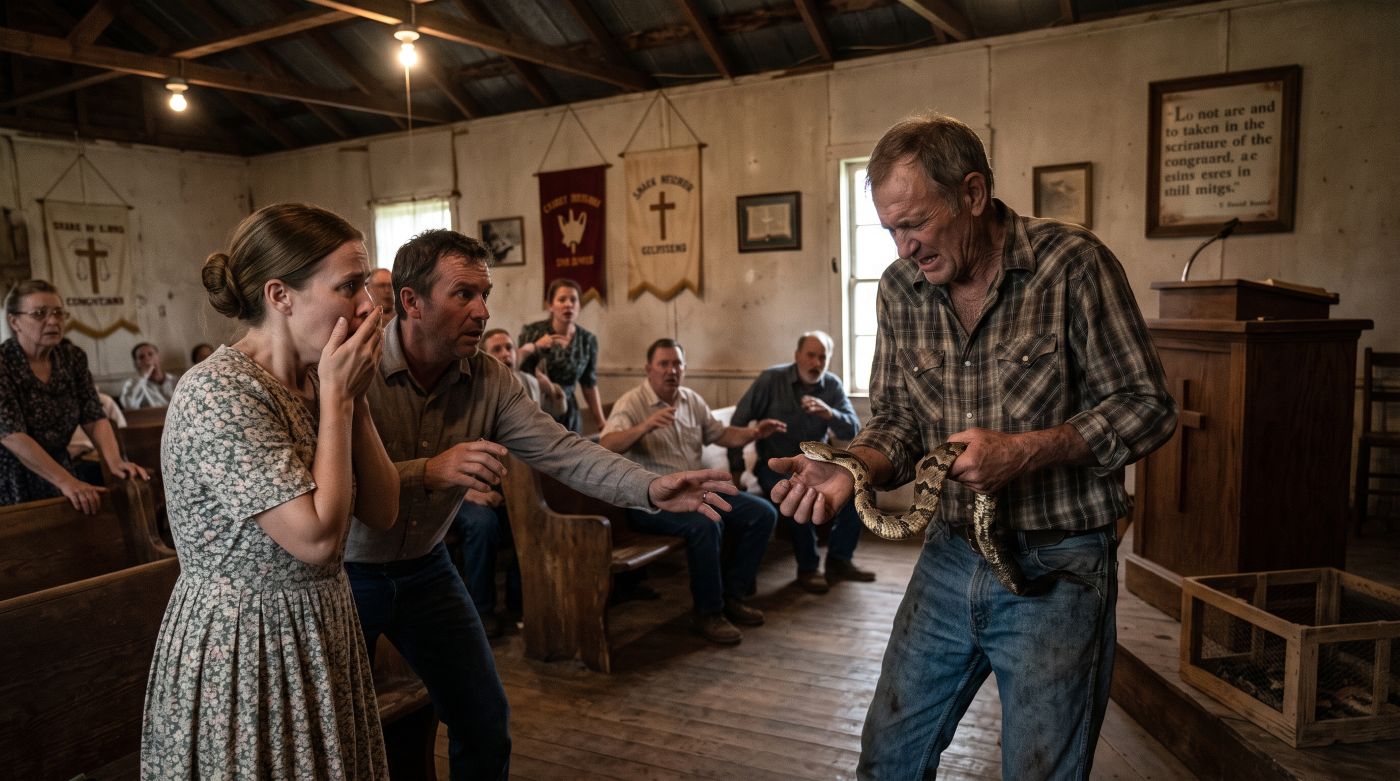
Despite the deep faith and conviction of those involved, the physical reality of handling wild, venomous pit vipers cannot be overstated. North American pit vipers, particularly timber rattlesnakes and copperheads, possess potent hemotoxic and cytotoxic venoms designed to break down tissue, destroy red blood cells, and disrupt blood clotting.
When a person is bitten during a worship service involving snake handling in churches, the spiritual beliefs of the congregation directly influence medical outcomes:
- Refusal of Medical Treatment: A core tenet in many serpent-handling sanctuaries is that seeking emergency medical care or receiving antivenom demonstrates a lack of faith in God’s healing power. Consequently, bite victims often refuse to call 911 or visit hospitals, choosing instead to remain at home or in the sanctuary while fellow church members pray over them.
- Severe Physical Disfigurement: Those who survive repeated venomous bites without medical intervention frequently suffer permanent physical damage. Tissue necrosis often leads to loss of function, extreme scarring, or amputation of fingers and hands. It is common for long-time handlers to display missing or severely deformed fingers as physical markers of their journey.
- Fatalities: The ultimate price of the practice is death. Historical estimates indicate that well over 100 people have died from snake bites sustained during religious services since the movement began in the early 20th century.
Tragically, even the movement's prominent leaders have not been immune to these outcomes. George Went Hensley himself died in 1955 at the age of 70 after being bitten by a timber rattlesnake during a service in Altha, Florida. True to his beliefs, he refused medical treatment and succumbed to the venom several hours later. Decades later, in 2012 and 2014, two nationally recognized pastors from West Virginia and Kentucky—both featured in news documentaries about Appalachian faith—died after refusing antivenom following rattlesnake bites suffered during worship.
A Complex Legacy of Faith and Survival
![A preacher holding a venomous snake at the altar of a modest wooden church, surrounded by a congregation in worship[cite: 1]. An open Bible and a mesh snake box sit nearby[cite: 1]](https://www.anunseenworld.com/images/xsnake-handling-church-service-appalachia.jpg.pagespeed.ic.X273PfdXtj.jpg "A preacher holding a venomous snake at the altar of a modest wooden church, surrounded by a congregation in worship[cite: 1]. An open Bible and a mesh snake box sit nearby[cite: 1]")
The practice of taking up vipers in sanctuary settings remains one of the most intriguing and controversial chapters in American religious history. What started over a century ago in the hills of Bradley County continues as a quiet, insular tradition maintained by a vanishingly small number of devoted believers across the central Appalachian chain.
To external observers, theologians, and law enforcement agencies, the practice represents an unnecessary physical hazard that misinterprets biblical texts and violates public safety standards. To the believers who gather in these small mountain churches, however, picking up a dangerous reptile is neither a stunt nor a test of bravado; it is a raw, uncompromising expression of obedience to scripture, a literal demonstration of faith, and an intense spiritual experience that sets their devotion apart from the rest of the world.
Whether viewed as an extraordinary example of literal biblical conviction or a dangerous distortion of Christian doctrine, the legacy of this movement continues to captivate scholars, historians, and everyday churchgoers who discover just how close these hidden traditions reside to their own backyards.
GotQuestions: What does the Bible say about snake handling?Related Articles
If you found this topic insightful, explore these related studies and biblical perspectives:
- Mary Worship An examination of Roman Catholic doctrines concerning Mary, evaluating claims of her veneration and perpetual virginity against the backdrop of Biblical scripture.
- Saul to Paul Transformation A deep dive into the miraculous conversion of Saul of Tarsus on the road to Damascus and how his radical change illustrates God's transformative grace.
- 1948: Hinge Of Prophecy An exploration of the re-establishment of Israel in 1948, analyzing its historical significance and alignment with end-times biblical prophecy.
- Alien Deception A critical look at modern UFO and extraterrestrial phenomena from a Christian worldview, examining the spiritual implications and potential deception behind them.


