Defining Biblical Antisemitism Today: Understanding the Spiritual Battle
When we begin defining biblical antisemitism today, we must realize it is often misunderstood as merely a social or political prejudice. However, to understand its persistence throughout history, we must look deeper than earthly friction. The spirit behind antisemitism is inherently evil, rooted in a spiritual opposition to the sovereign purposes of God. By attempting to destroy the Jewish people, the adversary seeks to invalidate God’s promises and His plan for humanity. Today, this ancient hatred manifests in new forms, often disguised as humanitarian concern, yet the underlying spiritual animosity remains the same.
This spiritual phenomenon is what the Bible refers to as the "mystery of lawlessness" at work. It is a irrational hatred that cannot be explained by economics or sociology alone. Ephesians 6:12 reminds us that we wrestle not against flesh and blood, but against principalities and powers. When we see nations gathered in rage against the existence of Israel, we are witnessing a cosmic rebellion against the God who chose them. By identifying the root as spiritual, we can better equip ourselves to stand for truth in a world increasingly blinded by deception.
The Biblical Foundation: Why God Chose Israel
The Jewish nation did not come into existence by chance or human migration. According to the Bible, God sovereignly chose Abraham and his descendants to be a light to the nations and the lineage through which the Messiah would come. This "chosen" status was not based on the nation's size, merit, or power, but strictly on God’s love and His covenant-keeping nature. In Genesis 12, God established the Abrahamic Covenant, promising to make of him a great nation and declaring, "I will bless those who bless you, and I will curse him who curses you."
This covenantal promise is the bedrock of our understanding. In Genesis 15, God performed a "cutting of the covenant" where He alone passed through the pieces, signifying that the fulfillment of the promise depended on His faithfulness, not Israel’s performance. Understanding the creation of the Jewish nation is essential to the process of defining biblical antisemitism today, as it highlights why this specific people group is so uniquely targeted. To stand against this nation is to ultimately challenge the sovereign choice of the Creator Himself, who declared in Zechariah 2:8 that whoever touches Israel "touches the apple of His eye."
Defining Biblical Antisemitism Today through Israel’s Prophetic Destiny
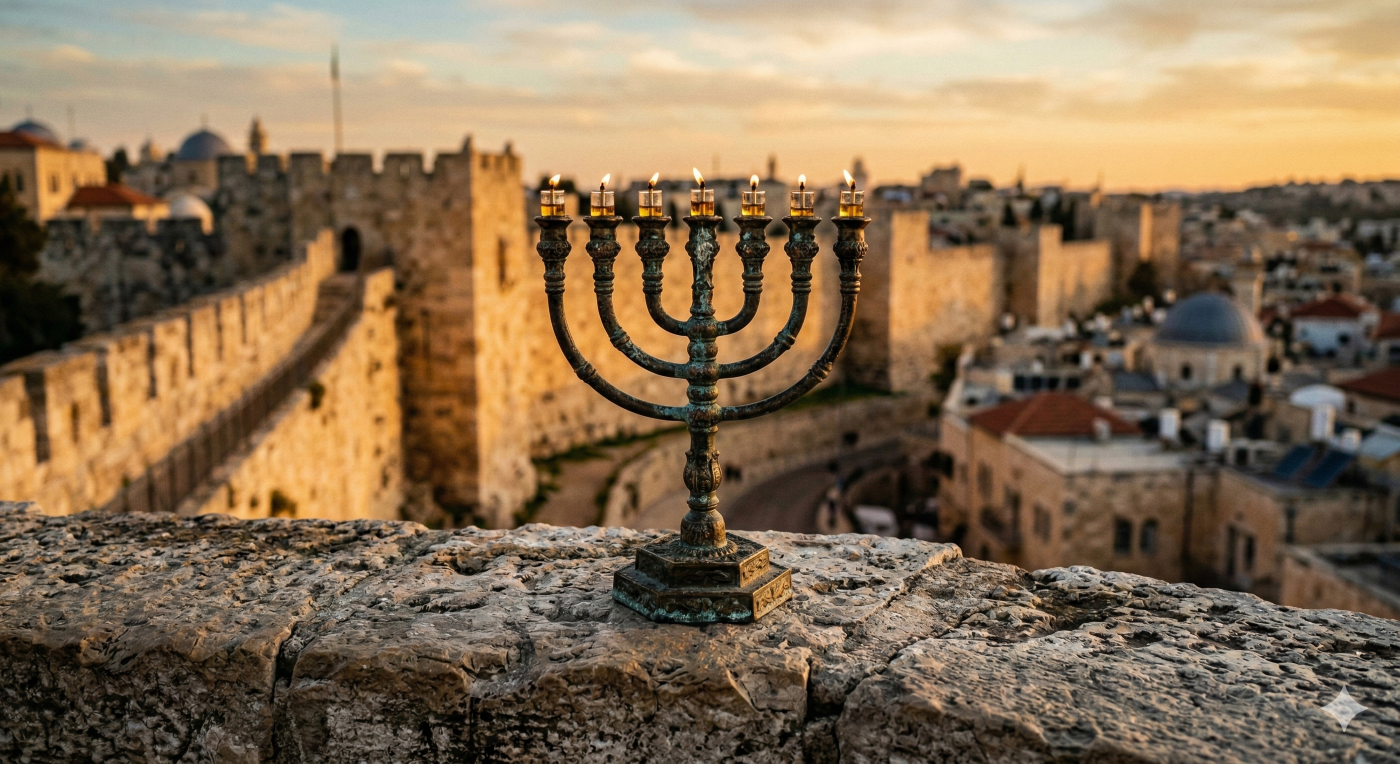
Bible prophecy provides a clear roadmap for the future of the Middle East. Far from being a forgotten piece of land, Israel is destined to become the capital country of planet Earth. Scripture foretells a time when the Prince of Peace will rule, and Jerusalem will be established as the capital city of the world. Zechariah 14 and Isaiah 2 describe a future where all nations will flow to Jerusalem to learn the ways of the Lord. This prophetic reality explains why the city remains the most contested point of focus in modern global affairs; the battle over the land is a battle over God's throne.
The Bible is explicit that God has a "set time" to favor Zion. In the Millennial Kingdom, the law will go forth from Zion and the word of the Lord from Jerusalem (Micah 4:2). This destined glory is exactly what the enemy of our souls wants to prevent. If the Jewish people can be eliminated, the enemy reasons that God’s Word would fail. This is why the world’s current hostility toward Jerusalem is so spiritually charged; it is a desperate attempt by the spirit of this world to stop the King of Kings from taking His rightful seat on the throne of David.

From Haman to Hitler: Satan’s Attempts to Destroy the Jews
History reveals a repetitive, supernatural pattern of attempted genocide that transcends normal political conflict. In the Book of Esther, we see this manifested through Haman. His plot to annihilate every Jew in the Persian Empire was not merely a personal grudge; it was a spiritual strike intended to wipe out the line through which the Savior would eventually be born. This plan was only thwarted by divine intervention and the courage of a young Jewish queen who was told she was "called for such a time as this."
Centuries later, the world witnessed the same "Haman spirit" in the reign of Adolf Hitler. The Holocaust was not merely a political or social event; it was a focused, industrial effort to destroy the people through whom God’s Word and Messiah came. Revelation 12 describes a symbolic "dragon" standing before the woman (Israel) ready to devour her child. Throughout history, whenever that dragon could not destroy the Messiah, he turned his wrath toward the people who brought Him forth. From the decrees of Pharaoh to the gas chambers of Europe, we see a calculated spiritual attempt to break God's promise of Jewish survival.

The Seven-Year Tribulation and Israel’s Turning
The Bible speaks of a future seven-year period, often called the Tribulation or "the time of Jacob’s trouble" (Jeremiah 30:7). While this is a period of great judgment, its ultimate biblical purpose for Israel is one of restoration. The scripture indicates that through these trials, the nation will be refined and will ultimately turn back to God. Crucially, Jesus Himself established the condition for His return in Matthew 23:39, telling the nation: "For I say to you, you shall see Me no more till you say, ‘Blessed is He who comes in the name of the Lord!’”
The prophet Zechariah tells us that during this time, God will pour out on the house of David a spirit of grace and supplication, and "they will look upon Me whom they have pierced" (Zechariah 12:10). This national mourning leads to a national cleansing. The Tribulation is not an end in itself; it is the refiner's fire that prepares a remnant of the Jewish people to welcome their Messiah back to Earth. It is a difficult journey, but one that leads to the final reconciliation where the Jewish people recognize Jesus (Yeshua) as their true King and Savior.
Defining Biblical Antisemitism Today: Exposing Replacement Theology
A significant deception within some religious circles is "Replacement Theology"—the idea that the Church has replaced Israel in God’s plan and that His promises to the Jewish people are now void. This is a scriptural fallacy. The Apostle Paul addresses this directly in Romans 11, asking, "Has God cast away His people? Certainly not!" When we are defining biblical antisemitism today, we must include these theological errors, as they often provide a "religious" cover for the rejection of God's chosen people.
If we believe God has broken His covenant with Israel, we inadvertently suggest that He could break His covenant with us as well. Paul warns the Gentile believers in Romans 11:18 not to "boast against the branches," reminding them that they do not support the root, but the root supports them. By claiming the Church has "replaced" Israel, many have fallen into a spiritual pride that blinds them to God’s ongoing plan for the Jewish nation. God’s gifts and His call are irrevocable, and His faithfulness to Israel is the greatest proof of His faithfulness to all believers.
The Inversion of Truth: October 7 and the Global Response
In our world today, we see a disturbing trend: the world often blames Israel for the very atrocities committed against her. This "inversion of truth" is a hallmark of modern antisemitism. A harrowing and undeniable example is the terrorist attack on October 7, 2023. Despite being an unprovoked assault involving unimaginable cruelty against innocent civilians, the subsequent global narrative quickly shifted from sympathy to condemnation of the victim.
Isaiah 5:20 warns of a time when people will "call evil good and good evil," and that is exactly what we are witnessing. When the world demands that Israel remain defenseless in the face of eliminationist threats, it reveals a profound moral and spiritual blindness. This modern manifestation of antisemitism often hides behind political labels, yet its fruit is the same ancient hatred seen in Esther’s day. As believers, we must recognize that these events are part of a larger spiritual battle for the soul of the nations and their alignment with God's Word.
For further study on the international standards and examples regarding this issue, you can view the IHRA Working Definition of Antisemitism at the International Holocaust Remembrance Alliance website.
Deepening Your Understanding: Grace, Judgment, and Repentance
The spiritual battle we see manifesting in the world today is part of a much larger narrative involving God’s sovereign plan for humanity. To truly understand why the adversary targets those whom God has chosen, it is helpful to look at the broader themes of scripture. For instance, the same God who remains faithful to Israel is the source of all spiritual provision for the believer. In our study on The Benefits of Grace, we explore how God’s unmerited favor is not just a one-time event, but a continuous source of strength and security for those who walk with Him. Understanding grace helps us realize that God’s commitment to His people—both the Church and Israel—is based on His character, not our own.
However, the reality of God’s grace also necessitates an understanding of His justice. Many struggle with the difficult questions surrounding divine judgment, specifically asking, Is Hell Real? We dive into the scriptures to provide a clear, biblical answer to this question, showing that God’s holiness requires a separation from sin, even as His love provides a way of escape. This leads us to the power of transformation, seen most clearly in The Repentance of Manasseh. If one of the most wicked kings in Judah’s history could find forgiveness through genuine humility, there is hope for any nation or individual today. These studies together paint a complete picture of a God who is both a Righteous Judge and a Merciful Savior.


