Do Catholics Worship Mary? The Biblical Truth vs. Tradition
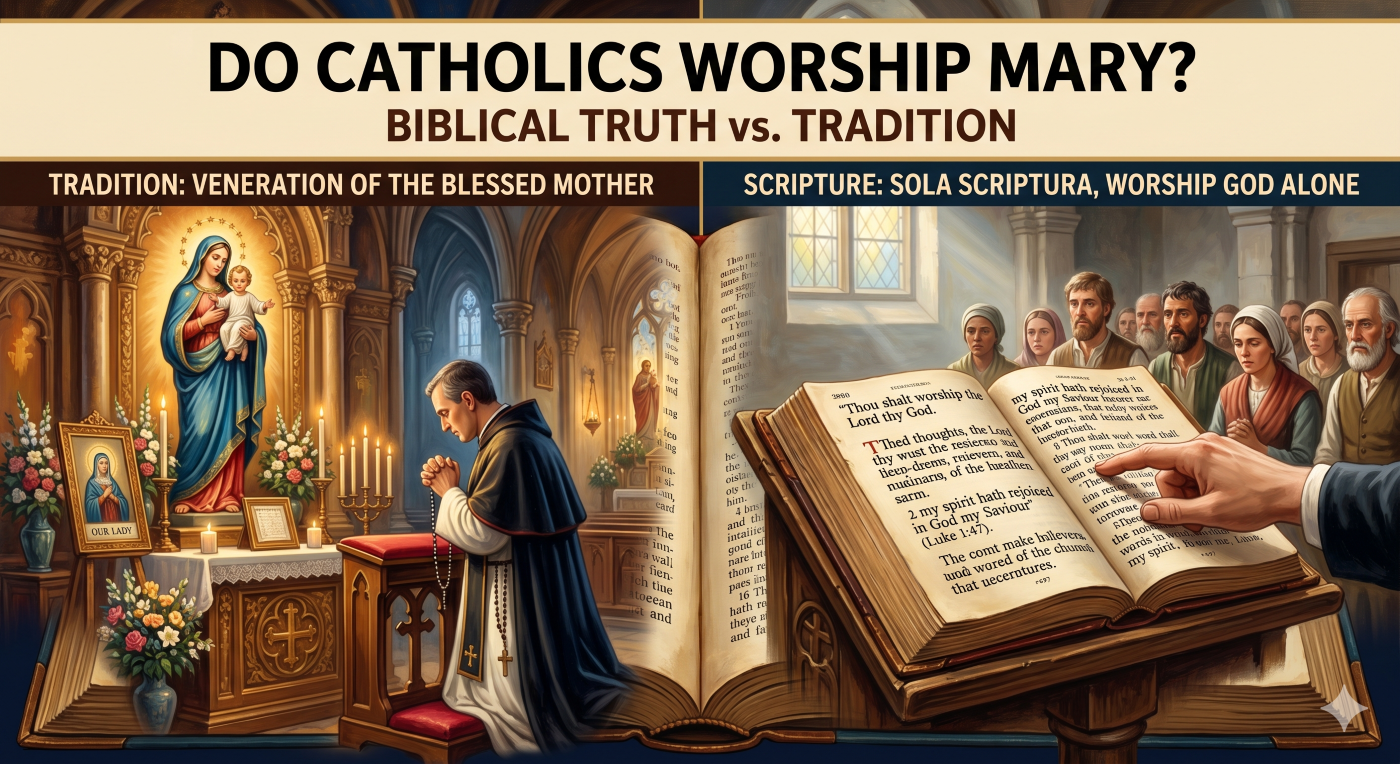
Many people today ask the urgent question: do Catholics worship Mary? While official Catholic Church catechism and theological manuals use the term "veneration" (hyperdulia) to distinguish their devotion from the worship due to God alone (latria), a close look at the actual practices, prayers, and history tells a different story. For millions of people around the world, the lines between honor, veneration, and outright worship are completely erased. When we examine the titles given to her, the prayers offered to her, and the shrines built in her name, we must ask whether these traditions align with the Holy Bible. To discover the truth, we must compare the doctrines of the church with the unchanging, inspired Word of God.
When Did Mary Worship Actually Begin?
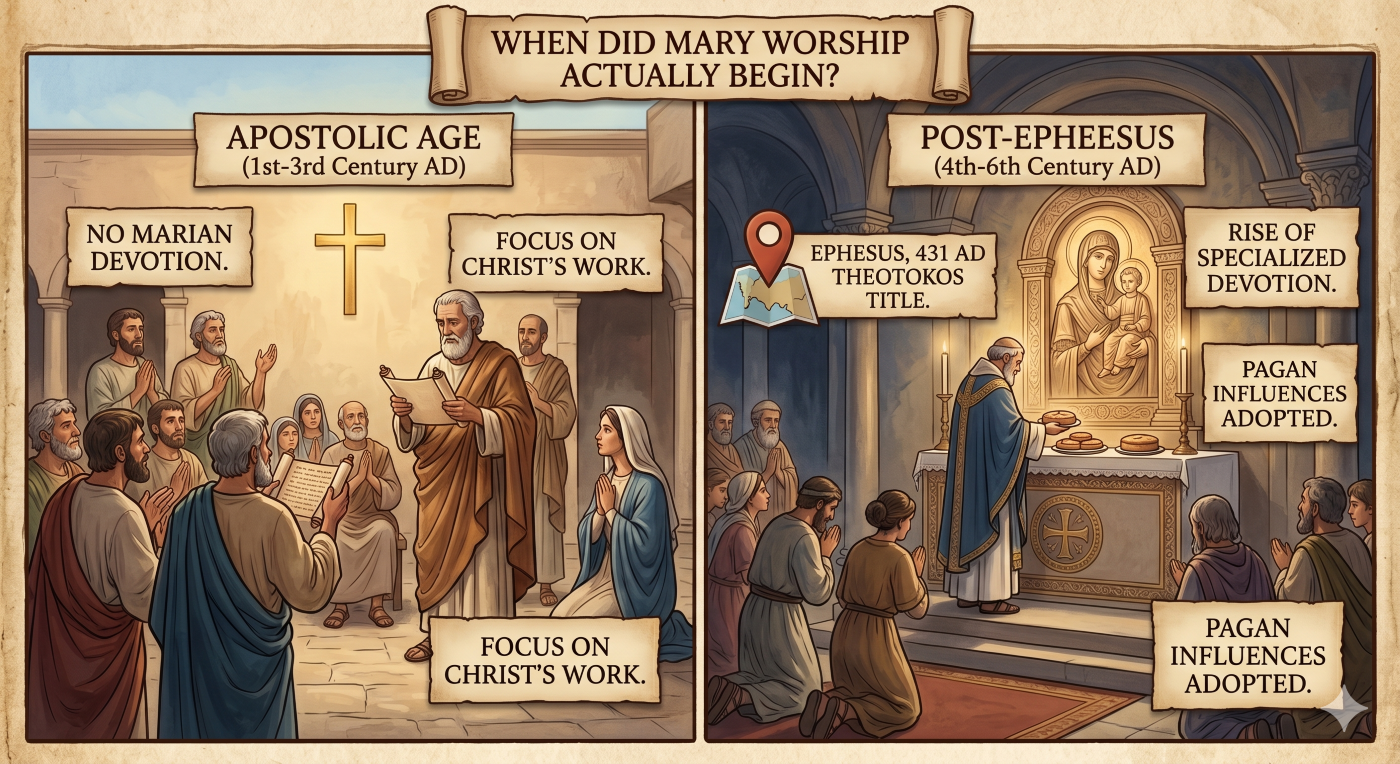
To understand when the practice of treating Mary as a deity began, we have to look past the Apostolic age. In the first three centuries of the early church, there is a conspicuous, absolute absence of Marian devotion. The Apostles and the early Church Fathers focused almost exclusively on the life, death, resurrection, and finished work of Jesus Christ. Mary is never mentioned in the early post-apostolic writings as an object of devotion or intercession.
The turning point occurred at the Council of Ephesus in 431 AD. This council officially gave Mary the title Theotokos, which translates to "God-bearer" or "Mother of God." While the early church leaders intended this title to defend the divinity of Jesus Christ against the Nestorian heresy, it inadvertently opened the floodgates for specialized devotion to Mary herself. When exploring the historical roots of this doctrine, historians naturally ask, do Catholics worship Mary? By the late 5th and 6th centuries, we see the rise of the "Collyridians"—a fringe group mentioned and strongly condemned by the early church writer Epiphanius of Salamis. This group was explicitly called out for offering cakes to Mary as if she were a goddess. Over the centuries, what began as a condemned heresy was gradually synthesized into mainstream church tradition, evolving into the elaborate system of Marian dogmas practiced by Catholics today
The Connection Between Mary and Ancient Goddess Worship
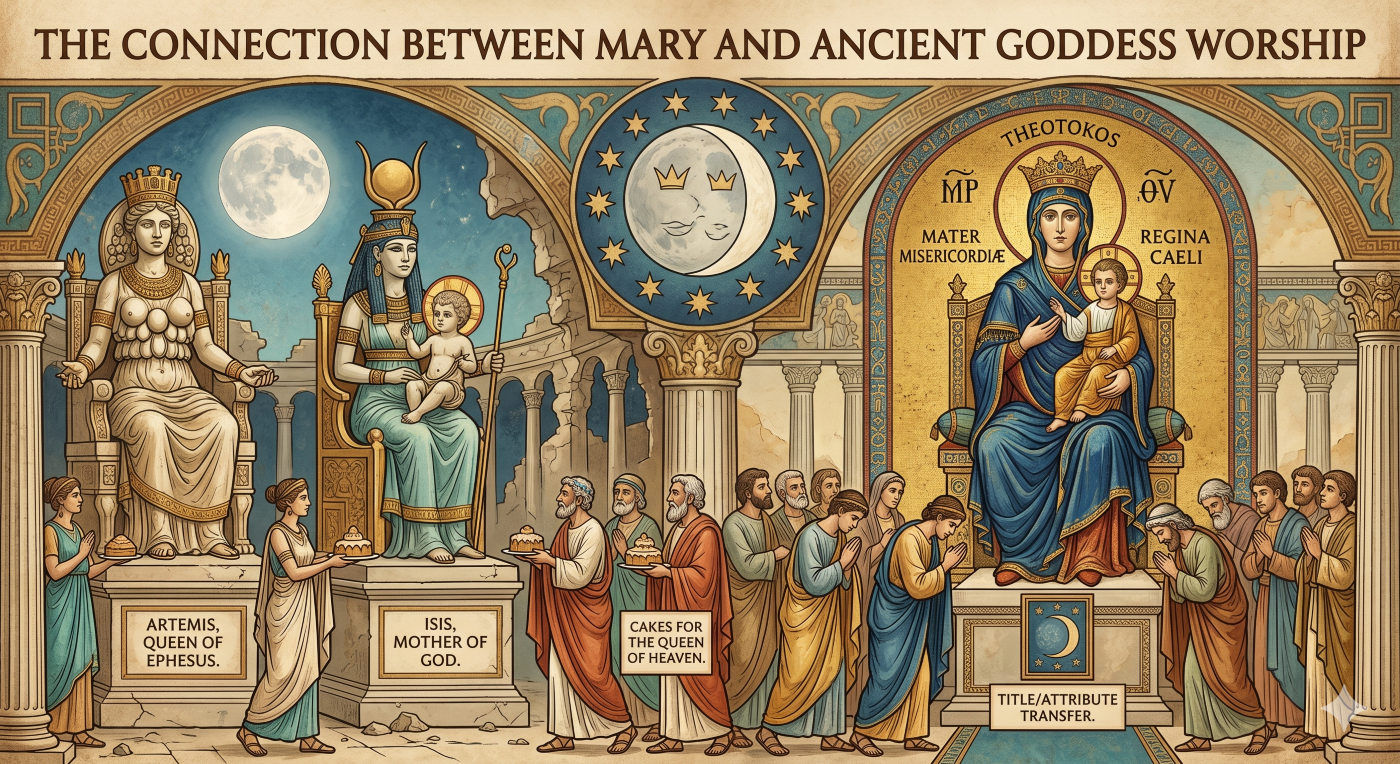
One of the most striking aspects of the "Mary worship" phenomenon is its undeniable similarity to ancient pagan religions. Before Christianity spread through the Roman Empire, the ancient world was steeped in the worship of "Mother Goddesses." From Isis in Egypt to Diana (Artemis) of the Ephesians and Cybele in Phrygia, the concept of a powerful, compassionate female deity—often carrying a divine child—was deeply embedded in the pagan psyche.
When Emperor Constantine legalized Christianity in the 4th century, millions of pagans flooded into the church without undergoing a genuine biblical conversion. They brought their cultural habits with them, looking for a familiar female figure to replace the goddesses they were forced to abandon. Consequently, the titles and attributes formerly held by Isis and Diana—such as "Star of the Sea," "Mother of Mercy," and "Queen of Heaven"—were systematically transferred to Mary.
The Bible explicitly warns against this type of syncretism. In the Old Testament, the prophet Jeremiah confronted the Israelites for falling into this exact pagan trap:
"The children gather wood, and the fathers kindle the fire, and the women knead their dough, to make cakes to the queen of heaven, and to pour out drink offerings unto other gods, that they may provoke me to anger." (Jeremiah 7:18, KJV)
Despite this severe scriptural warning, the modern Catholic Church explicitly applies the title "Queen of Heaven" to Mary. This historical "rebranding" explains why the practices of the modern church so closely mirror ancient pagan goddess worship under a Christian veneer.
The Magnificat: Mary’s Own Admission of Her Need for a Savior
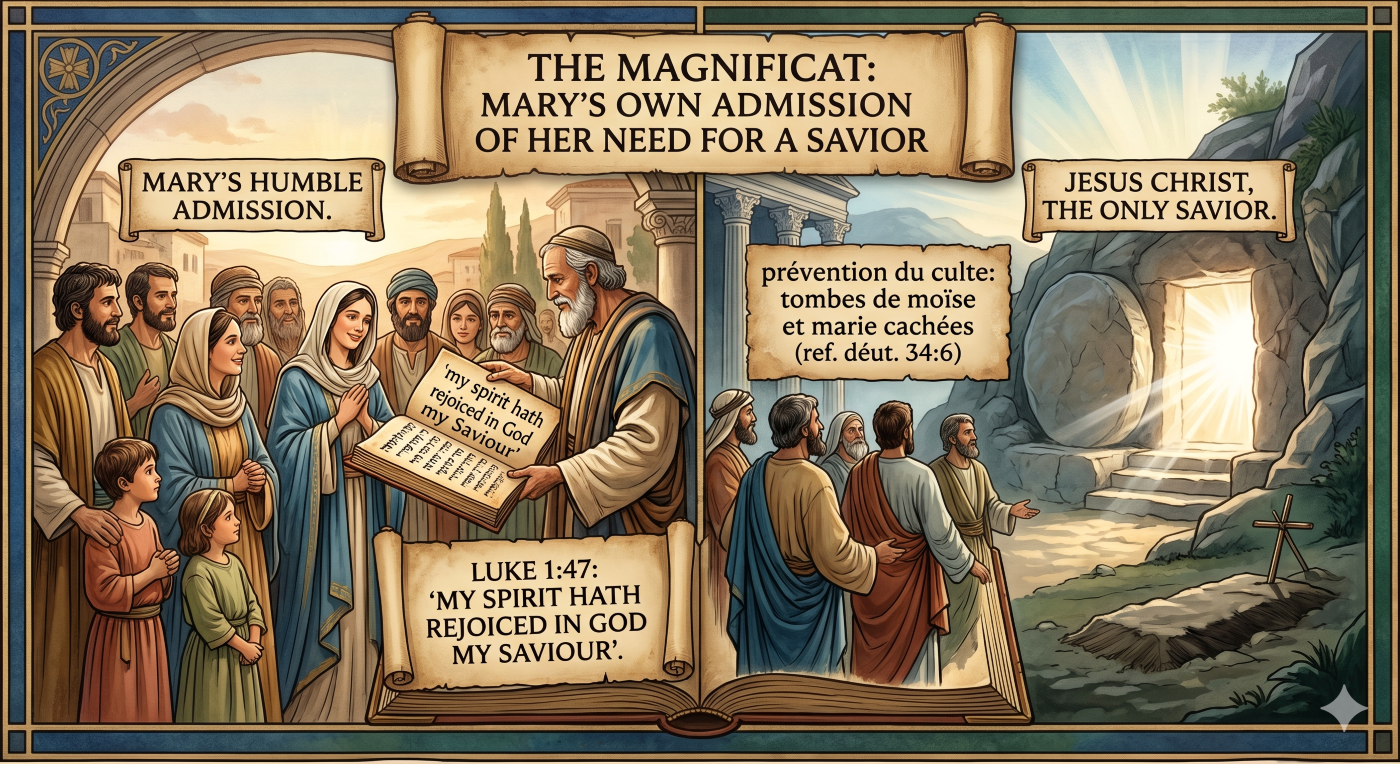
The most powerful evidence that Mary was a humble human being—and not a sinless, divine being deserving of prayers—comes from her own lips. In the Gospel of Luke, we find the "Magnificat," a beautiful song of praise Mary sang after being informed by the angel Gabriel that she would bear the Messiah.
"And Mary said, My soul doth magnify the Lord, And my spirit hath rejoiced in God my Saviour. For he hath regarded the low estate of his handmaiden: for, behold, from henceforth all generations shall call me blessed." (Luke 1:46-48, KJV)
In this passage, Mary directly refers to God as her "Saviour." Simple logic dictates that if Mary were born without sin (as the Catholic dogma of the Immaculate Conception claims), she would have absolutely no need for a Savior. Only a person born into the fallen human race needs a Redeemer. By her own public admission, Mary recognized her "low estate" and relied entirely on the grace and mercy of God for her own personal salvation. This scripture alone completely refutes the idea of her divinity, placing her firmly in the category of a faithful human servant rather than an object of worship.
Do Catholics Worship Mary Through Prayer? The Biblical Pattern
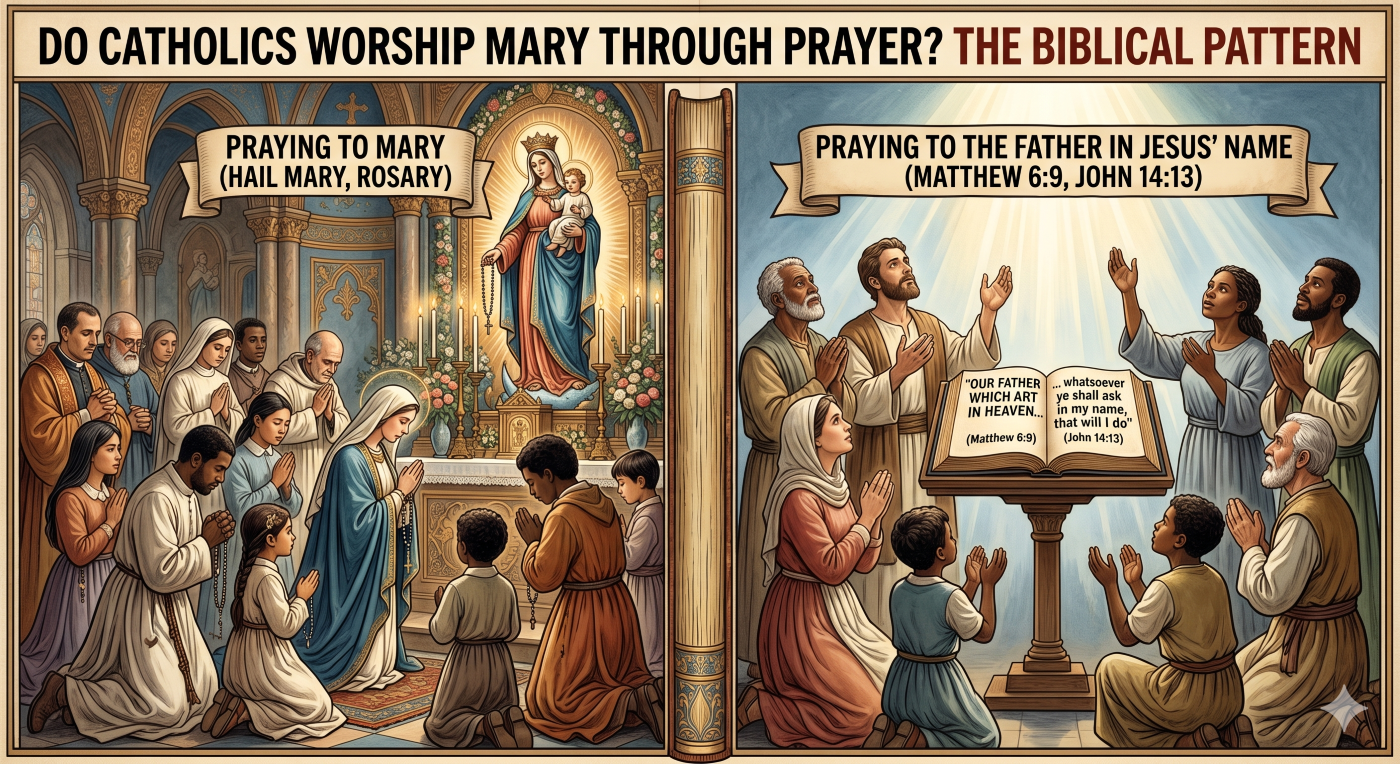
One of the most common ways people ask do Catholics worship Mary is by pointing to the act of prayer. Catholics are taught to pray to Mary daily through devotions like the Hail Mary, the Rosary, and the Memorare. They repeat phrases such as, "Holy Mary, Mother of God, pray for us sinners, now and at the hour of our death." They claim this is simply asking a friend to pray for them. However, in scripture, prayer is an exclusive act of worship reserved solely for God.
The Bible provides a very clear, uncompromising pattern for prayer. When the disciples asked Jesus how to pray, He did not point them to deceased saints or to His earthly mother. He gave them a direct template:
"After this manner therefore pray ye: Our Father which art in heaven, Hallowed be thy name." (Matthew 6:9, KJV)
The biblical example is always to pray to the Father, in the name of the Son. Jesus explicitly commanded this pattern in the Gospel of John:
"And whatsoever ye shall ask in my name, that will I do, that the Father may be glorified in the Son. If ye shall ask any thing in my name, I will do it." (John 14:13-14, KJV)
Nowhere in the Old or New Testament is a believer ever instructed or permitted to direct prayers to anyone else. To pray to Mary requires her to possess divine attributes like omniscience (the ability to hear millions of prayers simultaneously in different languages) and omnipresence (the ability to be spiritually present with every believer at once). Because Mary is a human being and not God, she does not possess these attributes. Directing prayers to her violates the biblical standard and elevates her to a position that belongs strictly to God the Father and the Lord Jesus Christ.
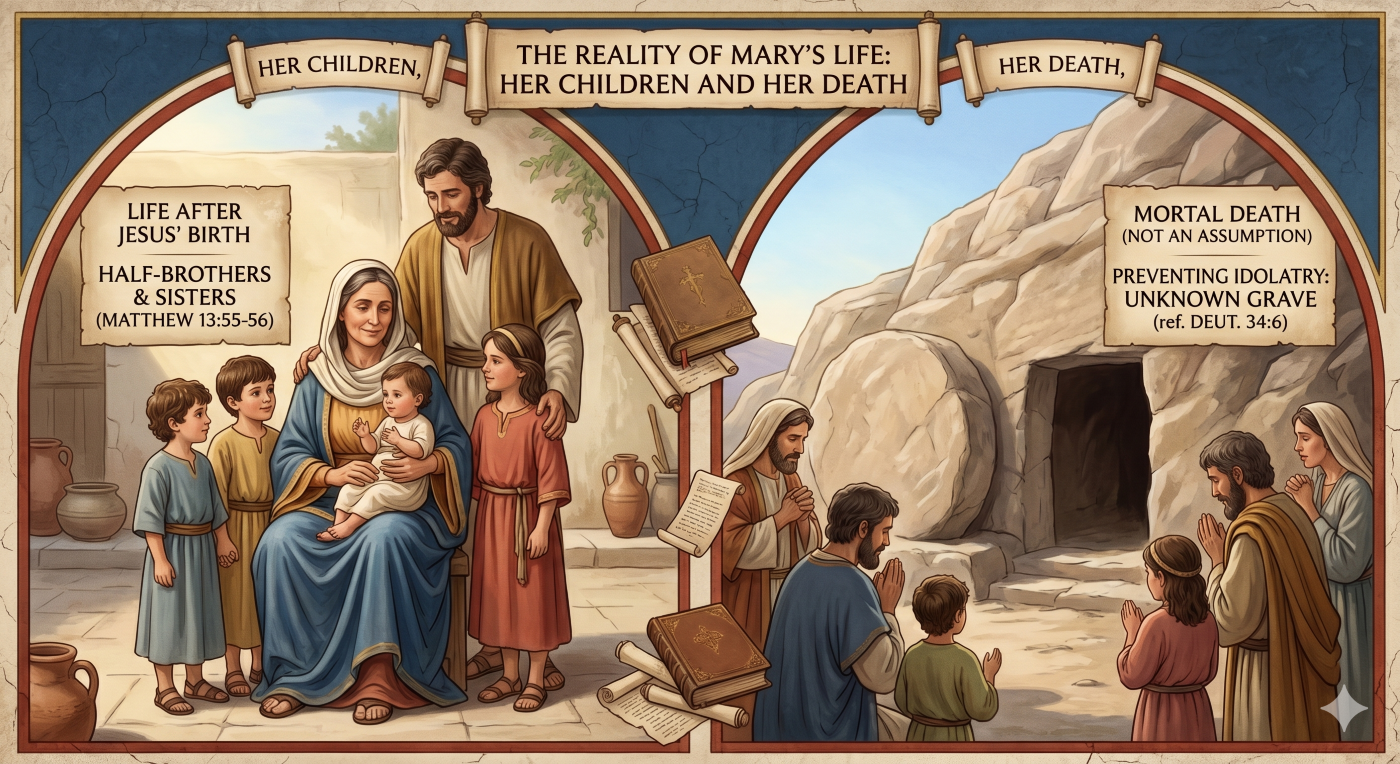
The Reality of Mary’s Life: Her Children and Her Death
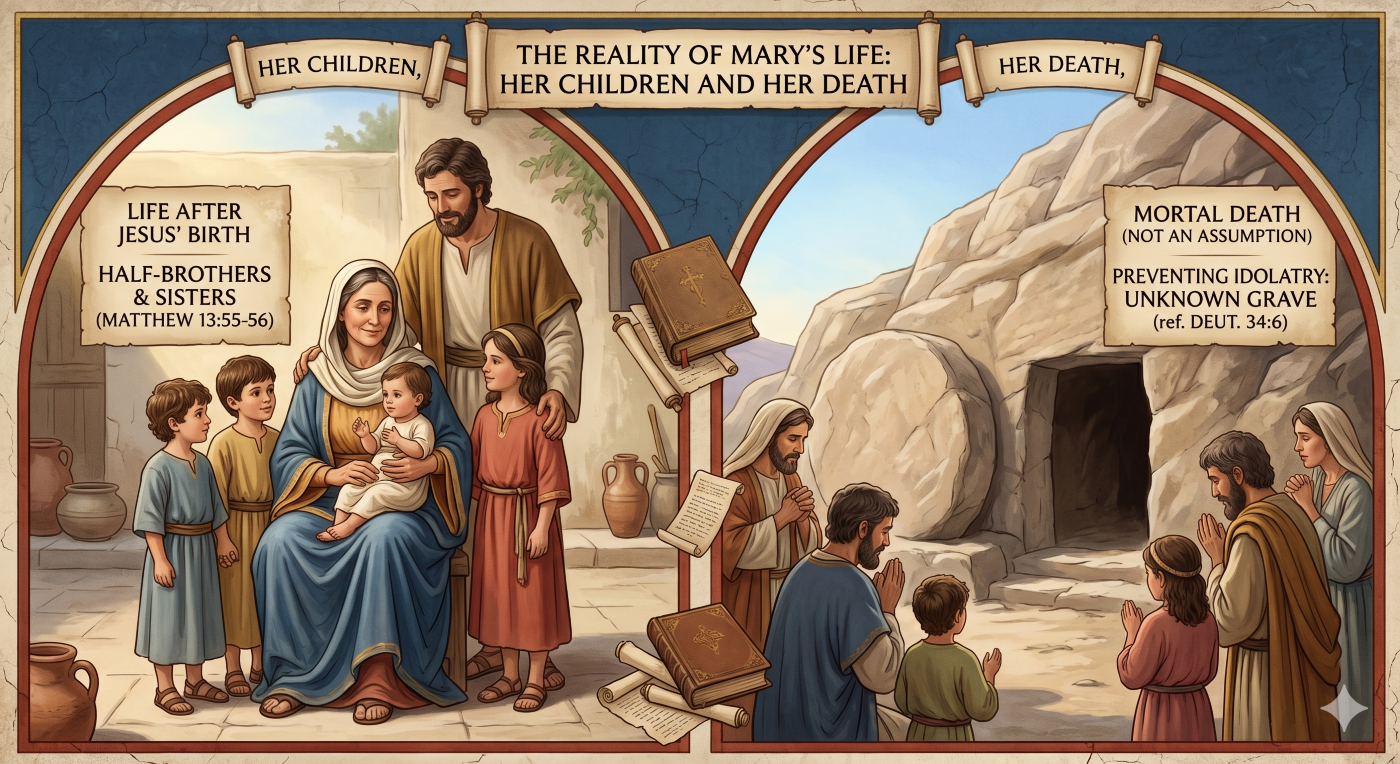
A foundational dogma in the Catholic Church is the "Perpetual Virginity" of Mary, which claims she remained a virgin her entire life. However, the New Testament provides a completely different historical account of her life following the miraculous birth of Jesus. Scripture demonstrates that Mary and Joseph went on to have a normal, holy marital relationship, conceiving several more children who grew up as the half-brothers and half-sisters of Jesus.
The Gospel of Matthew explicitly lists His brothers and mentions His sisters:
"Is not this the carpenter's son? is not his mother called Mary? and his brethren, James, and Joses, and Simon, and Judas? And his sisters, are they not all with us? Whence then hath this man all these things?" (Matthew 13:55-56, KJV)
Furthermore, Galatians 1:19 states, "But other of the apostles saw I none, save James the Lord's brother." These clear historical statements humanize Mary. They show that after fulfilling her unique calling to bear the Messiah, she lived out her life as a traditional, faithful Jewish wife and mother.
Like all humans, Mary eventually died. Despite the Catholic dogma of the "Assumption of Mary"—which claims she was taken body and soul into heaven without experiencing corruption—the Bible contains no such narrative. The exact whereabouts of Mary's tomb remain completely unknown to this day. This silence is incredibly significant. Just as God deliberately hid the body of Moses to prevent the Israelites from turning his gravesite into a pagan idol or a shrine of worship (Deuteronomy 34:6), the location of Mary’s resting place was kept a mystery by God. This serves as a divine safeguard, ensuring that the eyes of faith remain fixed on the empty tomb of Jesus Christ rather than the grave of a human servant.
The Silence of the New Testament Epistles
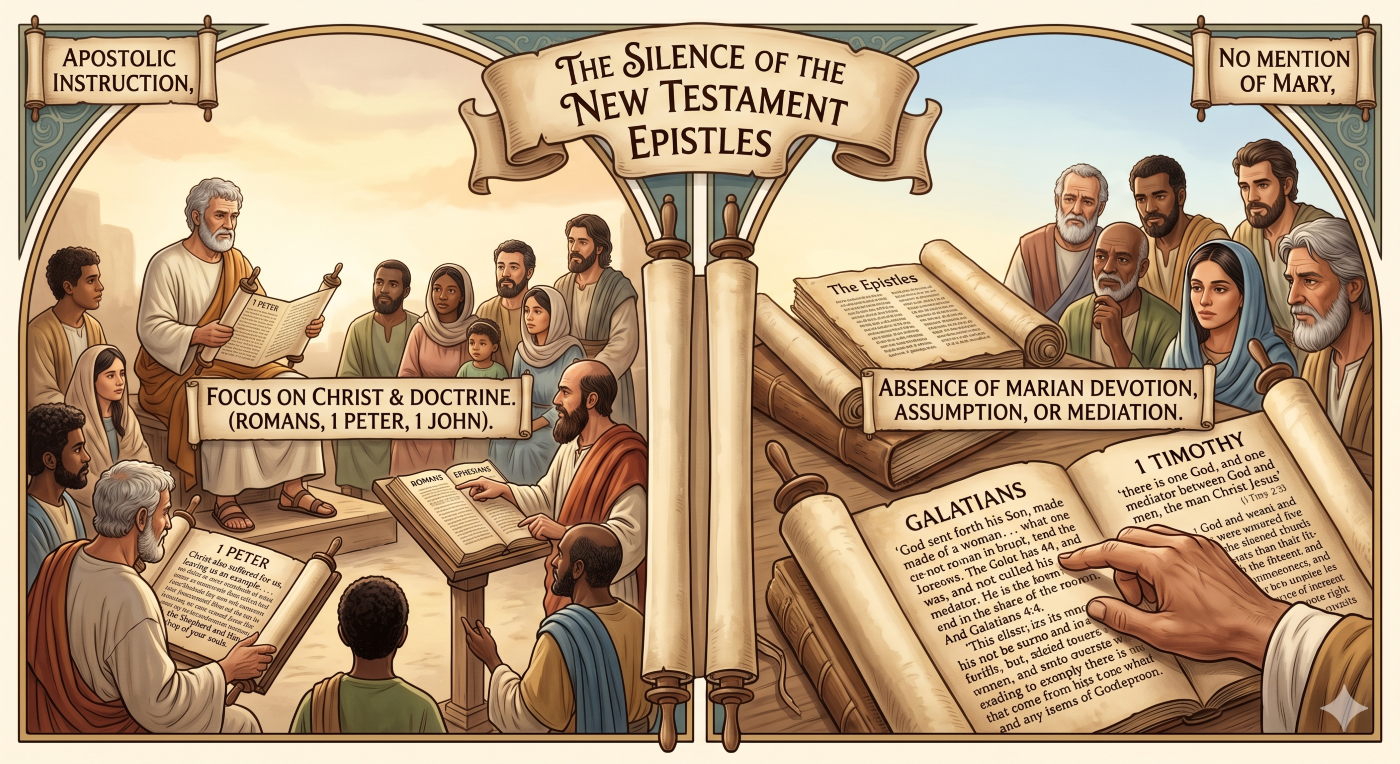
When wrestling with the question, do Catholics worship Mary, it is vital to notice what the New Testament does not say. Outside of the birth narratives in the four Gospels and a single, final mention in Acts 1:14 (where she is shown praying with the disciples, not being prayed to), the entire rest of the Bible is completely silent regarding Mary.
The Epistles—the letters written by the Apostles Paul, Peter, John, and James to instruct the early church on doctrine, daily Christian living, and corporate worship—never mention Mary. Not once.
- Paul never tells the churches in Rome, Corinth, or Ephesus to seek her intercession.
- Peter never mentions her "Assumption" or her role as a queen.
- John, who took Mary into his own home after the crucifixion, never writes a single sentence about her in his three letters or the Book of Revelation.
If Mary were meant to be a central figure in the spiritual life of a believer, this silence would be inexplicable. Instead, the Apostles consistently point to only one Mediator:
"For there is one God, and one mediator between God and men, the man Christ Jesus;" (1 Timothy 2:5, KJV)
Unscriptural Marian Dogmas vs. Biblical Truth
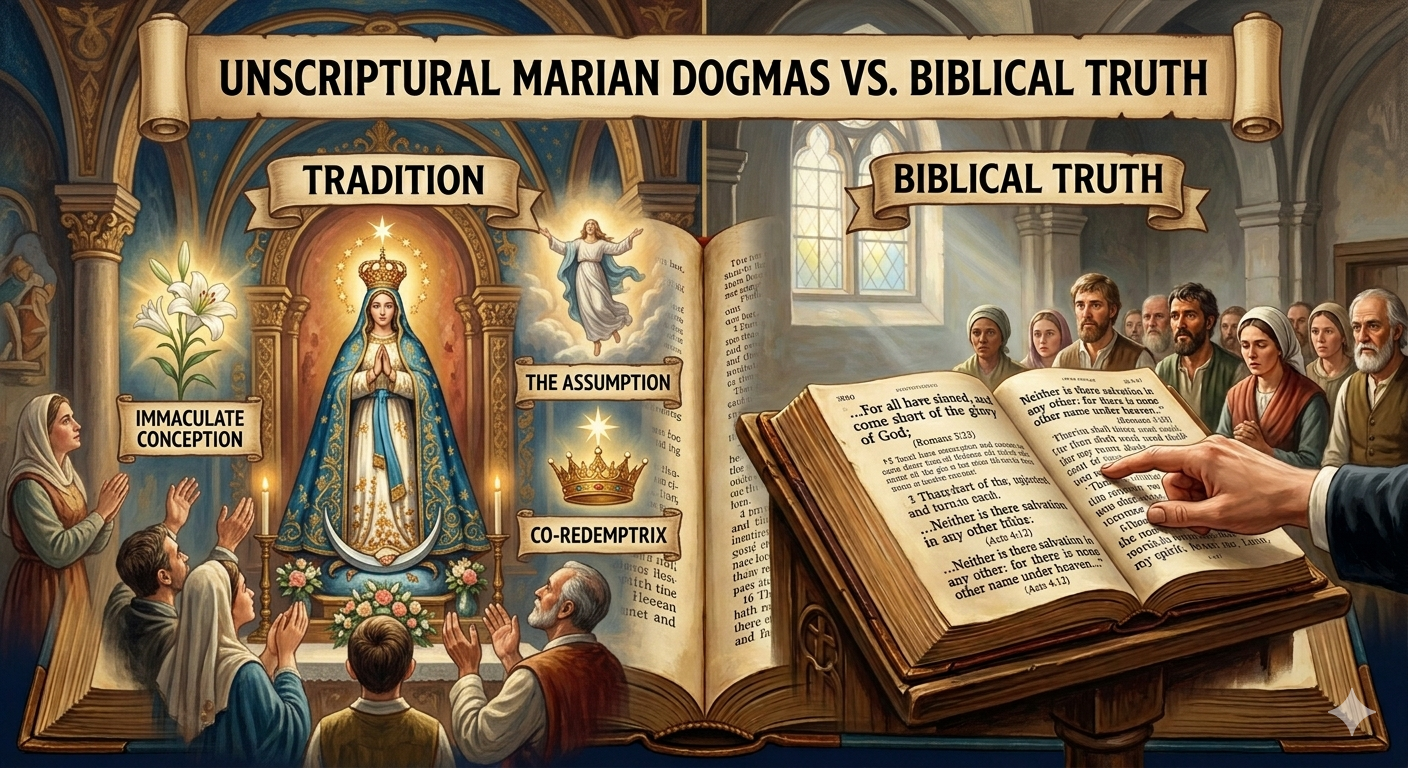
Over the centuries, human tradition has built up an extensive framework of beliefs about Mary that simply cannot be supported by the Word of God. When we compare these traditions against scripture, the contradiction is clear:
| Catholic Dogma | What the Bible Teaches | Scriptural Reference |
|---|---|---|
| The Immaculate Conception (Mary was born without original sin) | All human beings are born with a sin nature and need salvation. | "For all have sinned, and come short of the glory of God;" (Romans 3:23) |
| The Assumption (Mary was taken physically into heaven) | There is zero scriptural record of this event; it was not declared dogma until 1950. | Silence of Scripture |
| Co-Redemptrix / Mediatrix (Mary partners with Jesus in redemption and distributing grace) | Jesus Christ alone paid the price for our sins and provides access to God. | "Neither is there salvation in any other: for there is none other name under heaven given among men, whereby we must be saved." (Acts 4:12) |
When human traditions elevate a mortal woman to a level where she shares the titles, roles, and attributes of the Godhead, it crosses the line from honor into biblical idolatry.
Over the centuries, human tradition has built up an extensive framework of beliefs about Mary that simply cannot be supported by the Word of God. When people wonder, do Catholics worship Mary?, they are often reacting to these official dogmas that have no basis in the text of scripture. When we compare these traditions against the Holy Bible, the contradiction becomes undeniable.
When human traditions elevate a mortal woman to a level where she shares the titles, roles, and attributes of the Godhead, it crosses the line from honor into biblical idolatry.
Conclusion: Who is the True Object of Our Faith?
In the end, every believer must decide if their faith will be built on the shifting traditions of men or the unshakeable foundation of the Holy Scriptures. Mary was a blessed, highly favored woman who was chosen by God for a beautiful, unique purpose. She stands as a magnificent example of faith, humility, and obedience.
However, she was never intended to be a co-savior, a queen, or an object of our prayers. If someone asks, do Catholics worship Mary?, the answer is ultimately found in the fruits of their daily practices—the statues bowed before, the rosaries counted, and the petitions directed to her instead of the Father.
The Bible remains absolutely clear on this matter. We are to worship and pray to God alone. As Jesus firmly stated to Satan during the temptation in the wilderness: "Then saith Jesus unto him, Get thee hence, Satan: for it is written, Thou shalt worship the Lord thy God, and him only shalt thou serve." (Matthew 4:10, KJV). Let us honor Mary's memory by following the very best advice she ever gave, recorded at the wedding in Cana: "Whatsoever he [Jesus] saith unto you, do it" (John 2:5). Our focus, our prayers, and our worship must never rest on the mother, but solely on the divine Son who died on the cross to wash away our sins.
Deepen Your Study of Scripture
To verify these passages for yourself and explore detailed cross-references of the New Testament epistles, you can read the complete text online.
Read 1 Timothy 2:5 on Bible Gateway →Explore More Biblical Truths and Prophecies
If you want to continue your study into how God's Word stands firm against human tradition, science, and future events, explore these detailed deep dives:
- [History Of The Bible] – Discover the incredible journey of how the Holy Scriptures were preserved through the ages, remaining pure despite centuries of human opposition.
- [Scientific Facts In The Bible] – Take a fascinating look at how ancient biblical writers revealed accurate medical, geological, and astronomical facts thousands of years before modern science caught up.
- [The Battle Of Armageddon] – Understand the literal biblical timeline regarding the final clash between the kingdoms of this world and the returning Lord Jesus Christ.
- [Do Miracles Produce Faith?] – Examine the scriptures to see why signs and wonders alone cannot change a human heart, and why true saving faith only comes by hearing the Word of God.


