Is Hell Real? Exploring the Evidence for the Afterlife

Many people today view the concept of a dark afterlife as a relic of the past—a metaphor used to scare people into better behavior. But what happens when individuals who don't even believe in God find themselves on the brink of death, only to wake up with stories of a place far worse than their darkest nightmares? When we ask, "Is hell real?", we aren't just looking at ancient texts; we are looking at the harrowing testimonies of people who claim to have been there.
Perhaps the most famous modern account comes from Howard Storm, a former professor and self-avowed atheist. In his book, My Descent into Death (often referred to as his "To Hell and Back" experience), Storm recounts how a medical emergency led him into a realm of shadow and terror. He wasn't met with a "white light" or a sense of peace. Instead, he was lured away by cruel, shadowy beings who eventually began to physically and emotionally tear at him. It was only when he cried out to Jesus—a name he hadn't used in prayer for years—that a brilliant light rescued him from that pit.
Storm is not alone. Others, like Bill Wiese, who authored 23 Minutes in Hell, describe a place of literal sensory horror: the unbearable heat, the stench of sulfur and decay, and the absolute absence of God’s love. These anecdotal proofs serve as a modern-day "wake-up call," suggesting that the boundary between this world and the next is thinner than we think, and that the place we call hell is a very real destination.
Near Death Experience: Howard Storm's Descent into Hell
Is Hell Real? Why Jesus Spoke of Hell More Than Anyone Else
Many people today find themselves asking, is hell real? If we want to know the truth about the afterlife, we must look to the highest authority in the Bible: Jesus Christ. A common misconception is that Jesus only spoke of love and "flower-petal" theology. However, a deep dive into the Gospels reveals a startling reality: Jesus spoke about the reality of hell more than He spoke about heaven.
In the New Testament, Jesus refers to "Gehenna" (a word translated as hell) and "Hades" frequently—by some counts, over 70 times across the Gospels and Revelation. Why would a Savior who is defined by love speak so often about a place of torment? The answer is simple: Because He didn't want anyone to go there.
Jesus used the most graphic language available to describe this state of existence. He spoke of "outer darkness," a "blazing furnace," and a place where there is "weeping and gnashing of teeth" (Matthew 13:42). He didn't describe it as a temporary correction, but as a finality. By warning His listeners so frequently, Jesus validated that hell is not a scare tactic, but a spiritual reality that requires our urgent attention.
Biblical Proof: Why the Story of the Rich Man Proves Hell is Real
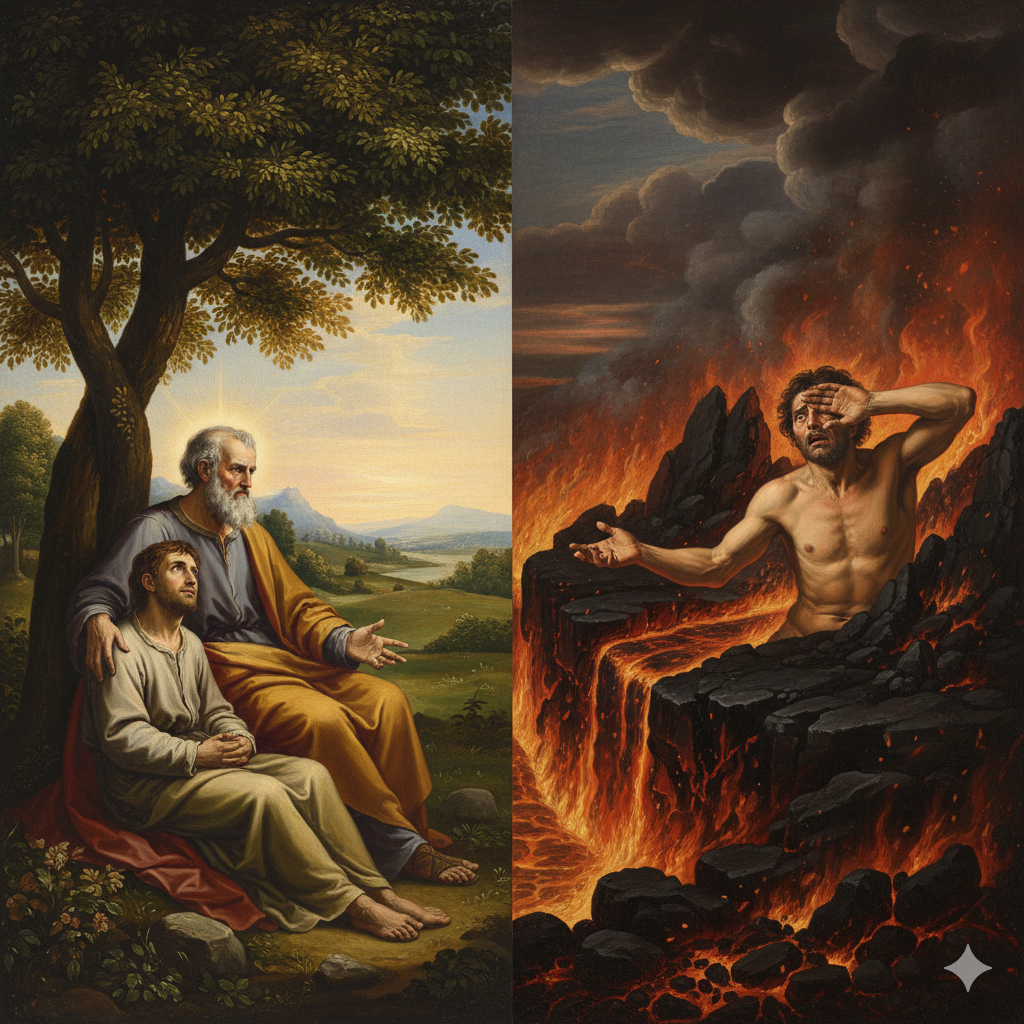
One of the most definitive biblical proofs of hell comes from the story of Lazarus and the rich man in Luke 16. Unlike many of Jesus’ parables, this account uses specific names, leading many scholars to believe it is a factual account of a real event.
In this narrative, the rich man dies and finds himself in "torment in Hades." He is fully conscious; he can see, he can feel thirst, and most tragically, he can remember. He begs Abraham to send Lazarus to dip a finger in water to cool his tongue, for he is "in agony in this fire." This story provides a terrifying look at the permanence of one's choices. There is a "great chasm" fixed between the saved and the lost, making it impossible to cross from one side to the other. This biblical proof debunks the idea that hell is just "non-existence." It shows a state of active, conscious suffering where the soul is fully aware of what it has lost.
The Worm That Does Not Die: Eternal Decay and the Lake of Fire
Jesus offered another chilling detail about the nature of hell in Mark 9:48, where He describes it as a place "where their worm does not die and the fire is not quenched." This imagery is drawn from the Valley of Hinnom (Gehenna) outside Jerusalem, where trash and carcasses were constantly burned.
In the natural world, a worm dies when it finishes consuming its host. In hell, however, the "worm"—often interpreted as the gnawing of a guilty conscience or a literal state of eternal decay—never finishes its work. The fire, likewise, is "unquenchable." This signifies that the punishment is not a quick annihilation, but a perpetual state of being.
This leads us to the "Lake of Fire" described in the book of Revelation. This is the final destination for all who reject God. It is often called the "second death," but it is a death that never ends. Critics often argue that human beings would be burned up instantly, yet the Bible provides evidence to the contrary.
One Thousand Years Later: The Longevity of Hell’s Torment
The most sobering evidence for the eternal nature of hell is found in the chronology of the book of Revelation. In Revelation 19, at the return of Christ, the Antichrist (the Beast) and the False Prophet are captured and "cast alive into the lake of fire burning with brimstone."
Fast forward through the one-thousand-year reign of Christ (the Millennium). In Revelation 20, Satan is finally defeated and cast into that same Lake of Fire. The scripture notes that he is cast into the lake "where the beast and the false prophet are." Take note of that phrasing: after 1,000 years in the flames, the Antichrist and the False Prophet have not been annihilated or "burned up." They are still there. The text continues to say they "will be tormented day and night forever and ever."
This 1,000-year gap is an undeniable biblical proof that the fire of hell does not consume the soul into non-existence. Instead, it is a place of everlasting duration.

Choosing Life Over the Reality of Hell
When we look at the combined weight of modern near-death experiences, the frequent warnings of Jesus, and the specific structural proofs found in Revelation, the answer to the question "Is hell real?" becomes clear. It is a place prepared for the devil and his angels, but it is also the destination for those who choose to live apart from God’s grace.
The reality of hell is not meant to drive us into despair, but to drive us into the arms of the Savior. Jesus spoke of hell so that we might choose heaven. He endured the "hell" of the cross—separation from the Father—so that we would never have to experience it ourselves. If the evidence is real, then the choice we make today is the most important decision of our lives. Don't ignore the warnings; the "unseen world" is closer than you think.
Explore More Biblical Truths:
- The Biblical Reality of Satanism: Understand the spiritual forces operating behind the scenes in our world today.
- Is Jesus God?: Discover the scriptural evidence for the divinity of Christ and why it matters for your eternity.
- Are Ghosts in the Bible?: What does the Word of God actually say about paranormal activity and the spirit realm?


