Understanding the Biblical View of Halloween: History, Scripture, and Church Responses

Before we get deep into the subject of a biblical view of halloween, let’s examine my own personal experience with this holiday that people either love or hate while others give the day absolutely no thought whatsoever. As a child growing up in the 1960s, I remember being taken trick-or-treating by my family. They dressed me up as various characters and drove me to a few neighboring houses where friendly occupants would fill my bag with candy.
I never fully understood why this custom happened; I simply went with the flow and had fun. As I got older, I developed fond memories of eating popcorn balls and watching scary movies on television with the family. Back in those days, horror movies were not nearly as gory or graphic as many of them are today. Most of the suspense and fright were inferred or suggested, relying on atmosphere rather than explicit violence.
Like millions of other kids back then, I also remember sitting down to watch the classic 1966 animated television special, It’s the Great Pumpkin, Charlie Brown. I always thought it was funny, yet looking back as an adult, it fits the spirit of October 31st surprisingly well. In the story, young Linus skips the festivities to sit in a cold pumpkin patch all night, holding out hope that a mythical "Great Pumpkin" will appear to reward his sincere devotion. While it was entertaining television, it unwittingly highlights a very real human tendency: placing sincere belief into traditions and ideas that have no basis in truth.
As an older adult today, I find myself falling into the category of not caring about the holiday one way or the other. I still enjoy eating popcorn and watching classic scary movies, but I do that throughout the entire year off and on. I do not set aside October 31st as a special or sacred kind of day at all. This article is not meant to harshly criticize everyone who participates nor to unconditionally uphold the holiday. It is written so that Christians, as well as non-Christians, can gain a thoughtful perspective on a day that millions celebrate every single year. This is why we need to objectively answer the question: What is the biblical view of halloween?
The Historical Origins of October 31st: From Samhain to All Hallows' Eve
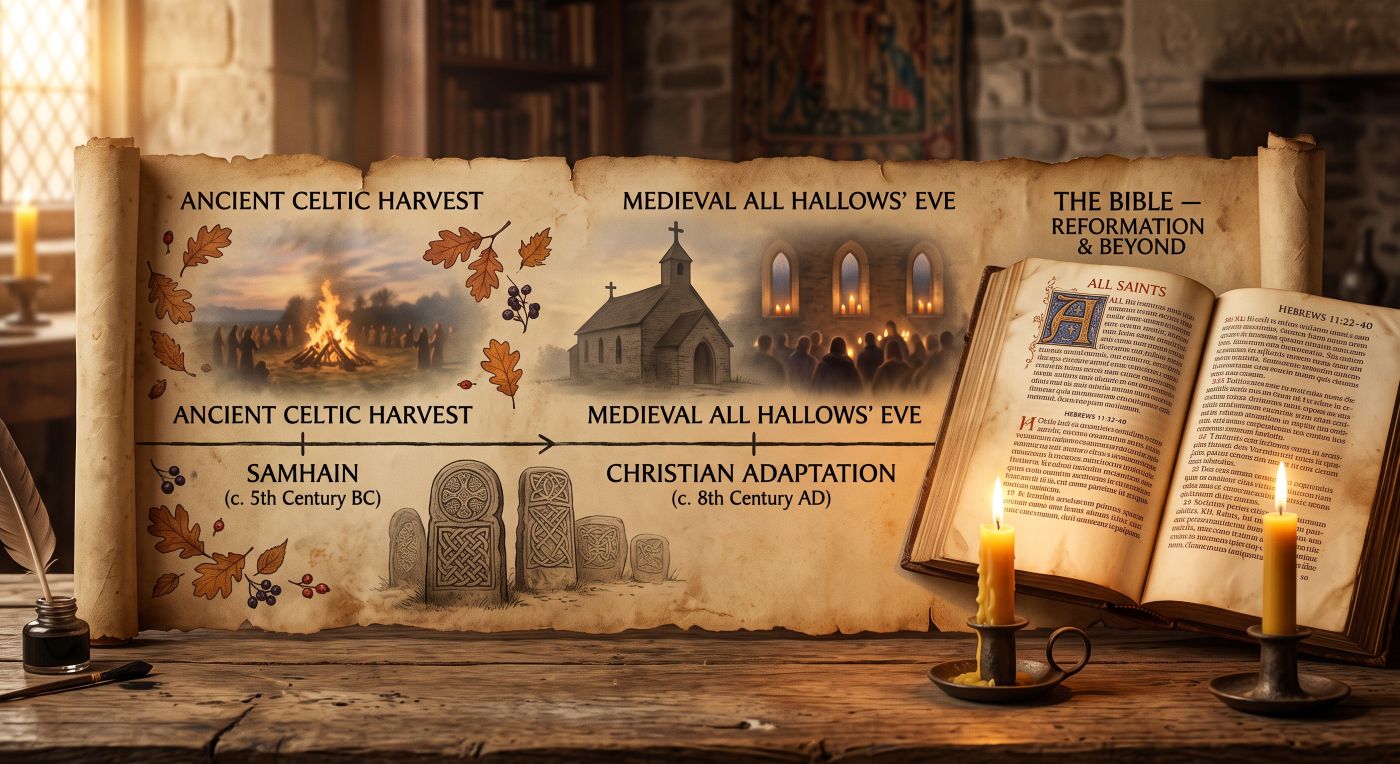
To form a balanced biblical view of halloween, one must first understand where the holiday originated and why this specific date on the calendar became associated with spirits, costumes, and nighttime festivities. Long before children knocked on doors for candy, October 31st marked a pivotal seasonal turn for ancient European societies.
The Ancient Celtic Festival of Samhain
Over 2,000 years ago, the Celts—who lived across the lands now known as Ireland, the United Kingdom, and northern France—celebrated a festival called Samhain (pronounced sow-in). Samhain marked the end of the harvest season and the beginning of the dark, cold winter. In the Celtic worldview, winter was closely tied to human mortality and cold hardship.
The Celts believed that on the night of October 31st, the boundary separating the world of the living from the world of the dead became porous and blurred. They believed that spirits of the deceased returned to walk the earth on this night. To protect themselves from hostile entities, villagers would build massive communal bonfires, offer sacrifices, and wear costumes made of animal heads and skins to disguise themselves so roaming spirits would mistake them for fellow specters.
The Catholic Church and "All Hallows' Eve"
As Christianity spread throughout the Roman Empire and into Celtic lands during the first millennium, the Church sought to supplant pagan traditions with Christian commemorations. In the 8th century, Pope Gregory III designated November 1st as a time to honor all saints and martyrs; this holy day became known as All Saints' Day or All Hallows' Day.
Consequently, the evening prior—October 31st—became known as All Hallows' Eve, which eventually morphed into the word Halloween. While the Church attempted to redirect the focus toward honoring faithful believers who had passed away, many of the old folk customs, superstitious fears of ghosts, and harvest rites lingered in European culture and were later imported to North America by immigrant populations.
What Does Scripture Say? Developing a Biblical View of Halloween
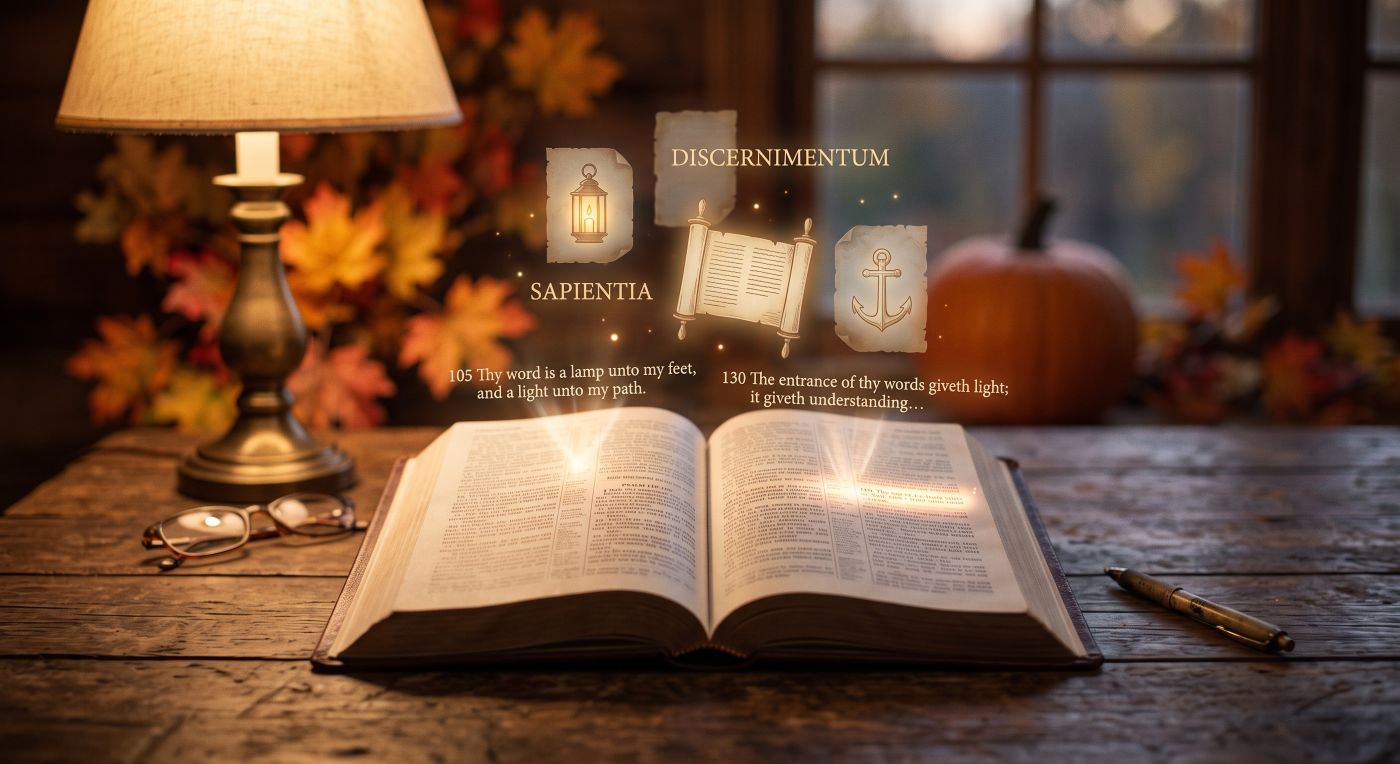
When examining the Bible, you will not find the word "Halloween" anywhere within its pages. The modern commercial holiday did not exist when the books of the Old and New Testaments were written. However, Scripture provides clear principles concerning spiritual reality, dark practices, personal liberty, and discernment. Establishing a biblical view of halloween requires weighing these biblical commands alongside Christian liberty.
| Scriptural Principle | Biblical Passages | Application to October 31st |
|---|---|---|
| Separation from the Occult | Deuteronomy 18:10-12, Leviticus 19:31 | Avoid practices involving sorcery, divination, or attempted communication with the deceased. |
| Walking as Light | Ephesians 5:8-11, 1 Thessalonians 5:5 | Ensure conduct reflects God's light rather than glorifying darkness, fear, or evil themes. |
| Christian Liberty & Conscience | Romans 14:5-6, 1 Corinthians 10:23-31 | Recognize that innocent, non-spiritual activities (like eating candy) depend on intent and conscience. |
1. Renouncing Darkness and the Occult
Scripture explicitly warns believers against engaging in practices that seek to bypass God to contact spiritual realms. Deuteronomy 18:10-12 states:
"There shall not be found among you anyone who makes his son or his daughter pass through the fire, or one who practices witchcraft, or a soothsayer, or one who interprets omens, or a sorcerer, or one who conjures spells, or a medium, or a spiritist, or one who calls up the dead."
From a biblical perspective, any activity that intentionally invokes evil spirits, glorifies demonic imagery, or dabbles in dark arts crosses a clear spiritual boundary. Paul writes in Ephesians 5:11: "And have no fellowship with the unfruitful works of darkness, but rather expose them."
2. Christian Freedom and the Heart Condition
For many modern families, dressing a child as a superhero or a cartoon character to walk around the neighborhood collecting chocolate has zero connection to ancient Druidism or pagan deities. Their motivation is pure fun and community engagement. The Bible teaches that God looks at the intent of the heart (1 Samuel 16:7).
Conversely, the Bible also addresses matters of personal conscience when dealing with days, foods, and cultural customs. In Romans 14:5-6, the Apostle Paul writes:
"One person esteems one day above another; another esteems every day alike. Let each be fully convinced in his own mind. He who observes the day, observes it to the Lord; and he who does not observe the day, to the Lord he does not observe it."
Three Distinct Ways Churches Approach a Biblical View of Halloween
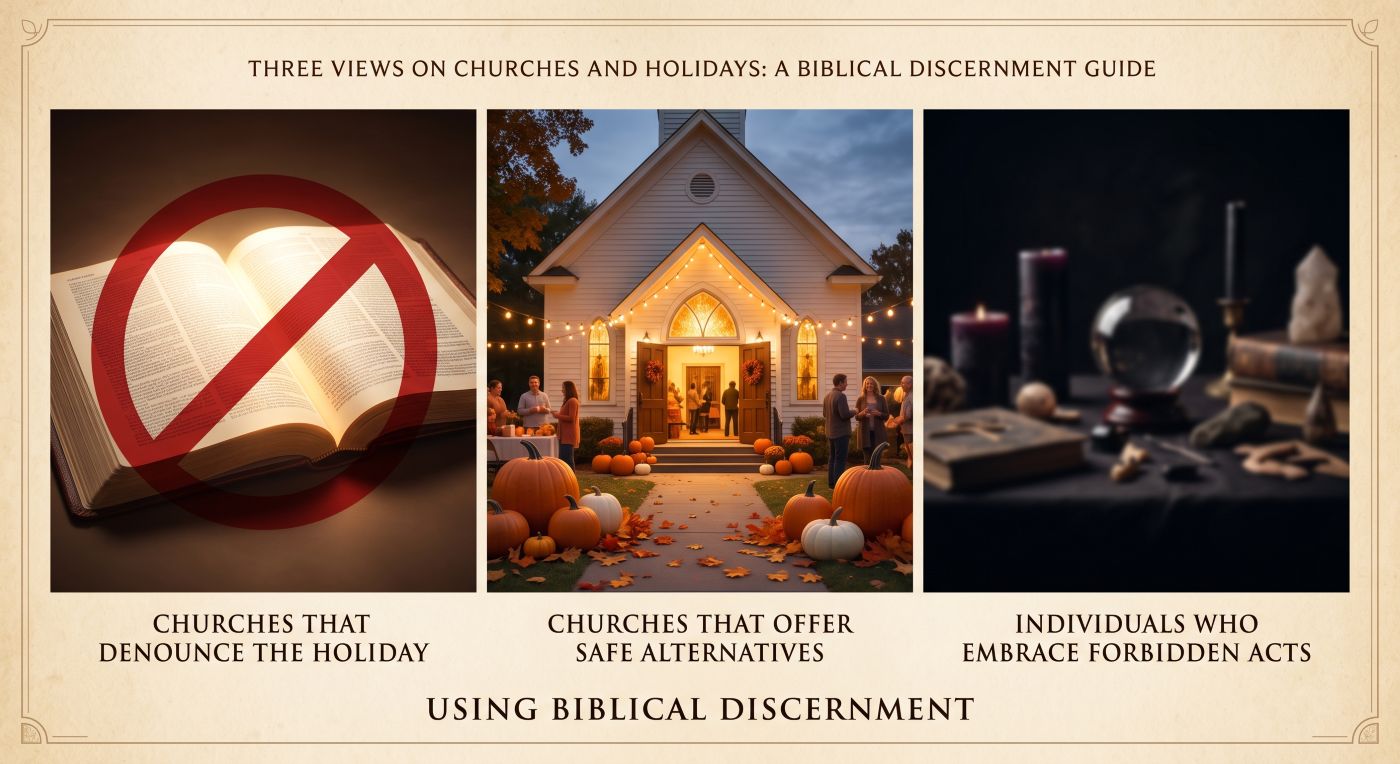
Across the global Christian community, local churches hold vastly different opinions regarding how to handle October 31st. These responses generally fall into three distinct categories, ranging from complete rejection to active evangelism—and in some concerning cases, unscriptural spiritual compromise.
Position 1: Total Separation and Refusal
A significant portion of conservative, evangelical, and fundamental churches take a firm stance of total non-participation. Pastors in these congregations preach that because Halloween's historical origins are rooted in pagan rituals and its modern expression often celebrates death, gore, witches, and monsters, Christians should have no part in it whatsoever.
Churches holding this view encourage their members to:
- Turn off their porch lights on October 31st.
- Refuse to distribute candy or wear costumes.
- Spend the evening in prayer, family devotions, or attending a dedicated prayer service.
Their primary biblical justification relies on 1 Thessalonians 5:22 ("Abstain from every form of evil") and 2 Corinthians 6:17 ("Come out from among them and be separate, says the Lord"). They believe that participating in any capacity—even innocently—gives a tacit endorsement to a day that glorifies darkness.
Position 2: Strategic Engagement and Safe Alternatives
A second large group of churches chooses not to ignore the day, but rather to redeem it for good. Recognizing that millions of children and parents walk neighborhood streets on October 31st, these churches use the occasion as an outreach opportunity.
The most common example of this approach is the "Trunk-or-Treat" event, where church members park their vehicles in the church parking lot, decorate their trunks with friendly themes (such as Bible stories, sports, or nature), and hand out candy to local families. Other churches host full "Fall Festivals" featuring carnival games, hayrides, and food.
Churches taking this approach view October 31st through the lens of Matthew 5:14–16, where Jesus commands His followers to be "the light of the world." They reason that rather than retreating indoors, Christians can provide a safe, wholesome environment for neighborhood families while demonstrating Christian hospitality and sharing the Gospel.
Position 3: Dangerous Compromise and Misguided Practices
Regrettably, there is a third, highly problematic category of churches that lose all scriptural grounding. In an effort to appear modern, progressive, or edgy, a small fringe of churches foolishly embrace the dark spiritual elements of the day.
Some congregations have been known to stage "spooky" services where they conduct séances, bring out Ouija boards in church basements, or host theatrical events that flirt directly with occult imagery under the guise of entertainment. Other churches hold "ghost hunts" in old sanctuaries or invite psychic mediums to speak.
This level of involvement is flatly condemned by Scripture. A genuine biblical view of halloween leaves no room for dabbling with divination, fortune-telling, or necromancy. When a church normalizes or encourages occult tools like Ouija boards—even as a playful stunt—it directly violates God’s warnings in Leviticus 19:31 ("Give no regard to mediums with familiar spirits; do not seek after them, to be defiled by them") and opens doors to genuine spiritual confusion.
Navigating October 31st as a Believer: A Balanced Path Forward

As we look back at the history, scriptures, and modern church responses, it becomes clear that establishing a biblical view of halloween requires wisdom, personal conviction, and spiritual discernment rather than knee-jerk legalism or careless compromise.
If you choose to sit the evening out in quiet reflection, you do so unto the Lord. If you choose to dress your children in innocent costumes and hand out candy while greeting your neighbors with love, you can do so with a clear conscience, giving thanks to God. However, if an activity crosses the line into celebrating evil, seeking the demonic, or playing with occult tools, a Christian must firmly draw the line and walk away.
Here are three simple questions every believer can ask when evaluating their participation on October 31st:
- What is my heart's motivation? Am I seeking wholesome fun and community outreach, or am I fascinated by evil and the macabre?
- Does this honor God? Can I participate in this specific activity with a clean conscience while giving thanks to God (1 Corinthians 10:31)?
- Does this compromise my witness? Will my actions confuse others about my commitment to Jesus Christ and His Word?
Ultimately, October 31st is just another date on the calendar created by God. Psalm 118:24 reminds us: "This is the day the Lord has made; we will rejoice and be glad in it." By keeping Christ at the center, resting in biblical truth, and rejecting dark practices, believers can navigate this contentious day with wisdom, peace, and clarity.
Further Reading & Resource:
For an additional in-depth study on how Christians can navigate October 31st, read GotQuestions.org's analysis on Should a Christian celebrate Halloween?
Explore More Biblical Perspectives
If you found this study on the biblical view of halloween helpful, you may also be interested in exploring how Scripture addresses other spiritual, prophetic, and theological subjects. Check out these related articles:
- The Doctrine Of Grace – A deep dive into the foundation of the Christian faith and God's unmerited favor toward us.
- Astrology and The Bible – What does God's Word actually say about the zodiac, horoscopes, and looking to the stars for guidance?
- Biblical View of NDEs – Examining near-death experiences (NDEs) and what happens after we step into eternity through the lens of Scripture.
- Nostradamus Vs. Bible Prophecy – A stark comparison between the vague predictions of the famous 16th-century seer and the infallible, exact prophecies found in the Bible.


