The Red Horse of the Apocalypse: Meaning, Prophecy, and Interpretations
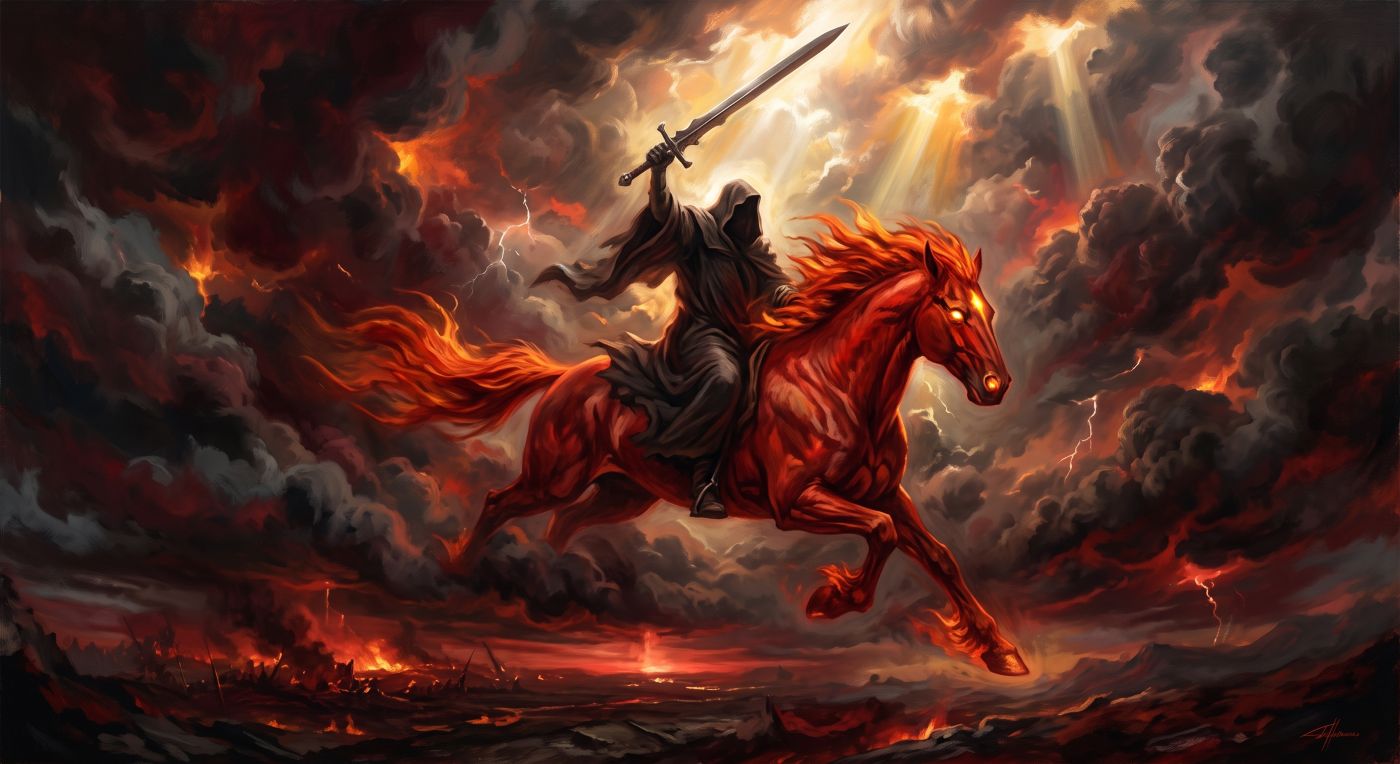
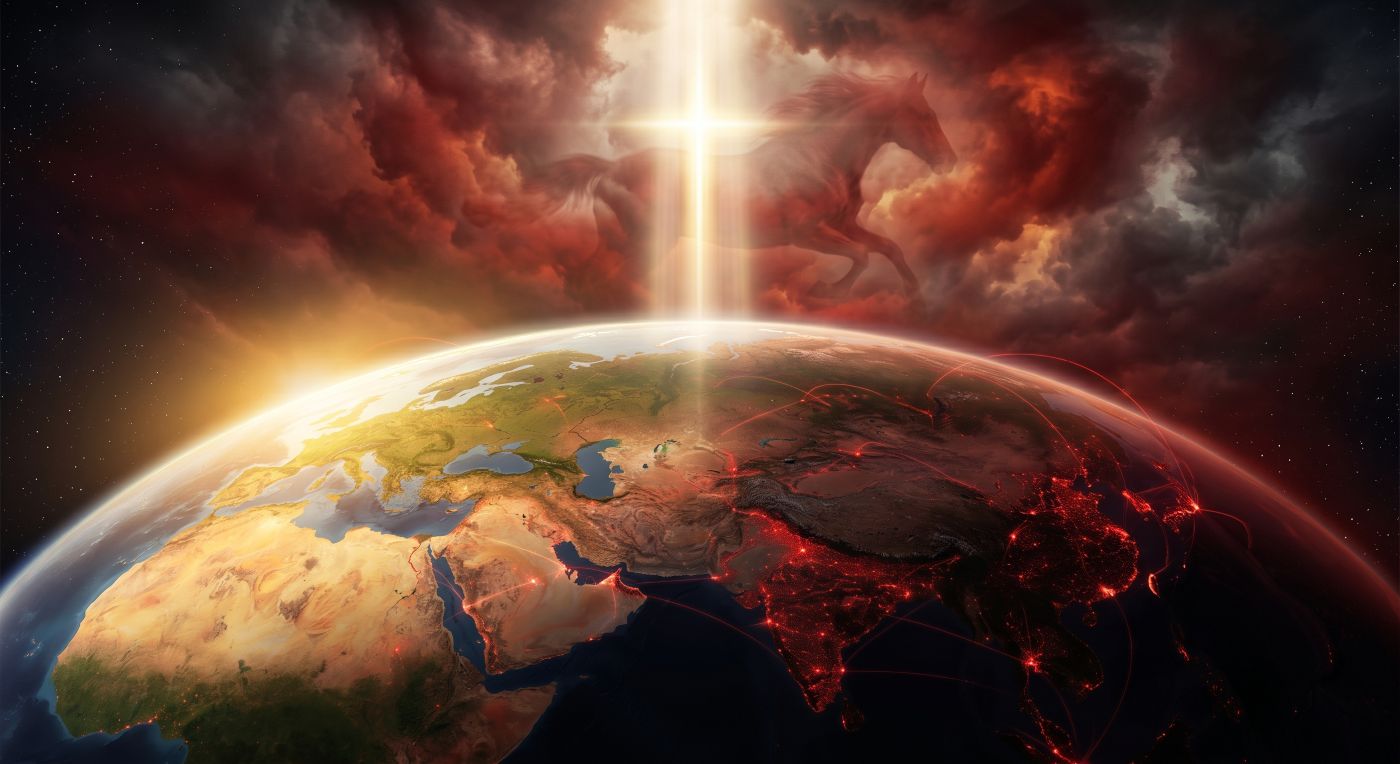
For centuries, the Four Horsemen of the Apocalypse have captured the human imagination, serving as a terrifying preview of global judgment. Found in Revelation 6, each horseman represents a distinct force released upon the earth following the breaking of the apocalyptic seals. While the white horse opens the vision, it is the second seal that brings one of the most violent figures in prophetic literature: the red horse of the apocalypse.
In the text of Revelation 6:3–4, the Apostle John writes: "When He opened the second seal, I heard the second living creature saying, 'Come and see.' Another horse, fiery red, went out. And it was granted to the one who sat on it to take peace from the earth, and that people should kill one another; and there was given to him a great sword." This imagery is stark, dramatic, and unmistakable in its theme of conflict, bloodshed, and world-shaking unrest.
Understanding the exact nature and timing of this rider depends heavily on one’s prophetic worldview. Bible scholars, theologians, and prophecy researchers have examined this passage through various lenses throughout church history. Is this rider a literal future figure destined to spark a worldwide global conflict during the Tribulation period? Or does the vision describe an ongoing geopolitical force, such as the rise of totalitarian regimes like global communism? In this study, we will explore the major viewpoints surrounding the red horse of the apocalypse, with a primary focus on the Futurist perspective alongside the historical and symbolic interpretations that continue to resonate today.
The Futurist View: Unfulfilled Global Warfare in the Tribulation
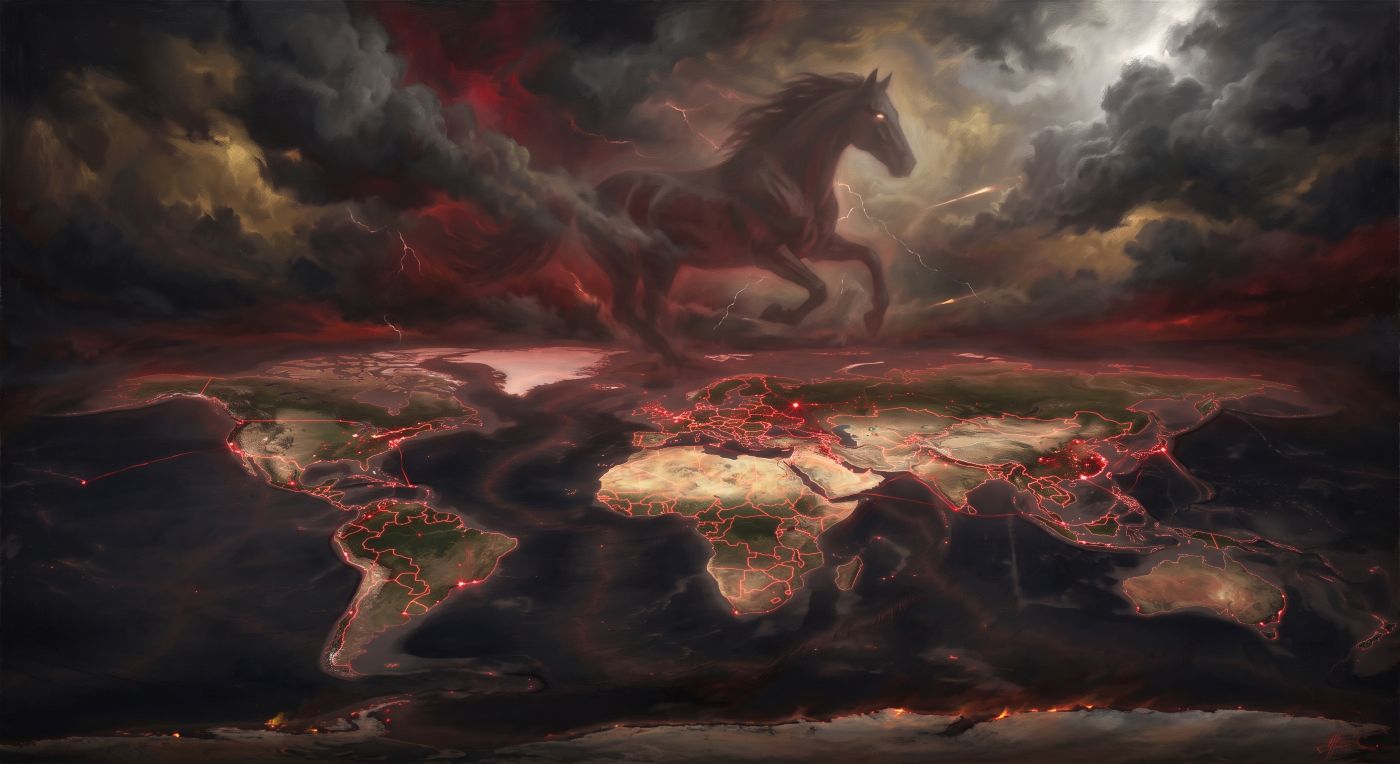
Among students of biblical prophecy, the Futurist framework provides one of the most consistent and literal interpretations of the Book of Revelation. According to Futurism, the events described from Revelation chapter 4 through chapter 22 are yet to be fulfilled in human history. Under this paradigm, the red horse of the apocalypse represents a literal, world-encompassing outbreak of war and violence that occurs during the early stage of the seven-year Tribulation period.
In the Futurist timeline, the breaking of the First Seal introduces a rider on a white horse, often understood to be the Antichrist or a false peace bringer who unites the nations under a deceptive diplomatic alliance. However, this artificial peace is fleeting. The breaking of the Second Seal immediately follows, introducing the fiery red horse. The color of the horse itself—in the original Greek text, pyrros, meaning flame-colored or fiery red—directly symbolizes warfare, bloodshed, and violent death.
Notice the specific commission given to the rider on the red horse: he is granted the power "to take peace from the earth, and that people should kill one another." Futurists emphasize that this is not merely a localized war or a regional skirmish. The phrasing indicates a global removal of peace. Up until this point in prophetic history, international diplomacy or restraining forces have maintained a baseline of global order. When this seal is broken, those restraints are stripped away, resulting in widespread civil unrest, revolution, and total warfare.
Furthermore, the rider is given a "great sword" (Greek: machaira megale). In ancient Roman times, the machaira was a short sword or dagger used in close-quarters combat, often associated with execution, civil slaughter, and internal revolt rather than standard battlefield military maneuvers. In a modern context, Futurists view this great sword as an emblem of devastating lethal power, potentially manifested through advanced military technology, civil breakdown, global anarchy, or world-scale conflicts that dwarf previous world wars.
For believers following the Futurist model, the arrival of this horseman serves as a sober warning. It marks the transition from the deceptive diplomacy of the end-times peace covenant into the raw, unbridled wrath and destruction that characterizes the Seals of judgment. Because the events of Revelation 6 align so closely with Jesus’s Olivet Discourse in Matthew 24—where He speaks of "wars and rumors of wars" and "nation rising against nation"—the Futurist view presents the second seal as a literal global catastrophe that lies directly ahead in humanity's near future.
The Illusion of Peace and Sudden Destruction

This dramatic shift from global diplomacy to all-out warfare fulfills a critical warning found elsewhere in New Testament prophecy. In 1 Thessalonians 5:3, the Apostle Paul warns: "For when they say, 'Peace and safety!' then sudden destruction comes upon them, as labor pains upon a pregnant woman. And they shall not escape." This passage provides essential context for how quickly the transition occurs between the First and Second Seals.
From a Futurist perspective, this false promise of "peace and safety" has a primary application to the nation of Israel. Prophecy indicates that during the final seven years, the Antichrist will confirm a firm covenant or treaty with Israel, allowing them a period of perceived security, national restoration, and likely the rebuilding of their Temple. Israel will genuinely believe they have secured their borders through this geopolitical alliance. However, midway through the Tribulation period, that pact is betrayed, the covenant is broken, and the full wrath of global conflict and persecution erupts.
At the same time, this passage applies to a broader world system deceived by the Antichrist’s initial machinations. Suffering from global crises, humanity will eagerly embrace a leader who promises unity, peace, and disarmament. Yet, just as the world celebrates an era of global harmony under this false messiah, the second seal is broken. The illusion shatters instantly as the red horse of the apocalypse is unleashed, proving that any human peace built without God is fragile, temporary, and destined for sudden destruction.
The Red Horse of the Apocalypse as Symbolic of Modern Communism
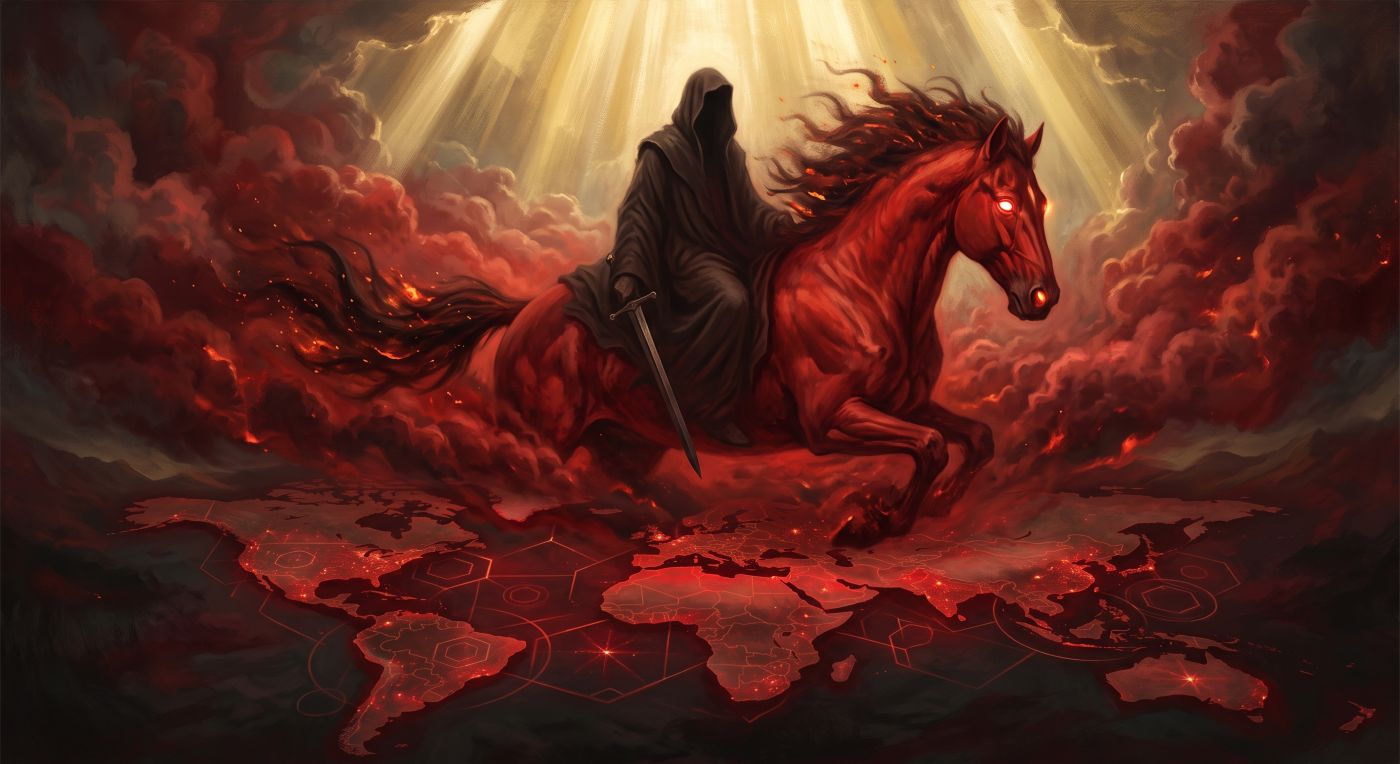
While the Futurist view looks ahead to a specific future outbreak during the Tribulation, many prophecy watchers and historicists argue that the imagery of the scripture may also find a vivid historical mirror in the rise of global communism. When examining the modern political landscape of the 19th, 20th, and 21st centuries, it is easy to see why this connection is frequently made.
First and foremost is the undeniable visual and ideological symbolism of the color red. Throughout modern history, red has been the universal emblem of communism, socialism, and radical Marxist revolution. From the Red Army of the Soviet Union and the Red Guards of Maoist China to the prominent red flags, banners, and stars that define communist state iconography, the color is inextricably linked to this political system. If a modern observer were asked to name the single geopolitical ideology most defined by the color fiery red, communism would unquestionably top the list.
Beyond visual symbolism, the operational history of communism reflects the precise mission of the second rider: taking peace from the earth and causing people to kill one another. Historians estimate that communist regimes in the 20th century alone were responsible for the deaths of over 100 million people through purges, forced starvations, gulags, political executions, and ideological wars. The ideology inherently preaches class warfare, internal division, and violent revolution—literally turning neighbor against neighbor and tearing down established societal structures.
Additionally, communism explicitly seeks the removal of traditional religion and the worship of God, replacing faith with allegiance to the state. The widespread persecution of Christians under communist rule in Eastern Europe, Russia, Asia, and Latin America directly aligns with the spirit of bloodshed and tyranny associated with the apocalyptic horsemen.
It is entirely plausible to hold a balanced view on this interpretation. While the literal, ultimate fulfillment of the second seal may remain a future event on the prophetic clock, the spirit and ideology of communism could very well serve as a historical forerunner or archetype of this rider. Throughout biblical prophecy, themes often display dual fulfillments or progressive foreshadowings. In this light, the global devastation wrought by red communism in recent history provides a terrifying preview of what the full, unrestricted release of the red horse of the apocalypse will look like on a global scale.
Other Key Interpretations of the Second Seal
To fully grasp how the Christian church has understood this passage throughout history, it is valuable to examine how other major schools of eschatology interpret the vision of the horsemen. Outside of strict Futurism and modern political applications, three main frameworks exist:
1. The Historicist View - Historicists see the Book of Revelation as a continuous, chronological roadmap of church history from the time of John until the second coming of Christ. In this framework, the red horse does not represent a distant end-times event or a modern 20th-century political movement, but rather a specific era of the ancient Roman Empire. Historicists typically link the red horse to the period of civil war, rampant bloodshed, and Roman political instability that occurred between the late 2nd century and the 3rd century AD, when emperor after emperor was assassinated and internal strife bled the empire dry.
2. The Preterist View - Preterists believe that the vast majority of Revelation’s prophecies were fulfilled in the first century AD, culminating in the fall of Jerusalem and the destruction of the Second Temple in 70 AD. From the Preterist perspective, the red horse represents the terrible Jewish-Roman wars and civil factions that tore Judea apart during that era. The "taking of peace from the earth" (or specifically, the land of Israel) describes the brutal siege of Jerusalem, internal zealot infighting, and the utter devastation brought by Roman legions.
3. The Idealist (Spiritualist) View - Idealists view Revelation not as a chronological timeline of specific historic or future events, but as a symbolic representation of the ongoing spiritual struggle between good and evil throughout the entire Church Age. To an Idealist, the red horse is a personification of the constant reality of war, violence, persecution, and human hatred that infects fallen humanity between Christ's First and Second Comings. It serves as an ongoing reminder that until the Prince of Peace returns, world systems will continually produce conflict and persecution against God's people.
Conclusion: Understanding the Second Seal Today
When we weigh all the available evidence, the Futurist perspective offers the most complete and direct interpretation of Revelation 6. It presents a clear, literal progression of end-times events where human governance, stripped of divine restraint, collapses into catastrophic war. Yet, recognizing the striking parallels between this vision and the historical impact of red communism only enriches our understanding of how prophetic patterns manifest in human history.
Whether one views the red horse as an impending Tribulation nightmare, a reflection of totalitarian regimes, or an ongoing spiritual reality, its core message remains unchanged: true peace can never be manufactured by human politics, globalist leaders, or military power. The removal of peace by the second horseman underscores the fragile nature of earthly stability when God permits humanity to reap the full consequences of its rebellion.
As world tensions rise, regional conflicts multiply, and technological warfare reaches unprecedented levels of lethality, the vision of John in Revelation 6 feels increasingly relevant. The red horse reminds believers to keep their eyes fixed not on the temporary peace promised by world systems, but on the ultimate return of the King of Kings, who alone will bring true, lasting righteousness and peace to the earth.
PROPHETIC VIGILANCE IN AN UNCERTAIN WORLD
As world events continue to align with end-times biblical indicators, remaining grounded in Scripture becomes increasingly vital for every believer. Studying visions like the red horse of the apocalypse is not meant to instill fear, but to prepare our hearts, encourage spiritual readiness, and deepen our trust in God's ultimate control over human history.
RELATED BIBLE PROPHECY STUDIES
As you examine the red horse of the apocalypse, it is helpful to place this event within the broader scope of biblical prophecy and end-times theology. The collapse of global peace is just one part of a much larger prophetic timeline described throughout Scripture. To help expand your study of Revelation, the Tribulation, and essential Christian doctrine, explore these related guides:
- What Is The Battle Of Armageddon? — Discover how the ongoing buildup of global conflicts ultimately culminates in the final, legendary gathering of nations in the valley of Megiddo.
- Mark Of The Beast — Understand the economic, technological, and spiritual implications of the system established by the Antichrist following the breakdown of world order.
- White Horse of The Apocalypse — Revisit the first seal of Revelation to analyze the identity of the rider who brings a deceptive global peace before war breaks out.
- Is Jesus God? — Examine the foundational scripture proof, deity, and eternal nature of Jesus Christ, the true Prince of Peace who ultimately triumphs over earthly kingdoms.


