Jonah and the God of Second Chances: 7 Power Lessons from the Storm

The story of the prophet Jonah is often remembered as a simple Sunday school tale about a man who got swallowed by a giant sea creature. Yet when we look past the surface of the narrative, we discover a powerful revelation of the God of second chances. Jonah’s journey is not just a historical account; it is a vivid mirror reflecting human nature, stubborn disobedience, and the overwhelming mercy of the Creator. Whether you are currently running from a clear calling or recovering from a season of rebellion, the book of Jonah proves that failure does not have to be the final chapter of your life.
Many people find themselves standing at a spiritual crossroads. They know what the Lord has asked them to do, yet they choose to walk in the complete opposite direction. When we look at Jonah, we see a prophet who was given a specific commission by God to preach to the great city of Nineveh. Instead of obeying, Jonah boarded a ship bound for Tarshish to flee from the presence of the Lord. His story reveals the heavy toll of willful disobedience, but more importantly, it shows us how the god of second chances meets us even in the depths of our self-made storms. Through Jonah’s struggle, we learn profound truths about divine patience, the power of national repentance, and the unending love God holds for every soul on Earth.
Knowing the Will of God Yet Refusing to Obey

Jonah was not an ignorant man who lacked understanding of God's Word. He was an established prophet of Israel who clearly heard the voice of God. The command was direct: "Arise, go to Nineveh, that great city, and cry against it; for their wickedness is come up before me." (Jonah 1:2). Jonah understood the assignment perfectly. He knew God’s will, recognized God’s authority, and fully grasped what was being asked of him. Yet despite this clarity, Jonah made a deliberate decision to reject the divine mandate.
This represents one of the most dangerous conditions a believer can fall into: knowing the revealed will of God yet actively refusing to obey it. Jonah did not merely hesitate or ask for clarification; he paid the fare and physically tried to run in the opposite direction. Running from God’s call is never a matter of intellectual confusion; it is always a matter of the heart. When we prioritize our personal comfort, political biases, or personal pride over God’s commands, we step outside the umbrella of His protective will and set our course toward disaster.
The Devastating Consequences of Being Out of God's Will

Walking out of God's will always comes at a steep price, and Jonah quickly discovered that disobedience is an expensive journey. The moment Jonah stepped onto the ship to Tarshish, a series of catastrophic events began to unfold. God did not abandon Jonah to his choices; instead, He sent a great wind into the sea, causing a tempest so violent that the ship was on the verge of breaking apart.
The consequences of being out of God’s will are rarely confined to the individual who rebels. Jonah’s rebellion brought a curse and immediate danger upon everyone around him. The innocent mariners on the ship were terrified, crying out to their own pagan gods, throwing valuable cargo overboard to save their lives. Meanwhile, Jonah was fast asleep in the hold of the ship, numb to the chaos his disobedience had caused. When the sailors cast lots to determine who was responsible for the calamity, the lot fell on Jonah. He was forced to confess his sin and instructed the crew to throw him overboard into the raging sea. When we flee from God's assignment, our rebellion inevitably creates storms that impact our families, our workplaces, and our communities. Fleeing from the Lord never brings peace; it only brings destruction to ourselves and collateral damage to those around us.
What Swallowed Jonah? The Mystery of the Great Fish

One of the most persistent misconceptions about the book of Jonah is the identity of the sea creature that rescued and contained him. The debate over the creature is so common that it even inspired a well-known story about a young student in a science class. Her teacher was explaining that it is physically impossible for a whale to swallow a human being because a whale's throat is far too small.
The little girl raised her hand and asked, "What about Jonah?"
The teacher scoffed and reiterated that it was biologically impossible.
Undeterred, the girl said, "Well, when I get to heaven, I will just ask Jonah."
The teacher sneered and replied, "What if Jonah isn't in heaven?"
Without missing a beat, the girl replied, "Then you ask him!"
While that classroom exchange brings a smile, secular skeptics frequently use the exact same argument to mock the biblical account as a fairy tale. However, the text of the Scriptures requires careful examination.
The Bible never says the great fish was a whale. The original Hebrew text in Jonah 1:17 explicitly states that "the Lord had prepared a great fish to swallow up Jonah." The text does not name a specific modern species, nor does it limit the creature to a common whale. We simply don't know what kind of fish it was. It may have been a known species of massive sea life, or it may have been a unique, specially created aquatic creature designed by God for this exact moment in history. Focusing heavily on debating marine biology causes readers to miss the supernatural miracle of the event. God prepared the vessel of rescue just as He prepared the storm. The focus of the passage is not on the creature itself, but on the sovereign hand of God orchestrating circumstances to save His rebellious servant from drowning.
Jonah in the Depths: Experiencing a Type of Hell

The three days and three nights Jonah spent inside the belly of the great fish were far from a simple holding period. Chapter 2 records Jonah’s desperate prayer from the depths, offering a chilling description of his condition. Jonah writes, "Out of the belly of hell cried I, and thou heardest my voice" (Jonah 2:2). He describes weeds wrapped around his head, the earth with her bars closing around him forever, and sinking to the very bottoms of the mountains.
Because of the extreme graphic language in Jonah's prayer, many biblical scholars and theologians believe Jonah actually died in the belly of the great fish and was miraculously brought back to life when he was vomited onto dry land. Whether Jonah experienced physical death or a literal, living agony that mirrored the torment of the grave, he undeniably experienced a type of hell. His agony in the abyss serves as a profound prophetic sign. Jesus Himself pointed back to this exact event in Matthew 12:40, stating, "For as Jonas was three days and three nights in the whale's belly; so shall the Son of man be three days and three nights in the heart of the earth." Jonah’s time in the dark abyss highlighted the severity of sin and foreshadowed the ultimate victory of Jesus Christ over death, hell, and the grave. It was from the lowest place imaginable that Jonah surrendered, crying out, "Salvation is of the Lord."
Discovering the God of Second Chances in Nineveh

After the great fish vomited Jonah onto dry land, the narrative reaches its pivotal turning point in Jonah 3:1–2: "And the word of the Lord came unto Jonah the second time, saying, Arise, go unto Nineveh, that great city, and preach unto it the preaching that I bid thee." Here we witness the breathtaking grace of the god of second chances. God did not disqualify Jonah forever because of his initial rebellion. He restored His servant, renewed his divine commission, and gave him another opportunity to obey.
Jonah went to Nineveh and delivered a stark, eight-word warning: "Yet forty days, and Nineveh shall be overthrown." The city of Nineveh was notorious for its extreme violence, cruelty, and pagan wickedness. Humanly speaking, they seemed beyond the reach of God's grace. Yet, when the warning reached the people and the King of Nineveh, something extraordinary happened. The entire city believed God. They declared a fast, covered themselves in sackcloth, and turned from their evil ways and violent practices.
In response to their genuine humility and repentance, God relented from the disaster He had pronounced against them. Nineveh’s story proves that no nation, city, or individual is too far gone for divine mercy. When a society turns away from sin and humbles itself before the Almighty, the god of second chances is always ready to pardon, restore, and withhold deserved judgment.
Why Did Jonah Sulk? The Danger of a Reluctant Heart
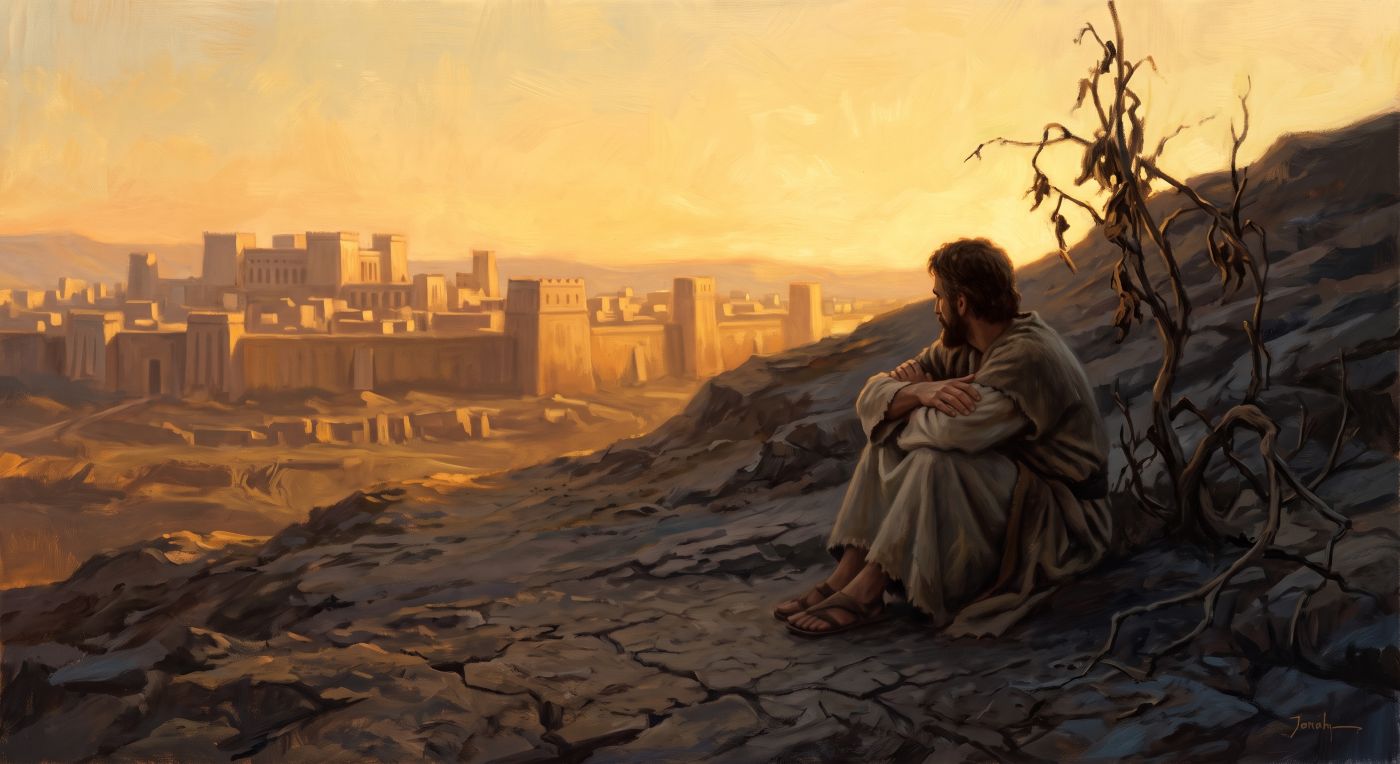
One of the most shocking elements of Jonah’s story is his reaction to the greatest revival in ancient history. When God spared Nineveh, Jonah did not rejoice. Instead, he became bitterly angry and began to sulk. Jonah hated the Ninevites because of their past atrocities against Israel. He knew that Nineveh was a military threat to his homeland, and he wanted to see them destroyed under the righteous wrath of God.
Jonah openly admitted his true motives in Jonah 4:2, telling God that the reason he fled to Tarshish in the first place was because he knew God was gracious, merciful, slow to anger, and abundant in kindness. Jonah was willing to receive mercy for himself in the depths of the ocean, but he resented God showing that same mercy to his enemies. He went outside the city, built a small shelter, and sat in the scorching heat, sulking in hopes that God might still rain down fire on Nineveh.
Jonah’s tragic attitude reveals a deep spiritual blind spot that can affect any believer. It is easy to celebrate God's grace when it cleanses our own lives, but we must guard against self-righteousness when that same grace is extended to people we dislike or deem unworthy.
How the God of Second Chances Rebukes Our Selfish Heart
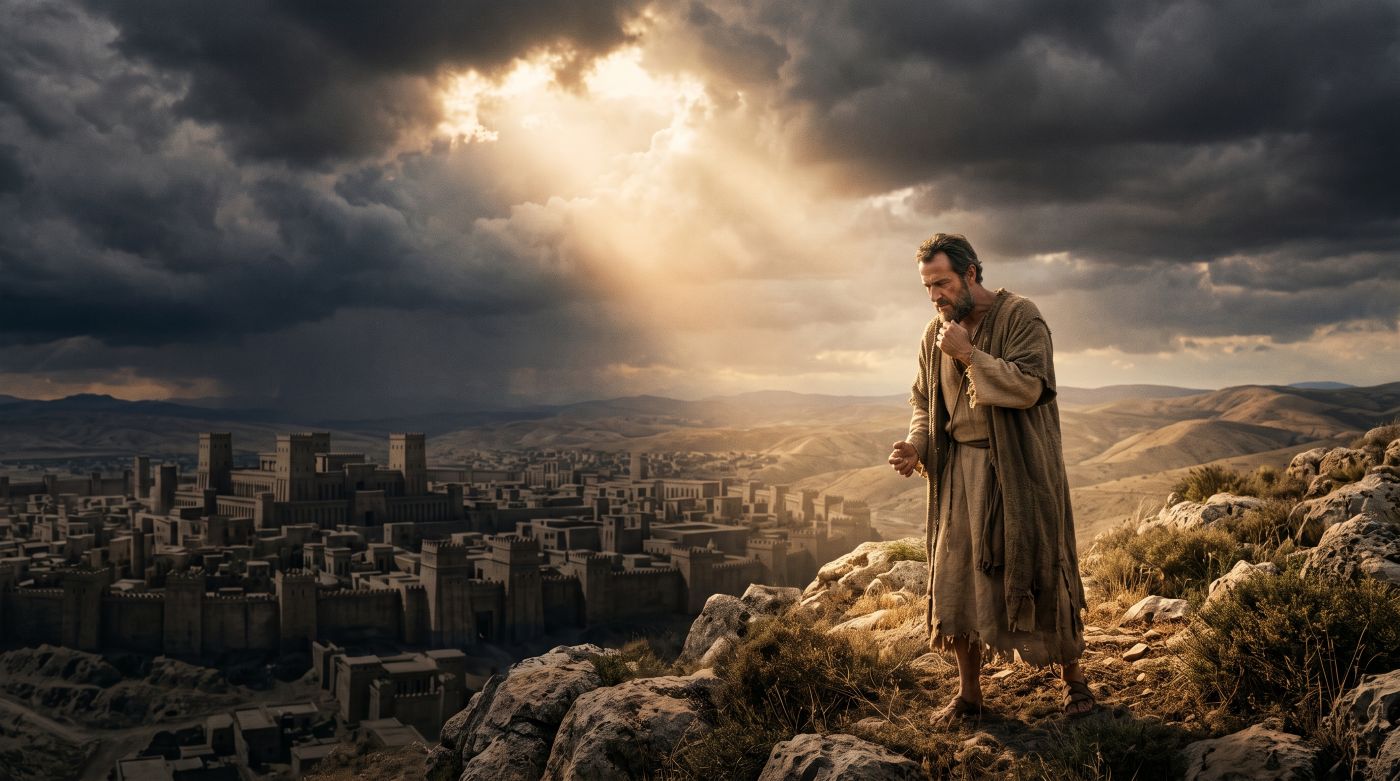
God used a practical object lesson to address Jonah’s bitter heart. As Jonah sat outside Nineveh in the blistering heat, God caused a plant (a gourd) to grow up overnight to provide shade over Jonah's head, bringing him great comfort. But the next morning, God prepared a worm that chewed the plant, causing it to wither away. When the sun arose and a severe east wind blew, Jonah grew faint and wished for death, complaining bitterly about the loss of the plant.
God used Jonah’s grief over a simple plant to expose his skewed priorities. God said to Jonah, "Thou hast had pity on the gourd, for the which thou hast not laboured, neither madest it grow; which came up in a night, and perished in a night: And should not I spare Nineveh, that great city, wherein are more than sixscore thousand persons that cannot discern between their right hand and their left hand; and also much cattle?" (Jonah 4:10–11).
Jonah cared more about a short-lived plant that brought him physical comfort than he did about the eternal souls of 120,000 people living in spiritual darkness. God’s final lesson to Jonah—and to us—is clear: God loves everyone. He has no pleasure in the death of the wicked, and His desire is that none should perish, but that all should come to repentance. The god of second chances is constantly working to break down our prejudices, align our hearts with His compassion, and remind us of the priceless value of human souls.
The book of Jonah ends abruptly with God’s question echoing into eternity, leaving the reader to reflect on their own spiritual condition. Jonah’s life shows us the foolishness of running from God, the severe reality of judgment, and the terrible fallout of personal rebellion. Yet above all the noise of the storm and the darkness of the deep, the character of God shines through brightly.
If you are currently running from God’s direction, experiencing the storm of your own choices, or holding bitterness toward others who need grace, remember the central message of this historic account. We serve the god of second chances—a loving Father who prepares a way of escape, answers prayers from the deepest abysses of life, and freely pardons all who turn to Him in genuine repentance.
Read the Scriptures for Yourself
You can read the full historical account of Jonah's journey, the storm, and God's mercy directly in the Bible.
Related Bible Studies and Spiritual Insights
If you found encouragement in the story of Jonah and the god of second chances, you may also enjoy exploring these related biblical studies and historical insights on our site:
- The Repentance Of King Manasseh — Discover how one of Israel’s most wicked kings found forgiveness and restoration through genuine repentance, proving that no one is beyond the reach of divine mercy.
- The Doctrine of Grace — Explore what the Bible teaches about God's unmerited favor, how it transforms a believer's life, and why grace is essential for salvation.
- The Bible and Reincarnation — Examine the Scriptures to see what God's Word actually teaches regarding life, death, resurrection, and the popular concept of reincarnation.
- History Of The Bible — Learn how the Word of God was preserved throughout history, from ancient manuscripts to modern translations, standing the test of time.


