What Happens at Death? A Biblical Perspective on the End of Life
There is an old saying that the only two certainties in life are death and taxes. Yet, while taxes are a matter of public record, the spiritual reality of our final moments remains the greatest mystery known to man. Most people eventually find themselves searching for the truth about what happens at death, seeking answers that go beyond biology and medical definitions.
While Webster defines death as the "permanent ending of life" and science points to the cessation of metabolic processes, the Bible reveals a much deeper transition. Every living thing on this planet is born to die; in a sense, we are all living on "death row," waiting for the day our physical breathing stops. To truly understand the journey of the soul, we must look at the scriptural evidence of what occurs when the spirit leaves the body.
Personal Reflections: The Reality of the Transition

I have witnessed the moment of transition several times, and each instance reinforces the mystery of the soul. I remember a teammate in a bowling league, a man around 70 years old. He was having a fantastic game, rolling strike after strike. After one particular strike, he turned around with a triumphant smile and suddenly collapsed from a heart attack. He never got up. The game halted, but the realization of how quickly the "thread of life" snaps stayed with everyone in that room.
Another time, I watched the life depart from a beloved pet dachshund. She had spent the morning joyfully chasing squirrels and rabbits. Later that day, she accidentally ran in front of a car. She wasn't killed instantly; she managed to run back to me, and I held her in the house as she took her final breath.
Death causes grief that words can barely touch. It is a separation that feels final to our physical senses, but the Bible provides a much deeper definition of what is happening during those final moments.
Understanding What Happens at Death: The Biblical Definition
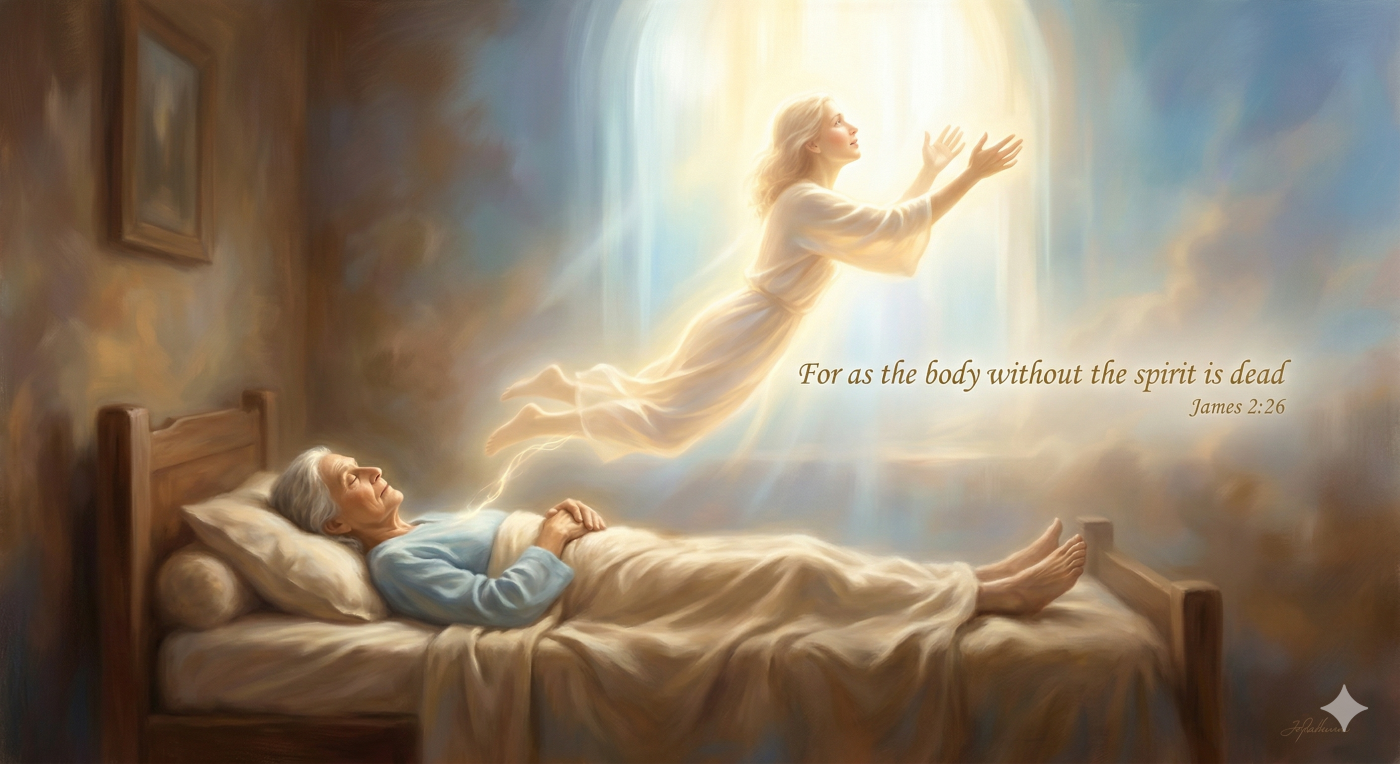
According to the Scriptures, death is best defined as separation. When a person stops breathing, they are separated from their friends, family, and the physical world. While the body begins the natural process of decay, the spirit and soul leave the vessel. As James 2:26 states: "For as the body without the spirit is dead..."
To understand why this separation occurs, we must look at our origin. Genesis 1:26 tells us that God created man in His own image. Because God is a triune being (Father, Son, and Holy Spirit), man was created as a triune being: body, soul, and spirit.
Why Do We Die? The Origin of the Curse
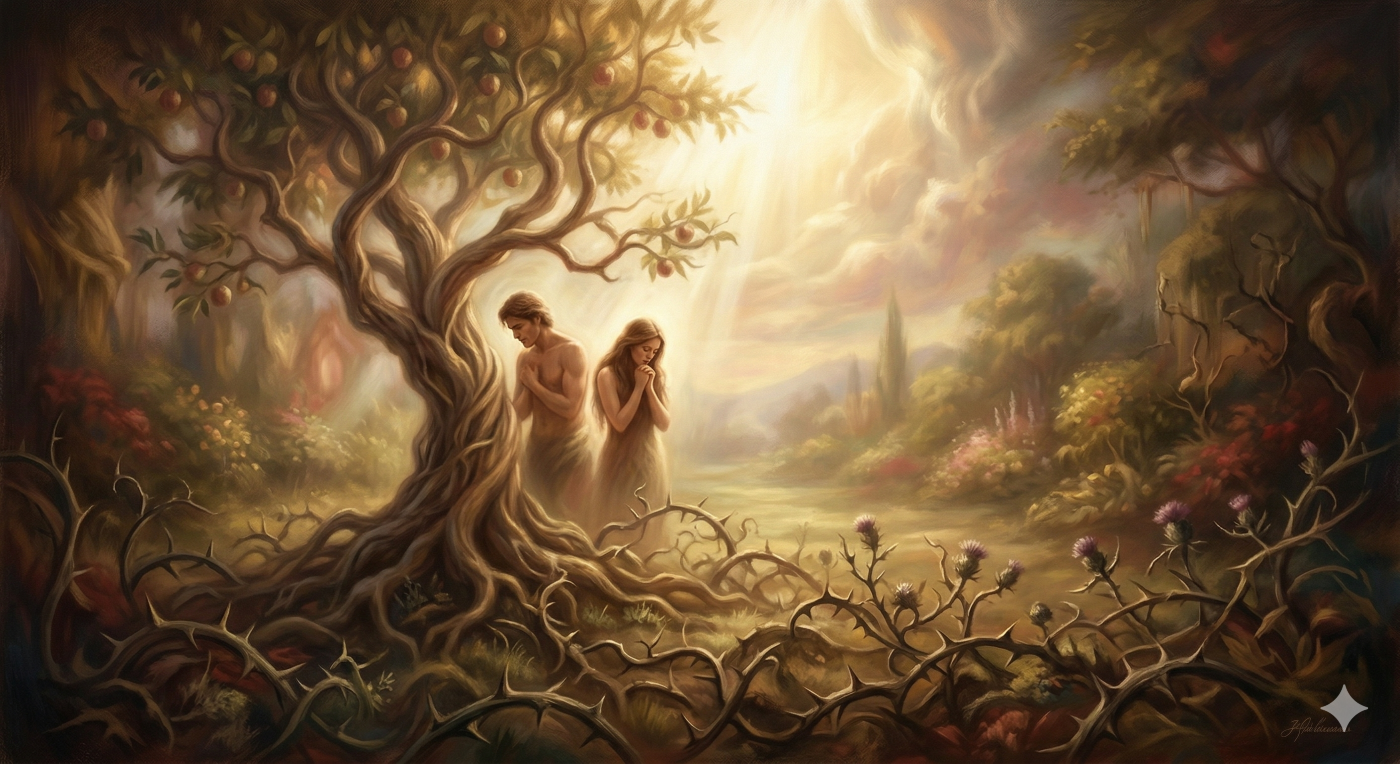
Some believe death is merely an evolutionary imperfection—a "glitch" that science might one day solve. This is a misunderstanding of our reality. Everything dies because everything is under a curse. To understand the root of what happens at death, we must look at our origin in the Garden of Eden.
The New Testament confirms that Jesus Christ is the Creator of all things (Colossians 1:16). He created man with free will—the power to choose obedience or rebellion. In the Garden of Eden, Adam and Eve were created for eternity. They had only one restriction: "but of the tree of the knowledge of good and evil you shall not eat, for in the day that you eat of it you shall surely die" (Genesis 2:17).
When they chose to believe the lie of the serpent over the truth of God, the "death penalty" was enacted. They did not drop dead physically that second, but they became spiritually dead—separated from the presence of God. This act brought the curse of death upon all of their descendants. As Romans 8:22 says, "the whole creation groaneth and travaileth in pain together until now."
Physical Death vs. Spiritual Death
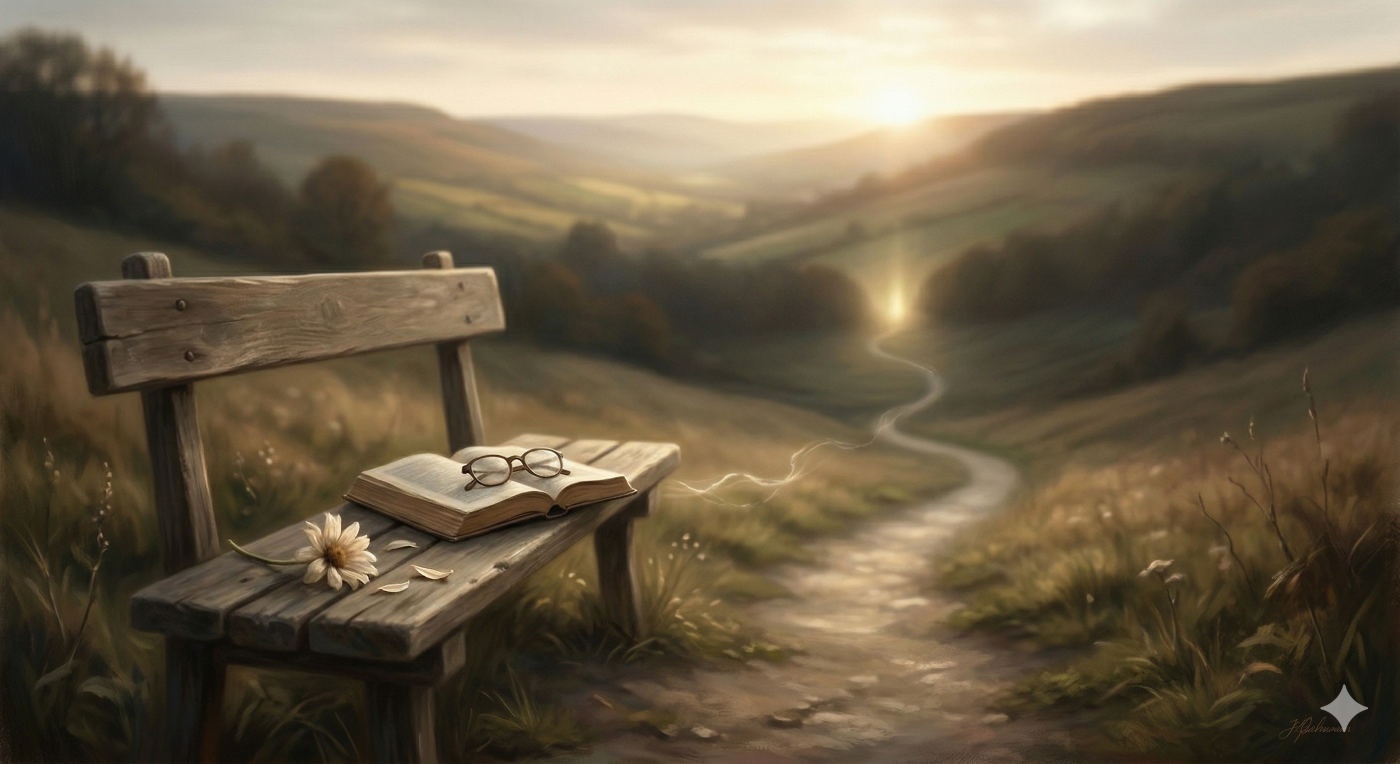
There are two distinct types of death mentioned in Scripture, and understanding the difference is vital for your eternal journey. When we analyze what happens at death, we must distinguish between the body and the soul.
- Physical Death: This is the cessation of bodily function. The body, made from dust, returns to dust. Paul clarifies in 1 Corinthians 15:50 that "flesh and blood cannot inherit the kingdom of God." Our physical bodies belong to this fallen world.
- Spiritual Death: This is the ongoing separation from God. Interestingly, Adam lived over 900 years after the fall. While he didn't die in a 24-hour "earth day," he died within a "God day." Psalm 90:4 notes that a thousand years are as a day to the Lord. No man has ever reached 1,000 years of age; thus, all die within that first "day" of the curse.
The Hope of Resurrection: Overcoming the Grave
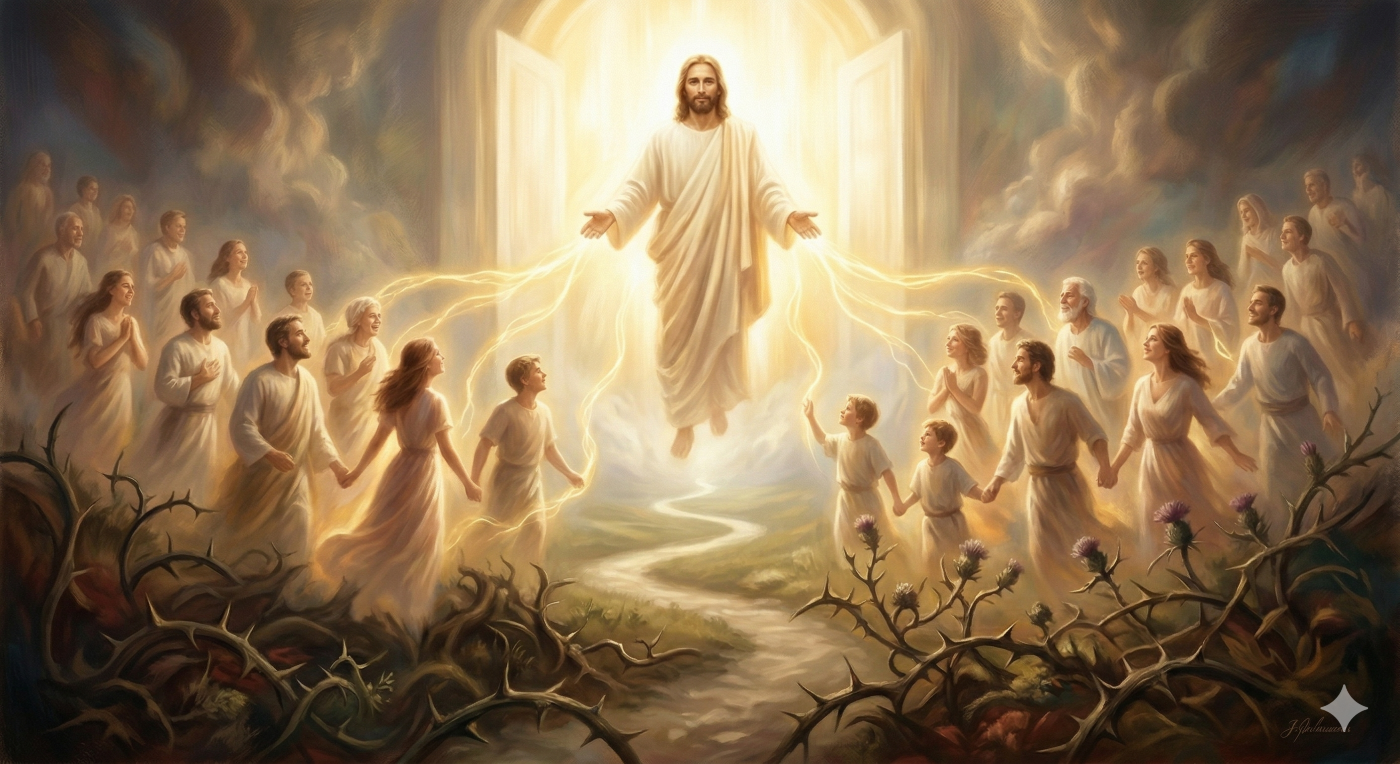
Does the curse mean we are without hope? Not at all. Jesus Christ not only created us; He redeemed us by taking the penalty of our sin upon Himself.
Jesus said in John 11:25, "I am the resurrection and the life. He who believes in Me, though he may die, he shall live." This is the great promise. To gain eternal life, the "flesh" must die so the spiritual body can be raised. Paul describes this process beautifully:
- It is sown in corruption; it is raised in incorruption.
- It is sown in dishonor; it is raised in glory.
- It is sown a natural body; it is raised a spiritual body.
For those who know Christ, death is not an end, but a step into eternity. It is the moment we stop bearing the image of the "man of dust" (Adam) and begin bearing the image of the "heavenly Man" (Christ).
Your Choice: Life or Death?
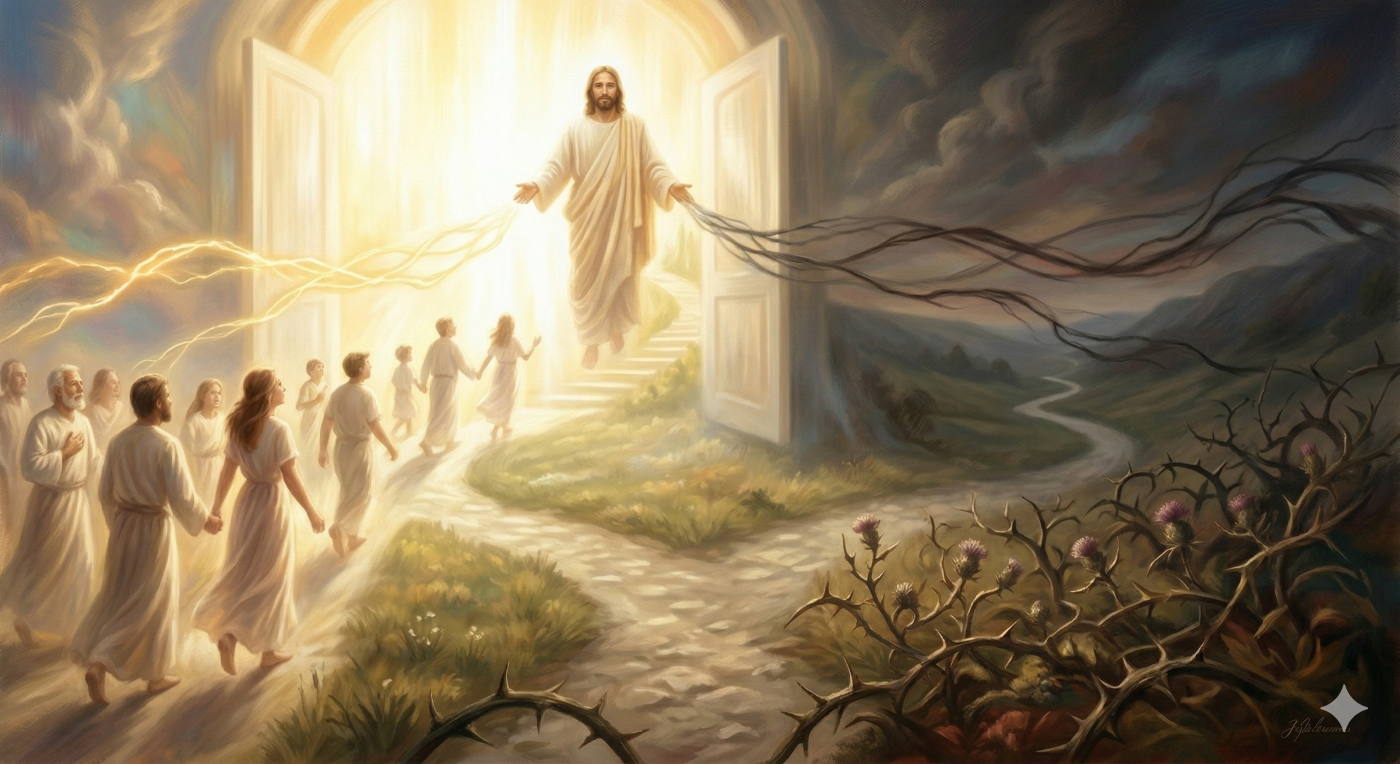
Hebrews 9:27 reminds us: "And as it is appointed for men to die once, but after this the judgment." At the point of physical transition, the reality of what happens at death becomes an eternal state of being. It either returns to the Creator or enters a state of total separation from God—a place often described as Hell.
No one alive today truly knows the horror of total separation from God, because currently, His "rain falls on the just and the unjust." But at death, that "common grace" ends. The choice of where you spend that eternity is yours. You can choose to trust in the redemptive work of Christ and move into life, or remain under the curse of the fall.
What is death? It is the question everyone will finally have the answer to. The wiser decision is to seek the life that overcomes the grave before that day arrives.
The Ultimate Decision: Choosing Life or Death
Thousands of years ago, Moses stood before the people and delivered a final, urgent message that echoes into our lives today. In Deuteronomy 30:19, he said: “I call heaven and earth as witnesses today against you, that I have set before you life and death, blessing and cursing; therefore choose life, that both you and your seed may live.”
When we consider what happens at death, we must realize that God has placed the same choice before us. While our physical bodies are subject to the "return to dust" because of the fall of Adam, our spiritual destination is not left to chance. At the point of physical transition, the reality of what happens at death becomes an eternal state of being.
You can choose the path of Life—reunited with the Creator through the redemptive work of Jesus Christ—or remain on the path of Death, separated from the Source of all light. Which is the wiser decision? To choose life is to step into an eternity of blessing. To choose death is to remain under the curse. The choice is yours, but the invitation to Life is open to all who believe.
Supplemental Resource: Understanding the Transition
▶ Watch: A Biblical Perspective on Death(Opens in a new window)
Explore More Biblical Truths and Mysteries
The transition of death is only one part of the spiritual journey. If you are seeking a deeper understanding of God’s power, His identity, and the reach of His mercy, I invite you to explore these featured studies:
- What Are The Benefits of Grace?: Understand how God's unmerited favor provides the strength we need for daily living and eternal security.
- The Miracles Of The Exodus: A look at the supernatural power God displayed to deliver His people from physical and spiritual bondage.
- Can God Forgive A Murderer?: A profound look at the infinite reach of God’s mercy—even for those who feel they have committed the "unforgivable."
- Is Jesus God?: Examine the scriptural evidence regarding the deity of Christ and His role as the Creator of life itself.


