What Is Heaven Like? A Biblical Journey into the Eternal Home
The Ultimate Question
What Is Heaven Like? This is the ultimate question that has occupied the hearts and minds of believers for centuries. While Hollywood often portrays the afterlife as a misty realm of clouds and harps, the Bible presents a far more vibrant, physical, and exciting reality. Understanding the biblical perspective requires us to look past modern myths and dive into the specific promises found in the Old and New Testaments.
A Prepared Place for a Prepared People
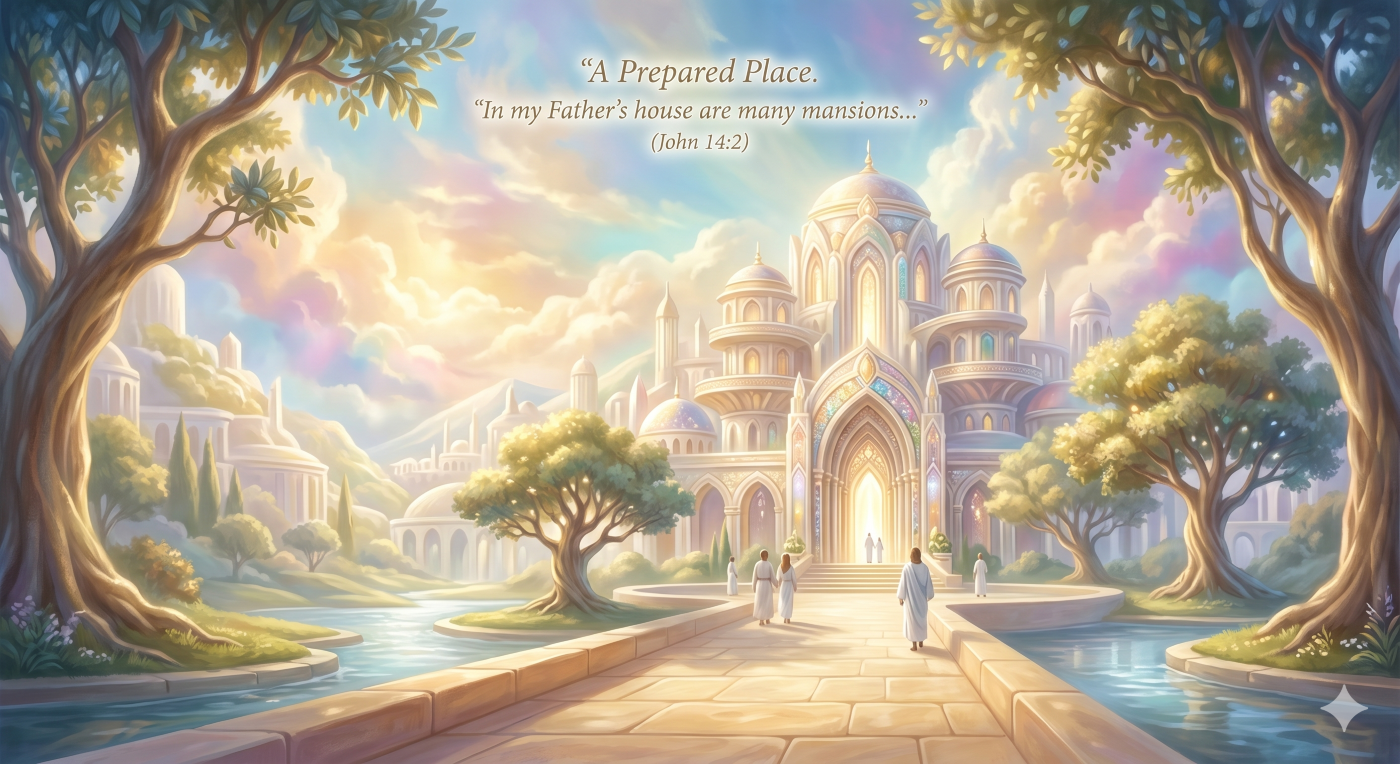
To truly understand what is heaven like, we must look at the specific language Jesus used when comforting His disciples during the Last Supper. In John 14:2-3, He issued one of the most profound promises in all of Scripture:
"In my Father’s house are many mansions: if it were not so, I would have told you. I go to prepare a place for you. And if I go and prepare a place for you, I will come again, and receive you unto myself; that where I am, there ye may be also."
This passage tells us three critical things about the nature of our eternal home: it is a Place, it is Personal, and it is Planned.
1. Heaven is a Tangible "Place"
When Jesus used the Greek word topos (translated as "place"), He was not describing a state of mind, a dream, or a vague spiritual dimension. Topos refers to a specific, physical location. Just as Cleveland is a place, or your childhood home was a place, heaven is a geographical reality in the Kingdom of God.
When people ask, "What is heaven like?", they often worry it will feel "ghostly" or "shadowy." However, the biblical promise of a "prepared place" suggests the opposite. It will be more "real" than the world we currently inhabit. The "mansions" (or "dwelling places") Jesus spoke of imply stability, architecture, and a sense of belonging. You are not headed toward a cloud; you are headed toward a permanent residence.
2. A Personal Design by the Creator
Think of the incredible beauty of the earth—the majesty of the Smoky Mountains, the vastness of the oceans, and the intricate colors of a sunset. Now, consider this: the Bible tells us that God created the entire universe in six days. Yet, Jesus has been "preparing" a place for His followers for over two thousand years.
If the "unprepared" world we live in is this beautiful despite the effects of sin, we can only imagine the level of detail, artistry, and perfection found in a place specifically crafted by the hands of the Savior for those He loves. This preparation suggests that heaven is tailored for human joy and divine fellowship.
3. The Requirement: A Prepared People
While the "place" is being prepared by Christ, the Bible is equally clear that it is intended for a "prepared people." The holiness of heaven is such that nothing "unclean" or "that maketh a lie" can enter (Revelation 21:27).
- Preparation through Redemption: We are prepared for heaven not by our own good works, but by being clothed in the righteousness of Christ.
- A Change of Nature: Just as a fish is prepared for the water and a bird for the air, the believer is "prepared" through the New Birth to inhabit a realm defined by light and purity.
The answer to "What is heaven like?" is inextricably linked to the Person who is there. It is a home designed by a Father for His children. It is not just about the "mansions" or the "streets of gold"; it is about the fact that the Place has been prepared so that "where He is, there we may be also."
The Architecture of the New Jerusalem
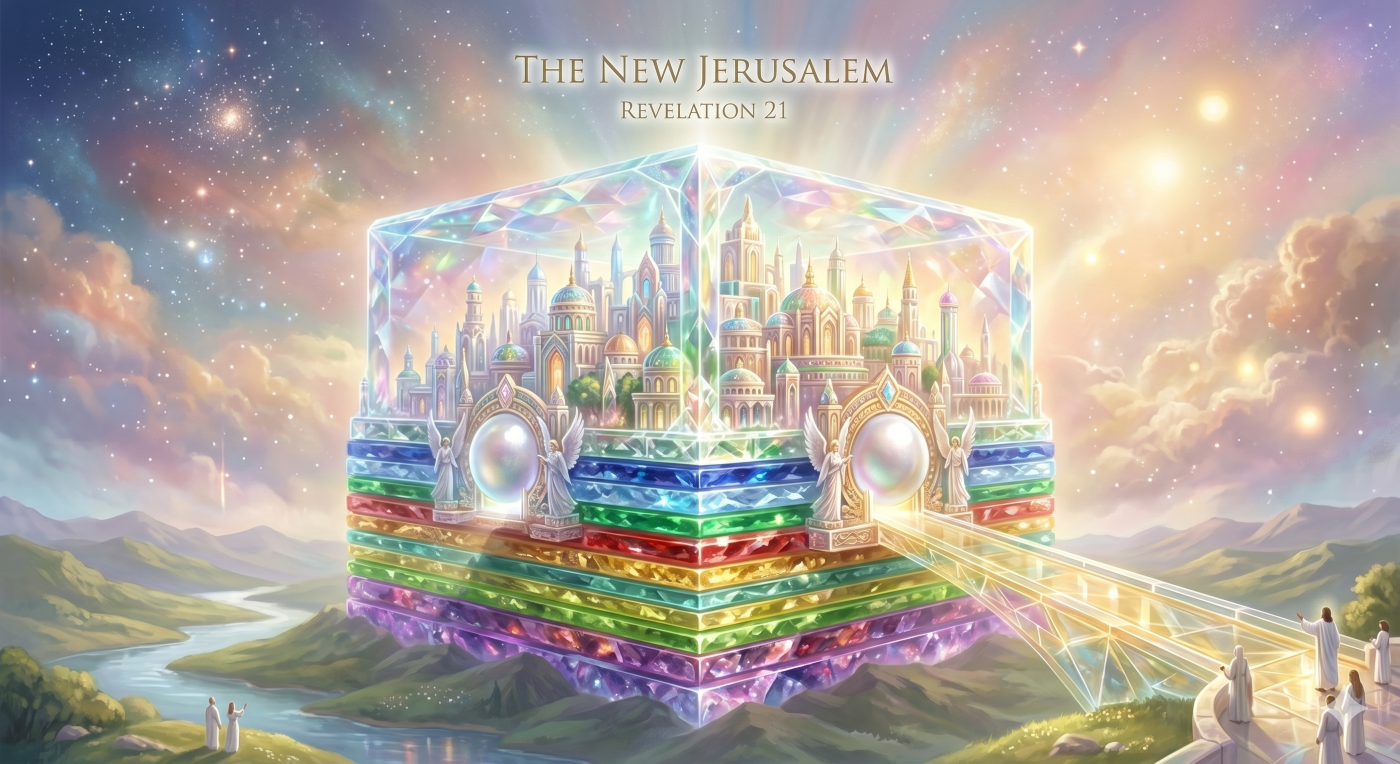
When we ask "What is heaven like?", the Bible provides us with a blueprint so staggering that it defies modern engineering. In Revelation 21, the Apostle John is shown the holy city, the New Jerusalem, coming down from God out of heaven. This is not a metaphorical city; John provides specific measurements, materials, and structural details that give us a literal glimpse into the capital city of eternity.The Massive Scale of the City
The first thing John notices is the sheer size. According to Revelation 21:16, the city lies foursquare, meaning it is a perfect cube. The angel measured the city with a golden reed, and it was found to be 12,000 furlongs (approximately 1,400 to 1,500 miles) in length, breadth, and height.
To put this into perspective:The Walls and the Twelve Foundations
- The base of the city would cover an area roughly half the size of the United States.
- The height reaches far beyond the Earth’s atmosphere, stretching into the heavens.
- This vast volume ensures there is more than enough room for the "many mansions" Jesus promised, capable of housing billions of people in a spacious, glorious environment.
The city is surrounded by a wall that is 144 cubits thick (about 216 feet). While the wall serves as a boundary of security and holiness rather than defense, its composition is what truly answers the question: What is heaven like? The wall is made of Jasper, which in the biblical context implies a crystal-clear, diamond-like brilliance. But the most stunning architectural detail is found in the foundations. Most earthly buildings have one foundation; the New Jerusalem has twelve, and each is garnished with a different precious stone:
- Jasper (Clear/Green)
- Sapphire (Blue)
- Chalcedony (Sky Blue)
- Emerald (Bright Green)
- Sardonyx (Red and White)
- Sardius (Fiery Red)
- Chrysolite (Golden Yellow)
- Beryl (Sea Green)
- Topaz (Yellow-Green)
- Chrysoprasus (Apple Green)
- Jacinth (Violet)
- Amethyst (Purple)
As the light of God’s glory shines through these layers of colored gemstones, the entire city likely radiates a rainbow of light that is impossible to replicate on earth.The Gates of Pearl and Streets of Gold
John further describes the entrance to the city: "And the twelve gates were twelve pearls; every several gate was of one pearl" (Revelation 21:21). Unlike earthly gates made of many materials, these are organic in origin—each a single, massive pearl. This serves as a beautiful reminder that pearls are formed through suffering and irritation within an oyster, symbolizing that our entrance into this glory was made possible through the suffering of Christ.
Furthermore, the "What Is Heaven Like?" keyword is often associated with the phrase "streets of gold." However, John’s description is more specific: "The street of the city was pure gold, as it were transparent glass." This is not the dull, heavy gold we find in mines. It is a celestial gold, so pure that it is translucent, allowing the light of God to permeate every inch of the city's infrastructure.
The Absence of a Temple
Perhaps the most shocking architectural fact is what is missing. John writes, "And I saw no temple therein: for the Lord God Almighty and the Lamb are the temple of it" (Revelation 21:22). In the Old Testament, the Temple was a place where God's presence was veiled. In the New Jerusalem, the architecture is designed for total access. There are no walls between God and man; the entire city is a "Holy of Holies."Light Without a Sun
The city does not need a power plant or a sun. The glory of God provides a constant, warming, and life-giving light. Because God is light, there is no "dark side" to the buildings or "shadows" in the valleys. Every facet of the Jasper walls and the Sapphire foundations reflects His radiance, creating an environment of perpetual, perfect day.
What Is Heaven Like in Terms of Daily Life?
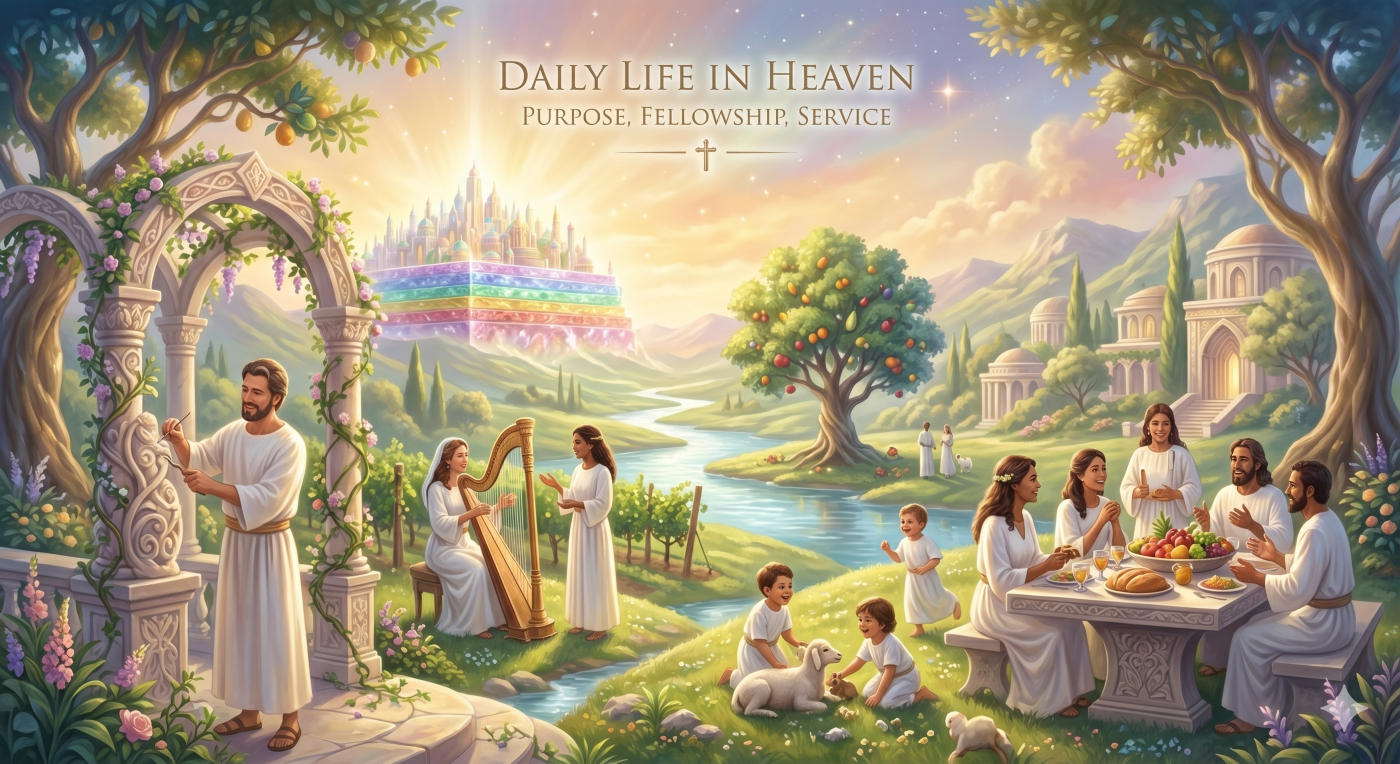
One of the most common misconceptions about the afterlife is that it consists of a never-ending cloud-based retreat where we do little more than play harps. However, when we ask "What is heaven like?" through the lens of Scripture, we discover a world of vibrant activity, meaningful labor, and deep social connection. The "New Earth" is not a place of idleness; it is a place of perfected human experience.
1. Purposeful Work Without Weariness
In the Garden of Eden, work existed before the Fall. Man was designed to tend the garden and exercise stewardship over creation. It was only after sin entered the world that work became "toil" characterized by thorns, thistles, and sweat.
In the eternal state, the curse is removed (Revelation 22:3), but the mandate for activity remains. The Bible says, "His servants shall serve Him." This "service" implies productive, creative, and fulfilling activity. Imagine being able to compose music, design architecture, or manage resources without the limitations of fatigue, lack of resources, or the frustration of failure. In heaven, your "daily life" will involve using your God-given talents to their highest potential.
2. Intellectual Growth and Discovery
Contrary to the idea that we will suddenly become "all-knowing" like God, the Bible suggests that we will continue to learn. In Ephesians 2:7, Paul writes that in the ages to come, God will "show the exceeding riches of His grace." This implies a progressive unveiling of God’s wisdom and the wonders of His creation.
Daily life in heaven will likely involve:
3. Social Life and Perfect Community
- Scientific Discovery: Exploring the vastness of the New Heavens and the complexity of the New Earth.
- Historical Understanding: Learning the "inside story" of how God moved through human history.
- Theological Depth: Gaining a deeper understanding of the character of the Creator.
A major part of answering "What is heaven like?" involves our relationships. We are social creatures, and the New Jerusalem is described as a city—the ultimate social structure.
We see in the New Testament that people remained themselves after death. At the Transfiguration, Moses and Elijah were recognizable. Jesus, in His resurrected body, sat and ate with His friends. This confirms that our daily lives will be filled with:4. Governance and Responsibility
- Feasting and Fellowship: The Bible mentions the "Marriage Supper of the Lamb" and the "Tree of Life" yielding fruit. Eating and drinking will be a source of pleasure and social bonding.
- Meaningful Conversation: Imagine sitting down with the heroes of the faith or reunited family members, sharing stories without the barriers of pride, misunderstanding, or hurt feelings.
- Worship as a Lifestyle: While there will be moments of corporate praise, biblical worship is more about a state of being. Everything we do—from our work to our conversations—will be an act of joyful worship because it will be done in the direct presence of God.
Jesus spoke frequently about being "faithful over a few things" so that He could make us "ruler over many things" (Matthew 25:21). The Bible mentions that believers will reign with Christ. This suggests that the New Earth will have a perfected government and a social order. Daily life will involve administration and responsibility, perhaps over cities or regions of the new creation, ensuring that the "New Society" functions in perfect harmony and justice.
The Sensory Experience of the New Earth
To truly answer what is heaven like, we have to look at the restoration of nature. The "New Earth" described in Revelation 21 and 22 includes:
- The River of Life: Clear as crystal, flowing from the throne of God.
- The Tree of Life: Yielding twelve manner of fruits every month, with leaves for the healing of the nations.
- No More Night: There is no need for a sun or moon because the glory of God provides the light.
The Absence of the "Former Things"
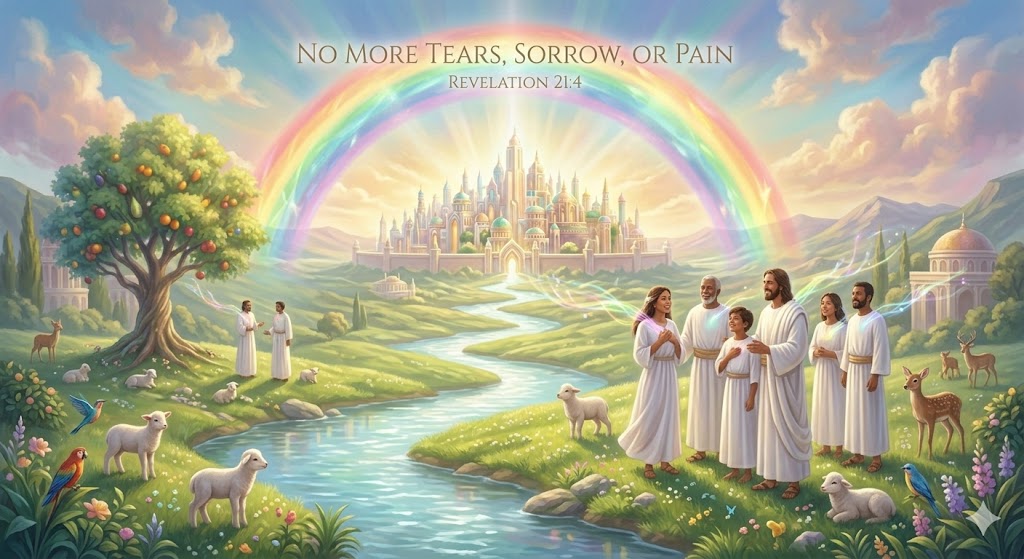
Perhaps the most comforting biblical answer to what is heaven like is found in what isn't there. Revelation 21:4 provides a list of things that are banished forever:
- No more tears: God Himself will wipe them away.
- No more death: The final enemy is defeated.
- No more sorrow or crying: The emotional weight of the human experience is lifted.
- No more pain: Our "glorified bodies" will be free from the decay of the Fall.
The Beauty of the Glorified Body
The Bible teaches that our experience in heaven will be physical. In 1 Corinthians 15, Paul explains that our earthly bodies are like seeds. Just as a seed is buried and rises as a powerful plant, our bodies are "sown in dishonor" but "raised in glory."
What is our future body like? It will be like Christ’s resurrected body—able to eat, walk, speak, and be touched, yet no longer subject to age, gravity, or disease.
Conclusion: The Heart of the Matter
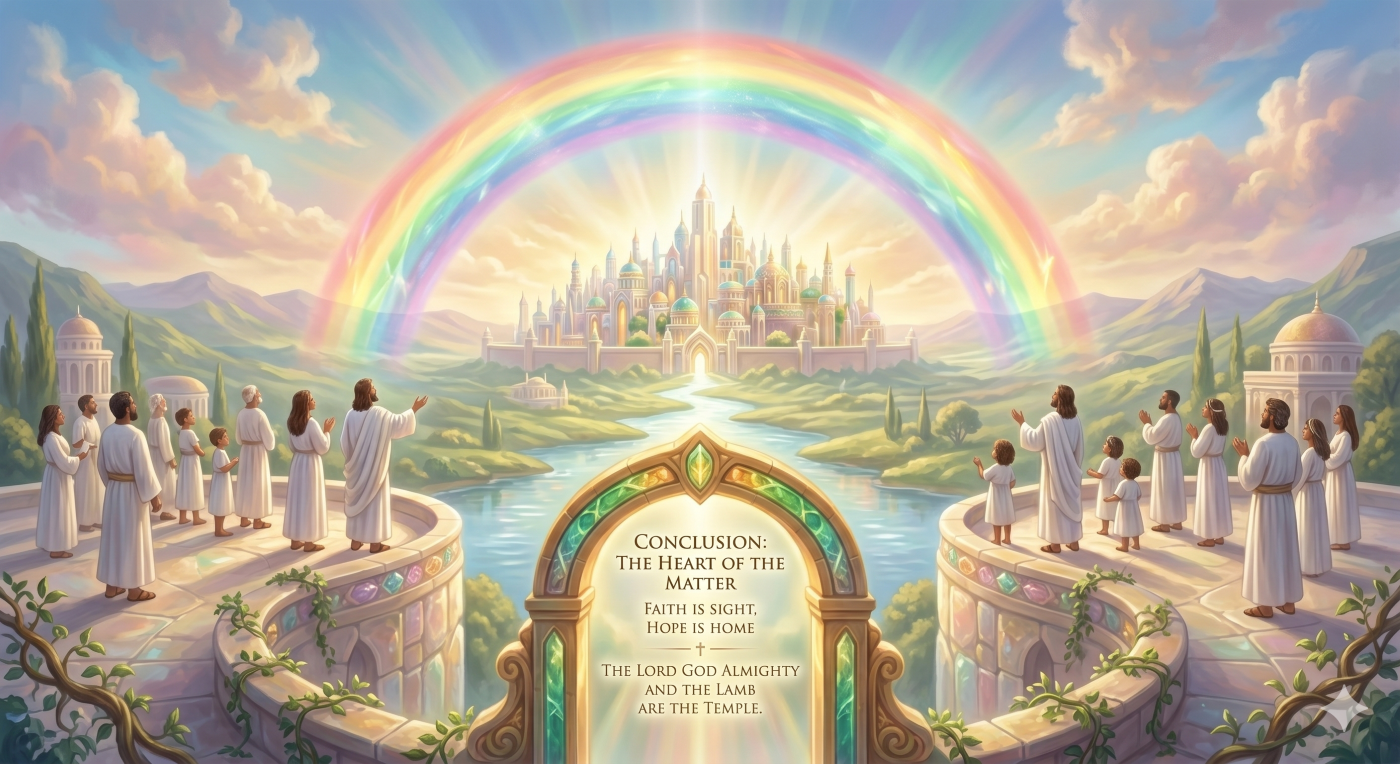
Ultimately, if you want to know what is heaven like, you must look at the character of Jesus Christ. While the architecture is breathtaking and the activities are fulfilling, the "heart" of heaven isn't the gold or the pearls—it is the Person. Heaven is the place where His beauty, kindness, and justice saturate every square inch of reality. It is the destination where our faith finally turns to sight, and the "glass" we have been looking through darkly is finally cleared.
The biblical descriptions we have explored aren't just meant to satisfy our curiosity; they are meant to provide a "blessed hope." This home is the place we have been homesick for our entire lives—the answer to every longing and the healing of every wound. When we finally step through those pearly gates and see the face of the Savior, we will realize that every beautiful thing on earth was merely a shadow of the reality we have now entered. Heaven is not just a change of location; it is the beginning of a story that never ends, where every chapter is better than the one before.
Deepen Your Study
If you would like to read the full scriptural descriptions of the New Jerusalem and the New Earth for yourself, you can explore the 21st and 22nd chapters of the Book of Revelation.
Read Revelation 21-22 at Bible GatewayExpanding Your Journey: Deeper Biblical Studies
While understanding the wonders of our eternal home provides great comfort, it is only one part of the magnificent story told throughout the Scriptures. To truly grasp what is heaven like, we must also understand the power that gets us there and the spiritual world around us.
Explore these additional resources to further your study of the Word:
- [The Doctrine of Grace]: Discover the "unmerited favor" of God that prepares us for our place in the New Jerusalem. Without this foundation, the gates of pearl remain closed to us.
- [Do Miracles Produce Faith?]: Explore the relationship between the supernatural signs we see on earth and the lasting faith required to trust in the unseen reality of heaven.
- [Bible Verses About Zombies]: How does the biblical "resurrection of the body" differ from the modern pop-culture myths of the undead? Learn what the Bible actually says about life after death.
- [Astrology and the Bible]: The New Jerusalem is filled with celestial light, but how does God's creation of the stars differ from the practice of astrology? See why the Creator is more important than the constellations.


